




 Whitman Expo



The unprecedented crossover underscores his personal efforts to combat “grade inflation.”
Thank you to our sponsors!
Go check them out!





One of the highest mintage Proof V Nickels making it a great, affordable type coin. There were 4,290 originally struck in which most are still in existence. Common without cameo designations except for the finest of gems. Cameo coins are a good bit scarcer with deep cameos non-existent.
Obverse Description
Lady Liberty with the word LIBERTY on her crown faces left with 13 stars around the periphery and the date positioned at the bottom center.
Reverse Description
Large V (roman numeral 5) is centered in the design surrounded by an ornate wreath with UNITED STATES OF AMERICA * CENTS * around the periphery. The motto E PLURIBUS UNUM appears near the top between the wreath and letters STATES OF AME.
Book Reference
Key to Collecting: The 1886 nickel is generally ranked as the second-rarest Liberty Head nickel in the early series, with 1885 first. However, in Mint State, particularly at the gem level, the 1886 nickel eclipses the 1885 in rarity. High-grade (Very Fine to Mint State) examples are elusive across the board, as little numismatic notice was paid to the date until the 1930’s, by which time most had become well worn. Finding a sharply struck gem would be an accomplishment indeed! Mark Hooten adds this comment:
As with its 1885 “key companion,” many collectors who typically seek out Mint State pieces will settle for a choice AU (About Uncirculated) piece. Often times, the AU grades house coins that possess better detail than many or most of their “Uncirculated” counterparts, making those grades a true bargain.5
Paralleling the situation for 1885, most of the demand for high-grade nickels with the 1886 date is supplied by Proofs, which were made in a fair quantity.
CIRCULATION STRIKES:
Characteristics and Appearance: The striking is usually quite good. Some nickels are prooflike, but not mirrorlike enough to be mistaken for Proofs. The date logotype used on all dies (circulation strikes and Proofs) has the 1 too high in relation to the curved baseline of the following three digits, this being characteristic of other years in the 1886 to 1889 era. There were 101 obverse dies made. If all of them were used, each die would have made 33,000 impressions—a low figure that probably indicates many of the dies were never used (since dies were sometimes retired before they were overly worn, the number isn’t impossible).
PROOF STRIKES:
Characteristics and Appearance: Most are well struck with Full Details, but a few have lightness on the highest parts of the hair. On the reverse, the ear of corn to the left of the ribbon bow also shows lightness.
Mintage and Distribution Notes: At least three obverse dies were used, one with the second 8 repunched, another with the last two digits slightly repunched. The making of multiple Proof dies for short production runs is unexplained, but is perhaps best exemplified by the use of at least five obverse dies in 1895 to coin just 880 examples.
VARIETIES:
Repunched Date—FS-301. Slightly repunched, date most noticeable at the top of the 6.
Catalog Information
GSID:
2995
Designer:
Charles E. Barber
Obverse Designer:
Charles Barber
Obverse Lettering:
LIBERTY, 1886
Reverse Designer:
Charles Barber
Reverse Lettering:
V, UNITED STATES OF AMERICA, E PLURIBUS UNUM, CENTS
Weight (gr):
5 gr
Weight (oz):
0.1608 oz
Strike Type:
Proof
Diameter:
21.2
Coin Shape:
Round
Edge:
Plain
Coin Date:
1886
Denomination:
5c
Designation:
PR
Mint Location:
Philadelphia
Mintage:
4,290
Coinage Type:
Liberty head nickel
Coinage Years:
1883-1913
Composition:
75% copper; 25% nickel
PCGS #:
83884
Send Catalog Feedback
To: editor@greysheet.com
Subject: I would like to contribute catalog info to CDN for 1886 5c PR CAM
Body: Referring page: http://dev.greysheet.com/prices/item/1886-five-cents-cameo-surfaces-liberty-v-nickel-proof/gsid/2995 GSID: 2995 Title: 1886 5c PR CAM
Subscribe to View
View more data, info, and visualizations. Get access to retail and wholesale pricing as well as auction data.
Coin Value History
1886 5c PR CAM
Value By Grade
1886 5c PR CAM
CPG (retail) values
Currency
Grade Range
Grading Authority
Sort by
Pricing
Values
Greysheet & CPG® Values
| Grade | CAC | CPG Value (Retail) | Greysheet Price (Wholesale) |
|---|---|---|---|
| PR67 |

|
$6,750 | $1,234 |
| PR67 | - | $5,500 | $1,234 |
| PR66 |
|
$1,234 | $1,234 |
| PR66 | - | $1,234 | $1,234 |
| PR65 |
|
$1,234 | $1,234 |
| PR65 | - | $1,234 | $1,234 |
| PR64 |
|
$1,234 | $1,234 |
| PR64 | - | $1,234 | $1,234 |
| PR63 |
|
$1,234 | $1,234 |
| PR63 | - | $1,234 | $1,234 |
Liberty (V) Nickel 5c No Cents, 1883 PR [Type]
![Liberty (V) Nickel 5c No Cents, 1883 PR [Type]](https://images.greysheet.com/ctc/catalog/NCobvPR.jpg?MaxWidth=200&Mode=Pad&Scale=UpscaleCanvas&format=webp)
Worth: $200 – $2,000
1883 5c No Cents PR

Worth: $200 – $2,000
Liberty (V) Nickel 5c With Cents, 1883-1912 PR [Type]
![Liberty (V) Nickel 5c With Cents, 1883-1912 PR [Type]](https://images.greysheet.com/ctc/catalog/1900ovvPR.jpg?MaxWidth=200&Mode=Pad&Scale=UpscaleCanvas&format=webp)
Worth: $110 – $7,000
1883 5c Cents PR

Worth: $175 – $1,680
1884 5c PR

Worth: $110 – $1,272
1885 5c PR

Worth: $750 – $10,000
1886 5c PR

Worth: $350 – $24,000
1887 5c PR

Worth: $110 – $2,500
1888 5c PR

Worth: $110 – $8,160
1889 5c PR

Worth: $110 – $7,200
1890 5c PR

Worth: $110 – $3,600
1891 5c PR

Worth: $110 – $3,600
1892 5c PR

Worth: $110 – $3,000
1893 5c PR

Worth: $110 – $1,500
1894 5c PR

Worth: $110 – $1,750
1886 5C PR66 Cameo NGC. NGC Census: (22/4). ...

$1,500
5C 1886 PCGS PR67+ CAM

$5,875
1886 5C PR65 Cameo NGC. CAC. NGC Census: (18/28). PCGS Population: (19/30). PR65. ...

$900
1886 5C PR64 Cameo PCGS. PCGS Population (15/39). NGC Census: (6/40). ...

$505
1886 5C PR63 Cameo NGC. NGC Census: (3/29). PCGS Population (0/31). (#83884)...
$575
1886 5C PR66 Cameo PCGS. PCGS Population: (25/6). NGC Census: (23/4). PR66. ...

$2,880
5C 1886 PCGS PR67 CAM CAC

$5,875
1886 5c PCGS/CAC Proof 65 CAM

$1,150
$604
5C 1886 PCGS PR66 CAM CAC

$1,645
1886 5C PR67 Cameo PCGS. CAC. ...

$6,900
1886 5C PR65 Cameo NGC. CAC. NGC Census: (17/26). PCGS Population: (19/28). PR65. ...

$870
1886 5C PR64 Cameo NGC. NGC Census: (3/39). PCGS Population (12/31). (#83884)...

$546
1886 5C PR66 Cameo PCGS. CAC. PCGS Population: (22/5 and 4/3+). NGC Census: (22/4 and 0/0+). PR66. ...

$1,200
5C 1886 PCGS PR67 CAM CAC

$7,344
1886 5C PR65 Cameo PCGS. ...

$734
1886 5c PCGS/CAC Proof 64 Cameo

$598
1886 5C PR66 Cameo NGC. NGC Census: (20/4). PCGS Population: (20/5). PR66. From The Michelle McCaulley Memorial Colle...

$2,520
5C 1886 PCGS PR67+ CAM

$7,050
1886 5C PR65 Cameo PCGS. PCGS Population (19/21). NGC Census: (18/26). ...

$911
Greysheet News
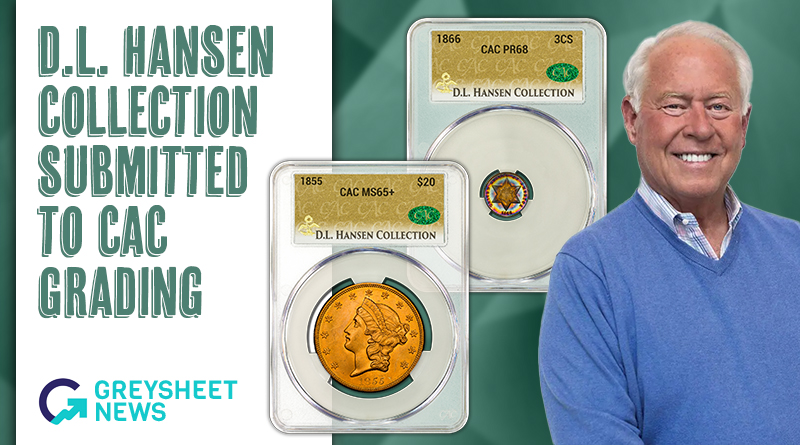
Prominent Collector Dell Loy Hansen Submitting His Historical Collection Of U.S. Coins To CAC Grading
8/8/2024
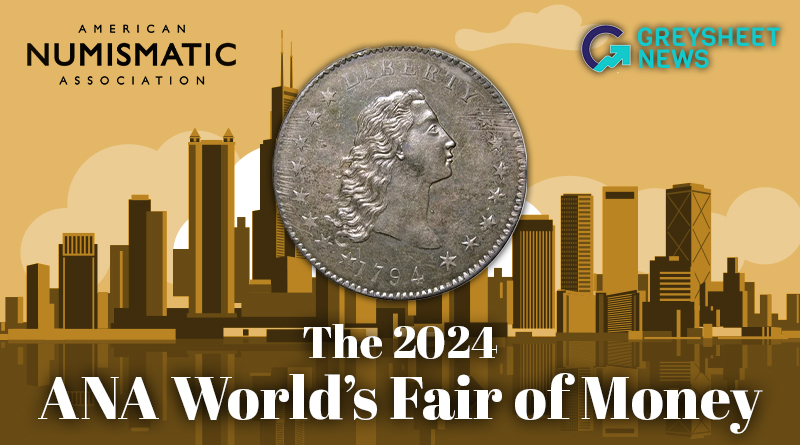
American Numismatic Association's Largest Coin Show, August 6-10 In Chicago
Dazzling rarities, free educational opportunities, family fun and more await at the Donald E. Stephens Convention Center
7/25/2024
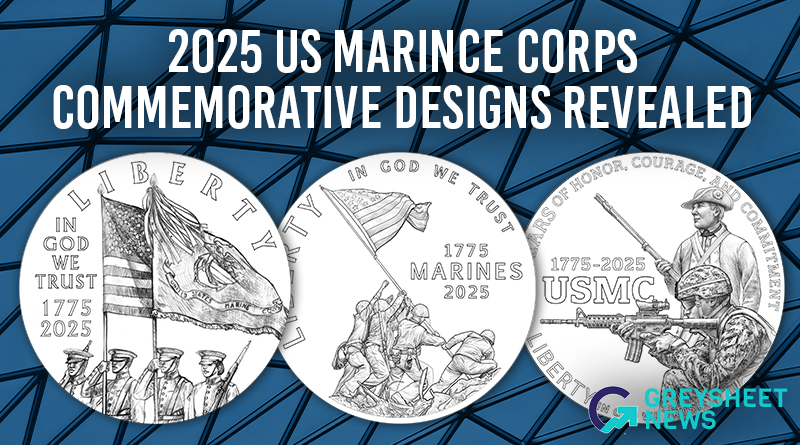
United States Mint Unveils Designs For The 2025 United States Marine Corps 250th Anniversary Commemorative Coin Program
The designs will be featured on a $5 gold coin, a $1 silver coin, and a half dollar clad coin.
7/23/2024
Events
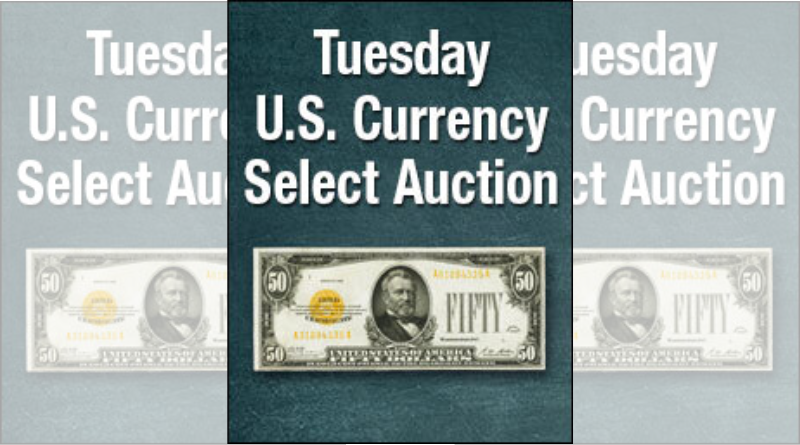
Heritage Auctions: US Currency Tuesday Select Auction
Location: Heritage Auctions
Tuesday, June 2, 2026
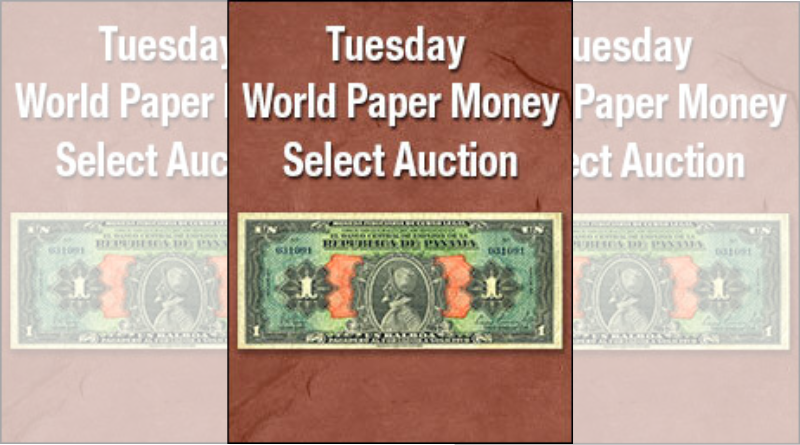
Heritage Auctions: World Paper Money Tuesday Select Auction
Location: Heritage Auctions
Tuesday, June 2, 2026
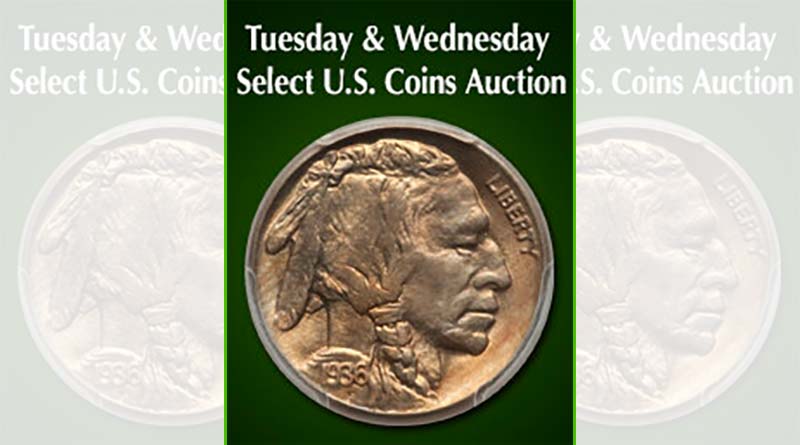
Heritage Auctions: US Coins Tuesday & Wednesday Select Auction
Location: Heritage Auctions
Wednesday, June 3, 2026