




 Whitman Expo



The unprecedented crossover underscores his personal efforts to combat “grade inflation.”
Thank you to our sponsors!
Go check them out!





Similar to the preceding 1884, this is a relatively high mintage affordable type coin. There were 3,790 originally struck in which most have survived. Common without cameo designations except for the finest of gems. Cameo coins are slightly scarcer with deep cameos being very rare.
Obverse Description
Lady Liberty with the word LIBERTY on her crown faces left with 13 stars around the periphery and the date positioned at the bottom center.
Reverse Description
Large V (roman numeral 5) is centered in the design surrounded by an ornate wreath with UNITED STATES OF AMERICA * CENTS * around the periphery. The motto E PLURIBUS UNUM appears near the top between the wreath and letters STATES OF AME.
Book Reference
Key to Collecting: Among regular-issue Liberty Head nickels, the 1885 is the key date—the date that everyone sought when collecting nickels from circulation became popular, beginning with Wayte Raymond’s “National” albums, Whitman boards, and other convenient holders that became available in the 1930’s. In that long-ago era, nickels of this design were plentiful in the channels of commerce, but those of 1885 were elusive due to their low mintage. Even so, many thousands were fished out of pocket change and elsewhere, most of these being well worn, down to grades that we call Good and Very Good today.
The numismatic community ignored the freshly minted circulation strikes of 1885. Those who collected by dates simply bought Proofs. Because of this, the survival of Mint State coins was a matter of rare chance, while the 3,790 Proofs were sold at a premium and were prized by their recipients.
Today, the 1885 nickel remains scarce in worn grades, rare in Mint State, but generally available in Proof format. The emphasis years ago on key dates has been eclipsed in recent decades by focus on the grade alone. Remarkably, today a Proof 1885 can be acquired at only a modest advance over a date that is more plentiful (in terms of overall mintage—Proofs plus circulation strikes). This is a change from the comment by Peters and Mohon in 1995, “Date pressure, due to the rarity of the business strike, keeps the price of Proofs at an unrealistic level for its rarity.”
A sharply struck gem Mint State 1885 nickel is a great find for the knowing connoisseur. Some Mint State coins, even certified as MS-65 or 66, have several obverse stars flat. In the meantime, Proofs handily fill the need of most buyers who seek high-grade examples of this prized date. The market price for Proofs seems to be taking a nap.
CIRCULATION STRIKES:
Characteristics and Appearance: Striking varies but is usually quite good, though some have several obverse stars flat at their centers. Some early strikes from fresh dies show parallel striae. The mint luster on some Uncirculated coins is satiny and attractive, while on others it is lifeless. Some have slightly prooflike surfaces. These are more available than those with deep, frosty luster.
Mint records indicate that in January 1886, for circulation-strike nickels of 1885, 29 obverse and 23 reverse dies were destroyed.2 If 29 obverse dies were actually used, this equates to an average of about 51,000 impressions per die. This was probably about the upper range of optimal use for the time, without creating surface problems.
Mintage and Distribution Notes: This represented the nadir of demand for the nickel five-cent piece during the early era of Liberty Head coinage. The slump, resulting from a nationwide economic chill, lasted until autumn 1886. Historian Neil Carothers commented,
Progress in metallurgy and mint processes eliminated the difficulties in coining nickel, and the attractive color and fine wearing qualities of the alloy made it a popular coinage material. After 1885 the mints had difficulty in keeping up with the demand. The street railway, the cheap cigar, the “notions counter,” sale of toys, candies, gum, cigarettes, and soda waters requiring payments of 5, 10, or 15 cents very rapidly increased.3
PROOF STRIKES
Characteristics and Appearance: Quality of striking varies, and some show weak- ness. Most, however, are fairly sharp. The Numismatist, April 1951, included a letter from Robert Scott, of Aurora, Illinois, noting that his “1885 Liberty Nickel in brilliant Proof condition . . . has a sizeable die break on the obverse side through the hair and out to the edge of the coin, at about 2:00 as for position.”
Mintage and Distribution Notes: Most examples show the 1 in the date very close to Liberty’s neck; fewer show the 1 distinctly separated with an area of Proof field. The 1885 nickel is justly advertised as a rare date in an overall context, but among Proofs it is one of the more plentiful coins in the series. Mint records indicate that in January 1886, for Proof nickels of 1885, one obverse and one reverse die were destroyed.4
Catalog Information
GSID:
2991
Designer:
Charles E. Barber
Obverse Designer:
Charles Barber
Obverse Lettering:
LIBERTY, 1885
Reverse Designer:
Charles Barber
Reverse Lettering:
V, UNITED STATES OF AMERICA, E PLURIBUS UNUM, CENTS
Weight (gr):
5 gr
Weight (oz):
0.1608 oz
Strike Type:
Proof
Diameter:
21.2
Coin Shape:
Round
Edge:
Plain
Coin Date:
1885
Denomination:
5c
Designation:
PR
Mint Location:
Philadelphia
Mintage:
3,790
Coinage Type:
Liberty head nickel
Coinage Years:
1883-1913
Composition:
75% copper; 25% nickel
PCGS #:
3883
Send Catalog Feedback
To: editor@greysheet.com
Subject: I would like to contribute catalog info to CDN for 1885 5c PR
Body: Referring page: http://dev.greysheet.com/prices/item/1885-five-cents-liberty-v-nickel-proof/gsid/2991 GSID: 2991 Title: 1885 5c PR
Subscribe to View
View more data, info, and visualizations. Get access to retail and wholesale pricing as well as auction data.
Coin Value History
1885 5c PR
Value By Grade
1885 5c PR
CPG (retail) values
Currency
Grade Range
Grading Authority
Sort by
Pricing
Values
Greysheet & CPG® Values
| Grade | CAC | CPG Value (Retail) | Greysheet Price (Wholesale) |
|---|---|---|---|
| PR68 |

|
$12,000 | $1,234 |
| PR68 | - | $9,000 | $1,234 |
| PR67 |
|
$1,234 | $1,234 |
| PR67 | - | $1,234 | $1,234 |
| PR66 |
|
$1,234 | $1,234 |
| PR66 | - | $1,234 | $1,234 |
| PR65 |
|
$1,234 | $1,234 |
| PR65 | - | $1,234 | $1,234 |
| PR64 |
|
$1,234 | $1,234 |
| PR64 | - | $1,234 | $1,234 |
| PR63 |
|
$1,234 | $1,234 |
| PR63 | - | $1,234 | $1,234 |
| PR62 |
|
$1,234 | $1,234 |
| PR62 | - | $1,234 | $1,234 |
| PR61 |
|
$1,234 | $1,234 |
| PR61 | - | $1,234 | $1,234 |
| PR60 |
|
$1,234 | $1,234 |
| PR60 | - | $1,234 | $1,234 |
Liberty (V) Nickel 5c No Cents, 1883 PR [Type]
![Liberty (V) Nickel 5c No Cents, 1883 PR [Type]](https://images.greysheet.com/ctc/catalog/NCobvPR.jpg?MaxWidth=200&Mode=Pad&Scale=UpscaleCanvas&format=webp)
Worth: $200 – $2,000
1883 5c No Cents PR

Worth: $200 – $2,000
Liberty (V) Nickel 5c With Cents, 1883-1912 PR [Type]
![Liberty (V) Nickel 5c With Cents, 1883-1912 PR [Type]](https://images.greysheet.com/ctc/catalog/1900ovvPR.jpg?MaxWidth=200&Mode=Pad&Scale=UpscaleCanvas&format=webp)
Worth: $110 – $7,000
1883 5c Cents PR

Worth: $175 – $1,680
1884 5c PR

Worth: $110 – $1,272
1886 5c PR

Worth: $350 – $24,000
1887 5c PR

Worth: $110 – $2,500
1888 5c PR

Worth: $110 – $8,160
1889 5c PR

Worth: $110 – $7,200
1890 5c PR

Worth: $110 – $3,600
1891 5c PR

Worth: $110 – $3,600
1892 5c PR

Worth: $110 – $3,000
1893 5c PR

Worth: $110 – $1,500
1894 5c PR

Worth: $110 – $1,750
1895 5c PR

Worth: $110 – $3,600
1885 5C PR65 NGC. CDN: $1,050 Whsle. Bid for NGC/PCGS PR65. Mintage 3,790. ...
$1,342
1885 5C PR66 NGC. CDN: $1,200 Whsle. Bid for NGC/PCGS PR66. Mintage 3,790. ...

$1,380
1885 5C PR61 NGC. NGC Census: (14/690). Mintage 3,790. ...
$840
1885 5C PR67 PCGS. CAC. CAC Population: (21/3). Mintage 3,790. ...

$2,280
1885 5C PR64 PCGS. Mintage 3,790. ...

$1,020
1885 5C -- Environmental Damage -- ANACS Details. Proof 60. Mintage 3,790. ...

$750
1885 5C PR68 PCGS. JD-1, R.1....

$8,400
1885 5C PR62 PCGS. PCGS Population: (48/960). NGC Census: (30/633). CDN: $875 Whsle. Bid for NGC/PCGS PR62. Mintage 3,790. ...

$840
1885 5C PR63 NGC. NGC Census: (67/566). PCGS Population: (144/811). CDN: $950 Whsle. Bid for NGC/PCGS PR63. Mintage 3,790. ...

$1,320
1885 5C PR58 PCGS. CAC. PCGS Population (4/857). NGC Census: (0/640). Mintage: 3,790. Numismedia Wsl. Price for problem fre...

$805
1885 5C --Cleaned--ANACS.Net PR55. PCGS Population: (0/777). NGC Census: (0/549). Mintage: 3,790....
$862
1885 5C PR65 PCGS. CDN: $1,050 Whsle. Bid for NGC/PCGS PR65. Mintage 3,790. ...

$1,110
1885 5C PR66 PCGS. Housed in a Generation 2.2 green label holder. Mintage 3,790....

$1,560
1885 5C PR61 PCGS. Mintage 3,790....

$900
1885 5C PR67 PCGS. PCGS Population: (32/4 and 6/0+). Mintage 3,790. ...

$2,640
1885 5C PR64 PCGS. PCGS Population: (345/474). NGC Census: (220/355). CDN: $960 Whsle. Bid for NGC/PCGS PR64. Mintage 3,790...

$960
1885 5C PR60 NGC. NGC Census: (4/653). PCGS Population: (7/974). CDN: $750 Whsle. Bid for problem-free NGC/PCGS PR60. Minta...

$720
5C 1885 PCGS PR68 CAC

$16,450
1885 5C PR62 ANACS. NGC Census: (24/619). PCGS Population (38/846). Mintage: 3,790. Numismedia Wsl. Price for problem free ...

$881
1885 5C PR63 PCGS. PCGS Population: (145/808). NGC Census: (67/560). CDN: $950 Whsle. Bid for NGC/PCGS PR63. Mintage 3,790....

$930
Greysheet News
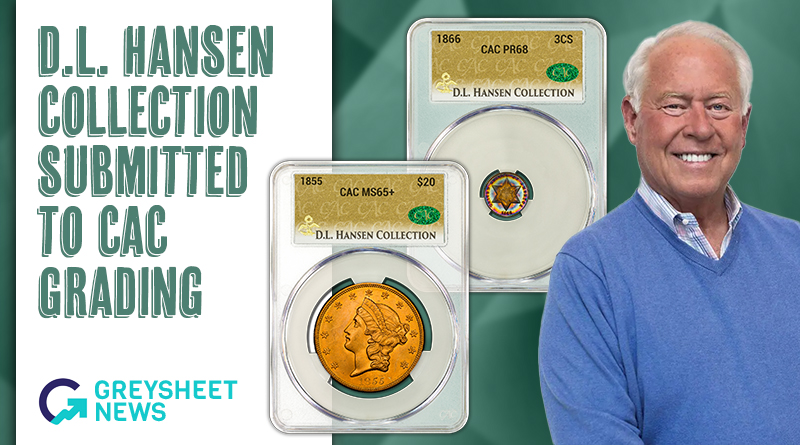
Prominent Collector Dell Loy Hansen Submitting His Historical Collection Of U.S. Coins To CAC Grading
8/8/2024
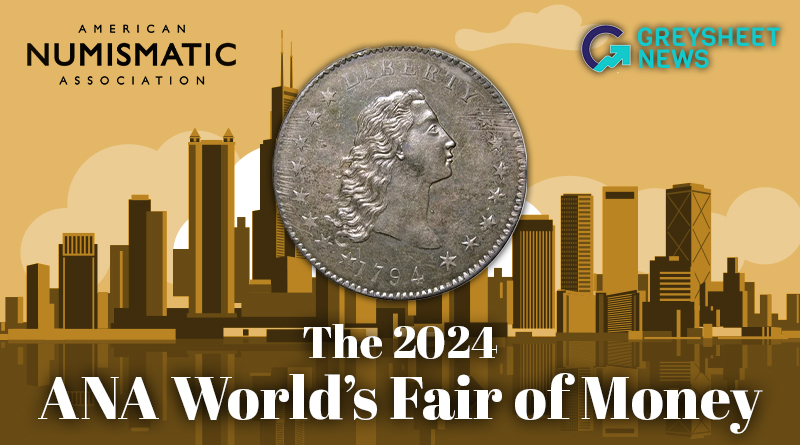
American Numismatic Association's Largest Coin Show, August 6-10 In Chicago
Dazzling rarities, free educational opportunities, family fun and more await at the Donald E. Stephens Convention Center
7/25/2024
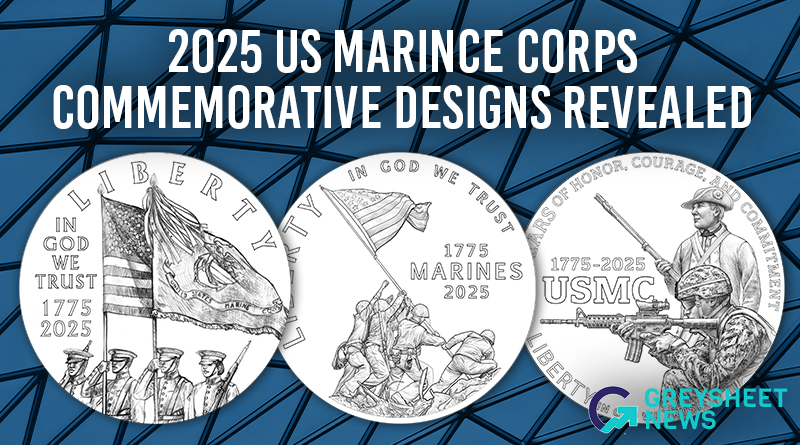
United States Mint Unveils Designs For The 2025 United States Marine Corps 250th Anniversary Commemorative Coin Program
The designs will be featured on a $5 gold coin, a $1 silver coin, and a half dollar clad coin.
7/23/2024
Events
Heritage Auctions: US Currency Tuesday Select Auction
Location: Heritage Auctions
Tuesday, June 2, 2026
Heritage Auctions: World Paper Money Tuesday Select Auction
Location: Heritage Auctions
Tuesday, June 2, 2026
Heritage Auctions: US Coins Tuesday & Wednesday Select Auction
Location: Heritage Auctions
Wednesday, June 3, 2026