




 Whitman Expo



The unprecedented crossover underscores his personal efforts to combat “grade inflation.”
Thank you to our sponsors!
Go check them out!





The first year of the V Nickels in which this issue had the word CENTS replaced by the phrase E PLURIBUS UNUM. This change made the issue more vulnerable to potential alterations (gold plated to look like a Half Eagle). Thus ending the design in well under a year. From a small mintage of 5,219 yet common without cameo designations. Cameo pieces are scarce with deep cameos being quite rare and desirable.
Obverse Description
Lady Liberty with the word LIBERTY on her crown faces left with 13 stars around the periphery and the date positioned at the bottom center.
Reverse Description
Large V (roman numeral 5) is centered in the design surrounded by an ornate wreath with UNITED STATES OF AMERICA and E PLURIBUS UNUM around the periphery.
Book References
Bronze or No L: These are typically called either 1864 No L or 1864 Bronze cents. Older collectors and grading services are accustomed to labeling this as Bronze. This separates these coins from the copper-nickel cents. The design change to the 1864 With L is assumed. In the past ten years it has been also listed as the No L, which separates the coin from the With L issue. The change from the copper-nickel alloy is assumed.
1864, No L, Cent Production: On April 22 a bill authorizing the change to a bronze cent was signed into law. This law also made the use of all private coinage illegal. The first bronze cents were produced on May 13 and released into circulation on May 20. There was no reason to make new dies for this coinage, as the Mint still had on hand many of the dies made at the beginning of the year for the copper-nickel cent coinage.
The coins were an immediate success. This cent composition remained basically unchanged, except for the emergency issues of World War II, until 1982, when it was changed to copper-coated zinc.
Survivability: These coins were released into circulation and stayed there for quite a while. They were only removed from circulation when they became too worn or damaged to be useful as coinage. Today they are mostly found in Very Good condition or lower.
Collecting Challenges: This issue is a one-year type, but this seems to be overlooked by most type collectors. As such, type collector demand is not a big factor in the pricing of these coins. These were mostly struck with dies used to strike the copper-nickel cents earlier in the year, and most coins show mushy details with numerous die clashes. Only about one in 30 coins was struck from fresh dies. The new dies produced crisp early-die-state pieces, which will have very sharp details. While many collectors will overlook die state when selecting coins, it may be important enough to spend the extra time to locate these. It may not cost much more, and the eye appeal of these pieces will more than make up for the time spent looking.
Collecting Circulated Pieces: The optimal collecting grade for circulated coins is AU-50. The vast majority is found in low grade so it is important to buy the best you can for your budget. Early-die-state pieces may occasionally be found, and should be bought when encountered.
Collecting Mint State Pieces: The optimal collecting grade for Mint State coins is MS-65RB. This is one of the most common issues of the Civil War years. In Mint State this date is no more common than any of the copper-nickel issues, but it can be found at a much lower price. Finding examples with eye appeal is recommended. Common, early-die-state pieces are very hard to find, as are ones with even red-brown color. Pieces with full mint red color are hard to find with eye appeal. Trying to find an early-die-state example is quite a challenge.
Collecting Proof Issues: The typically reported mintage is 150, but this is unreasonably low. While this issue is quite scarce, it always seems to be available. More than 200 examples have been recorded graded by ANACS, NGC, and PCGS combined. Even with duplicate submissions it seems unlikely that the mintage is anywhere near 150. A more realistic estimate may be 300. This issue is found mostly brown or with very little red present. Examples with even color with deep mirrors are most desirable for the issue. Full red examples are very diffcult to find and are very expensive. Examples with cameo contrast are extremely rare and are usually priced with a significant premium.
VARIETIES:
The best variety is the Snow-4 doubled die, with the doubling most prominent on LIBERTY. It was discovered in 1991 and is widely known, yet few examples have turned up. Very few examples are known. This is a coin that can make your day if you find one. There are Doubled-Die Obverse, Snow-4 only seven other varieties reported, mostly minor repunched dates. The other standout variety for this date is Snow-11, which has circular lathe lines over the face on the obverse.
An 1864 two-cent piece variety is known with clash marks from the obverse Indian Head cent die! This raises the question: does an 1864 Indian Head cent exist with the corresponding twocent piece clash marks? None have yet been found.
Key to Collecting: This historical and fascinating variety was saved in quantity at the time of issue. Today, examples are common in all Mint State grade levels. Striking sharpness can vary considerably. Many have die cracks and other interesting features. There are enough around for just about everyone interested. Such a coin is a fascinating addition to any collection, for few issues have more remarkable stories. Several youngsters who later become prominent professional numismatists, Farran Zerbe and Arthur M. Kagin among them, became interested in coin collecting after obtaining one of these curious nickels.
CIRCULATION STRIKES:
Characteristics and Appearance: The dies were not widely studied until the 1960’s. Of the 630 obverse dies used to coin both types of 1883 Liberty Head nickel, an estimated 200 or more were used exclusively for this issue. Some 242 reverse dies, all of Reverse Style B, are known to have been made. So many die pairs were used that no one rule can fit all. The striking of details ranges from weak to sharp, but is usually above average, with full stars and with decent details on the reverse, but with some lightness on the corn. The luster is usually satiny, sometimes slightly prooflike, but not often deeply frosty. Die cracks are very common on this issue; some are so extensive it seems surprising that the dies held together. This letter from Herman K. Crofoot, published in the July 1956 issue of The Numismatist, reflects this:
In starting over a quantity of 1883 No CENTS five-cent pieces I find one with a die break joining the UN of UNITED with the rim of the coin, first I have seen. I would like very much to hear from anyone who has a similar die break so that I may compile a list of them.
Of those 630 obverse dies, probably not all were used. If all were employed for the combined coinage of 21,500,000 for both types, that would indicate a life of about 34,000 impressions per die. Most dies were probably retired due to cracking, not wear.
Mintage and Distribution Notes: As discussed in the narrative above, this issue was eagerly snapped up by the public and was saved in quantity.
PROOF STRIKES
Characteristics and Appearance: Proofs are usually well struck and with good contrast.
Mintage and Distribution Notes: Reverse Style A (with repunched S in PLURI- BUS; rare) and Reverse Style B (usually seen). By March 31, Proof production amounted to 3,519 coins, reflecting the tremendous demand for this curious variety. By June 30, an additional 1,700 were delivered. This accounts for the figure of 5,219 commonly quoted, as here. R.W. Julian, in “Notes on U.S. Proof Coinage” (1966), cites 2,850 With CENTS Proofs delivered on June 26, with 1,000 more on October 11, and a further 2,993 by December 31. These figures are somewhat confusing as they indicate a great demand for the With CENTS, a sentiment that seems unlikely and is questioned by Breen in his Proof coins encyclopedia. It would seem reasonable to me that much of the With CENTS mintage quantity should be moved to the Without CENTS, an action that seems to be verified by market appearances and certification data. Likely, collector demand for Without CENTS Proofs lasted throughout the year, and orders for such coins were filled. Breen states that at least seven Proof obverse dies were used, indicating a large coinage. This includes varieties with the 1 close to the neck and distant from the denticles, another with the 1 close to the denticles, and several with the digit about centered. In any event, for a time in 1883 the Mint contin- ued to strike and sell all three designs of nickels of the year, the Shield and both types of the Liberty Head.1
VARIETIES:
Repunched Date—FS-1301. As described in the Fivaz-Stanton book, Cherrypickers’ Guide to Rare Die Varieties, the lower left serif of the 1 in the date extends outward from the lower left side of the first 8. URS-4.
Catalog Information
GSID:
2982
Designer:
Charles E. Barber
Obverse Designer:
Charles Barber
Obverse Lettering:
LIBERTY, 1883
Reverse Designer:
Charles Barber
Reverse Lettering:
V, UNITED STATES OF AMERICA, E PLURIBUS UNUM
Weight (gr):
5 gr
Weight (oz):
0.1608 oz
Strike Type:
Proof
Diameter:
21.2
Coin Shape:
Round
Edge:
Plain
Variety:
No Cents
Coin Date:
1883
Denomination:
5c
Designation:
PR
Mint Location:
Philadelphia
Mintage:
5,219
Coinage Type:
Liberty head nickel
Coinage Years:
1883
Composition:
75% copper; 25% nickel
PCGS #:
83878
Send Catalog Feedback
To: editor@greysheet.com
Subject: I would like to contribute catalog info to CDN for 1883 5c No Cents PR CAM
Body: Referring page: http://dev.greysheet.com/prices/item/1883-five-cents-cameo-surfaces-no-cent-liberty-v-nickel-proof/gsid/2982 GSID: 2982 Title: 1883 5c No Cents PR CAM
Subscribe to View
View more data, info, and visualizations. Get access to retail and wholesale pricing as well as auction data.
Coin Value History
1883 5c No Cents PR CAM
Value By Grade
1883 5c No Cents PR CAM
CPG (retail) values
Currency
Grade Range
Grading Authority
Sort by
Pricing
Values
Greysheet & CPG® Values
| Grade | CAC | CPG Value (Retail) | Greysheet Price (Wholesale) |
|---|---|---|---|
| PR67 |

|
$3,750 | $1,234 |
| PR67 | - | $2,500 | $1,234 |
| PR66 |
|
$1,234 | $1,234 |
| PR66 | - | $1,234 | $1,234 |
| PR65 |
|
$1,234 | $1,234 |
| PR65 | - | $1,234 | $1,234 |
| PR64 |
|
$1,234 | $1,234 |
| PR64 | - | $1,234 | $1,234 |
| PR63 |
|
$1,234 | $1,234 |
| PR63 | - | $1,234 | $1,234 |
Liberty (V) Nickel 5c No Cents, 1883 PR [Type]
![Liberty (V) Nickel 5c No Cents, 1883 PR [Type]](https://images.greysheet.com/ctc/catalog/NCobvPR.jpg?MaxWidth=200&Mode=Pad&Scale=UpscaleCanvas&format=webp)
Worth: $200 – $2,000
1883 5c No Cents PR

Worth: $200 – $2,000
Liberty (V) Nickel 5c With Cents, 1883-1912 PR [Type]
![Liberty (V) Nickel 5c With Cents, 1883-1912 PR [Type]](https://images.greysheet.com/ctc/catalog/1900ovvPR.jpg?MaxWidth=200&Mode=Pad&Scale=UpscaleCanvas&format=webp)
Worth: $110 – $7,000
1883 5c Cents PR

Worth: $175 – $1,680
1884 5c PR

Worth: $110 – $1,272
1885 5c PR

Worth: $750 – $10,000
1886 5c PR

Worth: $350 – $24,000
1887 5c PR

Worth: $110 – $2,500
1888 5c PR

Worth: $110 – $8,160
1889 5c PR

Worth: $110 – $7,200
1890 5c PR

Worth: $110 – $3,600
1891 5c PR

Worth: $110 – $3,600
1892 5c PR

Worth: $110 – $3,000
1893 5c PR

Worth: $110 – $1,500
1894 5c PR

Worth: $110 – $1,750
1883 5C No Cents, PR65 Cameo PCGS. Mintage 5,219. ...

$690
1883 5C No Cents, PR64 Cameo PCGS. PCGS Population: 60 in 64 (2 in 64+) Cameo, 277 finer (11/25). Mintage 5,219. ...

$528
1883 5C No Cents, PR66 Cameo PCGS. CAC. CAC: 61 in 66, 16 finer (9/25). Mintage 5,219....

$1,248
1883 5C No Cents PR67 Cameo PCGS. Breen-2532....

$2,160
1883 5C No Cents PR63 Cameo PCGS. PCGS Population (5/179). NGC Census: (6/173). (#83878) From The Joe Scialdone Collec...

$322
1883 5C No Cents PR65 Cameo PCGS. Mintage 5,219. ...

$564
1883 5C No Cents PR64 Cameo PCGS. PCGS Population: (55/256). Mintage 5,219. ...

$504
1883 5C No Cents, PR66 Cameo PCGS. CAC. CAC: 61 in 66, 16 finer (10/25). Mintage 5,219....

$900
1883 5C No Cents PR67 Cameo NGC. NGC Census: (30/0). Mintage 5,219. ...

$2,160
1883 5C No Cents PR63 Cameo NGC. Brilliant throughout ...
$247
1883 5C No Cents PR65 Cameo NGC. Mintage 5,219. ...

$600
1883 5c NGC/CAC Proof 64 CAM (No Cents)

$575
1883 5C No Cents PR66+ Cameo PCGS. CAC. CAC Population: (61/14). Mintage 5,219. ...

$1,860
1883 5C No Cents PR67 Cameo PCGS. CAC....

$3,360
1883 5C No Cents PR 63 Cameo NGC. ...
$242
1883 5C No Cents PR65 Cameo NGC. Mintage 5,219. ...

$576
1883 5C No Cents PR64 Cameo NGC. NGC Census: (69/192). PCGS Population: (52/257). PR64. Mintage 5,219. ...

$264
1883 5C No Cents PR66 Cameo PCGS. Mintage 5,219. ...

$690
1883 5C No Cents PR67 Cameo NGC. NGC Census: (29/0). PCGS Population: (35/0). PR67. Mintage 5,219....

$3,360
1883 5C No Cents PR65 Cameo NGC. NGC Census: (91/104). PCGS Population: (109/143). PR65. Mintage 5,219. ...

$601
Greysheet News
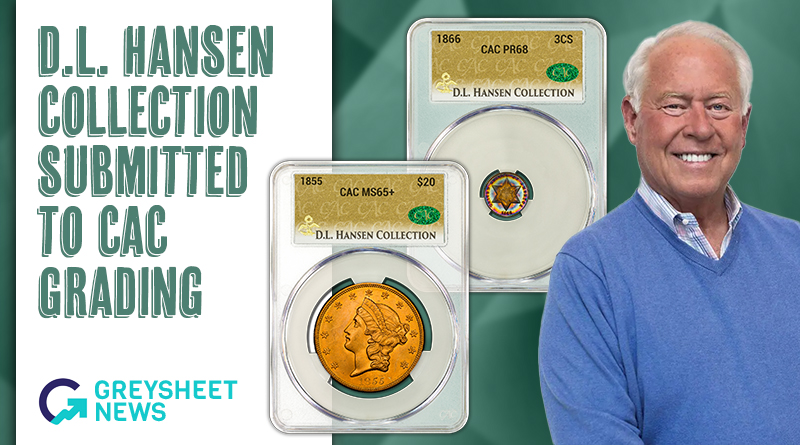
Prominent Collector Dell Loy Hansen Submitting His Historical Collection Of U.S. Coins To CAC Grading
8/8/2024
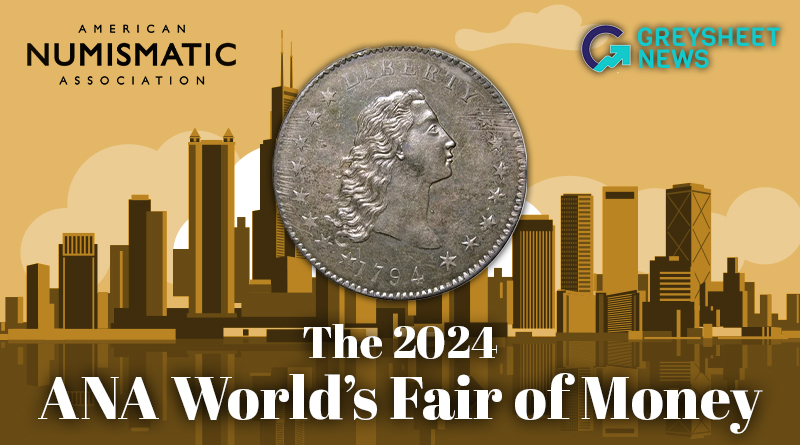
American Numismatic Association's Largest Coin Show, August 6-10 In Chicago
Dazzling rarities, free educational opportunities, family fun and more await at the Donald E. Stephens Convention Center
7/25/2024
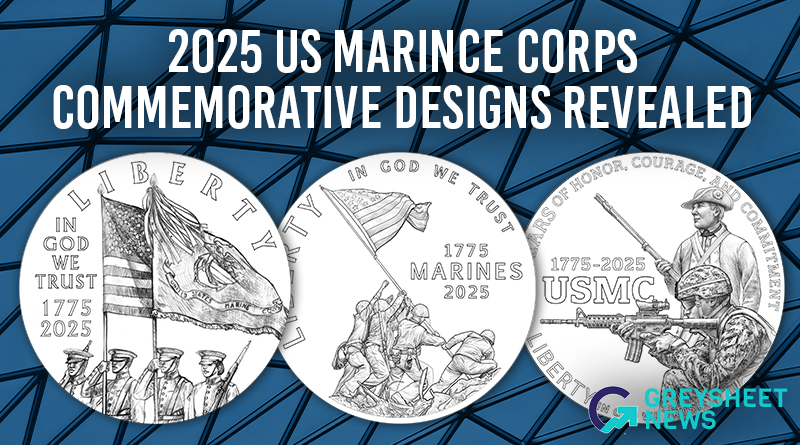
United States Mint Unveils Designs For The 2025 United States Marine Corps 250th Anniversary Commemorative Coin Program
The designs will be featured on a $5 gold coin, a $1 silver coin, and a half dollar clad coin.
7/23/2024
Events
Heritage Auctions: US Currency Tuesday Select Auction
Location: Heritage Auctions
Tuesday, June 2, 2026
Heritage Auctions: World Paper Money Tuesday Select Auction
Location: Heritage Auctions
Tuesday, June 2, 2026
Heritage Auctions: US Coins Tuesday & Wednesday Select Auction
Location: Heritage Auctions
Wednesday, June 3, 2026