




 Whitman Expo



The unprecedented crossover underscores his personal efforts to combat “grade inflation.”
Thank you to our sponsors!
Go check them out!





The 1877 Indian Cent is a famous key date known and appreciated throughout the Numismatic community. All 1877's come from one single reverse die and a mintage of just 852,500 (second lowest) which is very low for the series. It is scarce and collectible in all grades even the poorest of them. High-end VF's through low-end AU's are very scarce. Nice AU's into Mint State are rare and the finest gems, especially red ones, are extremely rare.
Obverse Description
A portrait bearing the likeness of a Native American in full headdress framed by the words UNITED STATES OF AMERICA around the periphery. The date is centered at the bottom under the portrait.
Reverse Description
The reverse bears the denomination of ONE CENT in the center surrounded by a wreath bearing a ribbon with arrows tied in at the bottom center.
Book Reference
1877 Cent Production: This is the rarest date in the Indian Head cent series. The low mintage of 852,500 accounts for its relative rarity, but the real reason for its scarcity is tied to the economy of the time and its effects on the redemption program called for in the Mint Act of 1871.
Since 1873 the country had been suffering from a severe depression. By 1877, 27% of the working population was jobless, and those who did have jobs saw their wages cut, in many cases nearly in half.
Other major events made this one of the toughest years, economically, since the Civil War. The reconstruction of the South was terminated as a bargaining chip in the controversial election of Rutherford B. Hayes. A nationwide railroad strike crippled the economy further and brought with it the birth of the modern labor movement.
This had a very important impact on the redemption of the minor coinage. Huge amounts of these coins flooded back to the Mint. Enough nickel three-cent and fivecent pieces were turned in that, except for Proofs, the Mint stopped production of those denominations. Nearly ten million cents were turned in to the Mint this year, of which 9,821,500 were reissued (see further discussion under 1871). In addition to the reissues, the number of cents minted was the smallest since 1823.
Survivability: Even with a mintage close to one million pieces, the number of surviving 1877 cents is unusually low. Only two obverse dies and a single reverse die are known on circulation-strike examples. The single reverse die is of the Shallow N style last used in 1872. It suffered only a minor die clash, and no die cracks, over its lifetime striking of 1877 cents. The average die life during this era has been calculated to be 150,000 to 250,000 pieces. This “miracle die” could not possibly have struck all the cents minted this year without totally deteriorating or busting into pieces. There might have been more than one reverse die used but presently no others are known. The 1878 Mint report says that three obverse and six reverse dies were in stock for coinage of cents, but then says that only two reverse dies were used, and the four remaining dies were used in 1878. This additional die may be one of the Proof dies.
There are a few possibilities for the missing coins, including: 1. Perhaps the Mint record shows examples struck with 1876 dies early in
1877. This practice was common in the early 1800’s but was not standard procedure in 1877. 2. Perhaps three-fourths of the original mintage was destroyed, leaving
not one coin from additional die pairs as evidence of their existence. The fact remains that the purported original mintage of this date appears to be way too high compared to the number of observed surviving examples. An upper estimate of 200,000 coins struck seems more accurate. Very few of these were saved at the time. Taken with the ten million reissued cents, this estimated mintage amounts to only 5% of the total released by the Mint this year. This coin was scarce from the day it was issued.
Collecting Challenges: This is the top coin on every Indian Head cent collector’s list. Due to the high cost and diffculty in finding acceptable coins, many collectors reduce their standards and buy anything to fill the void. I suggest waiting until the right coin becomes available. Cost should be a secondary consideration. Attractive coins will serve their owners very well when it comes time to sell. This date is always expensive.
Collecting Circulated Pieces: The optimal collecting grade for circulated coins is F-12. It is very diffcult to find accurately graded examples, especially in Extremely Fine or About Uncirculated grades. Dealers and grading services tend to grade this date liberally because of its rarity. Properly graded coins often carry a significant premium over pieces reported in pricing guides.
The diamond detail on the lower ribbon is usually shallow and is quickly worn down to only three diamonds. It is very diffcult to find full-diamond examples in circulated condition. When found they command an added premium.
Problems such as rim dents, scratches, and unnatural color may be acceptable if the price reflects the problem. If fully priced, wait for a problem-free example. Many coins, actually Fine or Very Fine, have been wire-brushed to simulate mint luster. These are dangerous to buy, as they have a very low resale value.
Counterfeits: Counterfeits are numerous for this date. Luckily, there are only two obverse dies and one reverse die known on authentic pieces. If the diagnostics for these are known, the counterfeits will be easy to spot. Coins with altered dates are typically altered from 1879- or 1875-dated coins. Both these dates always have the Bold N reverse. False-die counterfeits are typically seen with a reverse die that was transferred from a common-date coin, also with the Bold N reverse. Even though the majority of counterfeits are found with the Bold N reverse, this should not condemn all 1877 cents found with this style reverse. The Proofs of this year all have the Bold N reverse, so it is possible that a circulated Proof might be mistaken for a fake. The best protection is to buy coins certified and authenticated by a major grading service. It is strongly recommended that you purchase this date from a reputable dealer who offers a guarantee, has a return policy, and is easy to locate. This will protect your investment.
Collecting Mint State Pieces: The optimal collecting grade for Mint State coins is MS-63RB. Look for well-struck examples with even coloration. Although the diamond detail for this issue is typically shallow, it is usually fully visible on well-struck Uncirculated coins. The best indicator for a full strike is full feather tips. Minor problems are acceptable if they are reflected in the price. Problem-free examples are highly sought after and will generally get higher premiums than expected.
Although the 1872 and 1871 cents are rarer in full red condition, this date is much pricier due to higher collector demand. Beware of cleaned examples. Because of the great difference between red-brown and full red examples, there is a temptation for unscrupulous individuals to lighten the color in an attempt to get a higher premium.
Perhaps the finest 1877 Indian Head cent is the example pictured on page 131 from the collection of Stewart Blay. This coin set a record price when it sold uncertified for $71,300 in Stack’s Americana sale, January 1999. Today it is graded MS-66RD by PCGS. Stewart Blay can easily boast of having the finest collection of small cents (Flying Eagle, Indian Head, and Lincoln) ever assembled.
Collecting Proof Issues: All Proofs of this year are struck with Bold N reverse dies. Three obverse dies were used along with three reverse dies. One of the reverse dies has a bulging right pennant of the T in CENT. This is a die first used in 1872 and is found on some examples from all dates from that year until 1878.
The actual mintage of Proof cents for this year (and all years prior to 1878, for that matter) is unknown. Walter Breen in his 1977 Complete Encyclopedia of U.S. and Colonial Proof Coins gave a figure of 510+ coins as the mintage. Research by R.W. Julian revised the estimate to 900. The 510 figure is the quantity of complete sets sold, not including gold issues. At least 400 smaller sets of only the nickel and copper coins were also distributed. These numbers represent coins sold, not produced. It is likely that at least 1,500 coins were produced, with the remaining unsold pieces being destroyed or released into circulation. The quantity of survivors in population reports is similar to the 1876 issue.
Examples are usually readily available, and these are priced much higher than other Proof issues of similar rarity due to date-collector demand. However, prices are much lower than the Mint State circulation-strike issue. Some collectors will substitute a Proof 1877 for a circulation strike if the price differential is too great.
The issue is typically found with slightly subdued mirrors. One of the die pairings is weak on the right side. Some are found singly struck; these will have rounded edges. (Proofs are normally double struck, giving them very sharp edges.) Enough coins are usually available for collectors to be able to find a suitable example, without problems. Gems are also available, but cameo examples are quite scarce.
VARIETIES:
There are no varieties known for this year. Collectors might want to acquire both the Proof and circulation-strike issue as an example of the Bold N and Shallow N reversedesign styles.
An example is known struck on a copper-nickel one-centavo piece from Venezuela. It is graded MS-61 by NGC. In 1876, ten million one-centavo coins were struck for the Venezuelan government at the Philadelphia Mint.
Catalog Information
GSID:
1345
Designer:
James B. Longacre
Obverse Designer:
James B. Longacre
Obverse Lettering:
UNITED STATES OF AMERICA, 1877
Reverse Designer:
James B. Longacre
Reverse Lettering:
ONE CENT
Weight (gr):
3.11 gr
Weight (oz):
0.11 oz
Strike Type:
Business
Diameter:
19
Coin Shape:
Round
Edge:
Plain
Coin Date:
1877
Denomination:
1c
Designation:
MS
Mint Location:
Philadelphia
Mintage:
852,500
Coinage Type:
Indian Head Cent
Coinage Years:
1864-1909
Composition:
95% copper; 5% zinc & tin
PCGS #:
2128
Send Catalog Feedback
To: editor@greysheet.com
Subject: I would like to contribute catalog info to CDN for 1877 1c MS RB
Body: Referring page: http://dev.greysheet.com/prices/item/1877-united-states-indian-cent-red-brown-surfaces/gsid/1345 GSID: 1345 Title: 1877 1c MS RB
Subscribe to View
View more data, info, and visualizations. Get access to retail and wholesale pricing as well as auction data.
Coin Value History
1877 1c MS RB
Value By Grade
1877 1c MS RB
CPG (retail) values
Currency
Grade Range
Grading Authority
Sort by
Pricing
Values
Greysheet & CPG® Values
| Grade | CAC | CPG Value (Retail) | Greysheet Price (Wholesale) |
|---|---|---|---|
| MS66 |

|
$34,500 | $1,234 |
| MS66 | - | $29,000 | $1,234 |
| MS65 |
|
$1,234 | $1,234 |
| MS65 | - | $1,234 | $1,234 |
| MS64 |
|
$1,234 | $1,234 |
| MS64 | - | $1,234 | $1,234 |
| MS63 |
|
$1,234 | $1,234 |
| MS63 | - | $1,234 | $1,234 |
| MS62 |
|
$1,234 | $1,234 |
| MS62 | - | $1,234 | $1,234 |
| MS61 |
|
$1,234 | $1,234 |
| MS61 | - | $1,234 | $1,234 |
Indian Head Cent 1c 1859, Reverse of 1858 MS [Type]
![Indian Head Cent 1c 1859, Reverse of 1858 MS [Type]](https://images.greysheet.com/ctc/catalog/Indian-Cent.jpg?MaxWidth=200&Mode=Pad&Scale=UpscaleCanvas&format=webp)
Worth: $5 – $25,000
1859 1c MS

Worth: $5 – $25,000
Indian Head Cent 1c Copper Nickel, 1860-1864 MS [Type]
![Indian Head Cent 1c Copper Nickel, 1860-1864 MS [Type]](https://images.greysheet.com/ctc/catalog/1863-obv.jpg?MaxWidth=200&Mode=Pad&Scale=UpscaleCanvas&format=webp)
Worth: $6 – $72,000
1860 1c Round Bust MS

Worth: $6 – $18,000
1860 1c Pointed Bust MS

Worth: $7 – $28,800
1861 1c MS

Worth: $14 – $72,000
1862 1c MS

Worth: $6 – $72,000
1863 1c MS

Worth: $6 – $18,750
1864 1c Copper Nickel MS

Worth: $14 – $20,000
Indian Head Cent 1c Bronze, 1864-1909 MS BN [Type]
![Indian Head Cent 1c Bronze, 1864-1909 MS BN [Type]](https://images.greysheet.com/Ctc/CatalogEntry/auctions_stacksbowers_com_lots_view_3_j4gae-0.20200712022457246.jpg?MaxWidth=200&Mode=Pad&Scale=UpscaleCanvas&format=webp)
Worth: $1 – $1,688
Indian Head Cent 1c Bronze, 1864-1909 MS RB [Type]
![Indian Head Cent 1c Bronze, 1864-1909 MS RB [Type]](https://images.greysheet.com/Ctc/Catalog/20250811/m7z2wm7kefb0wx6umy1d.webp?MaxWidth=200&Mode=Pad&Scale=UpscaleCanvas&format=webp)
Worth: $44 – $2,000
Indian Head Cent 1c Bronze, 1864-1909 MS RD [Type]
![Indian Head Cent 1c Bronze, 1864-1909 MS RD [Type]](https://images.greysheet.com/Ctc/Catalog/20200826/ha_com_131705_30309-0.20200826140250544.jpg?MaxWidth=200&Mode=Pad&Scale=UpscaleCanvas&format=webp)
Worth: $110 – $120,000
1864 1c Bronze MS BN

Worth: $10 – $625
1864 1c Bronze MS RB

Worth: $160 – $11,500
1864 1c Bronze MS RD

Worth: $300 – $18,000
1877 1C MS64 Red and Brown PCGS. Snow-1....

$11,100
1877 1C MS62 Red and Brown PCGS. Snow-2....
$6,900
1877 1C MS63 Red and Brown PCGS....

$7,200
1877 1C MS65 Red and Brown PCGS....

$15,600
1877 1c PCGS/CAC MS66 RB (Eagle Eye Photo Seal)

$31,000
1877 1C -- Cleaned -- PCGS Genuine. Fine Details. NGC Census: (0/194). PCGS Population: (0/412). Mintage 852,500....

$646
1877 1C Genuine PCGS. ...

$3,220
1877 1C VG10 PCGS. PCGS Population (3/337). NGC Census: (0/368). Mintage: 852,500. (#2128)...

$949
$5,060
$3,335
1877 1C AU50 PCGS. ...

$2,530
1877 1C, RB
$1,050
1877 1C, RB
$390
1877 1C MS64 Red and Brown PCGS....

$7,500
1C 1877 NGC MS62 RB CAC

$5,052
1877 1C MS63 Red and Brown PCGS. An old-time Red and Brown example, showing original copper-orange luster in the fields ben...

$7,200
1877 1C MS65 Red and Brown PCGS. CAC. Snow-2....

$15,000
1877 1C MS66 Red and Brown PCGS. CAC. ...

$28,800
1877 1C PCGS Genuine. The PCGS number ending in .98 suggests Damage as the reason, or perhaps one of the reasons, that PCGS...

$431
1877 1C MS60 Red and Brown ANACS. ...

$3,738
Greysheet News
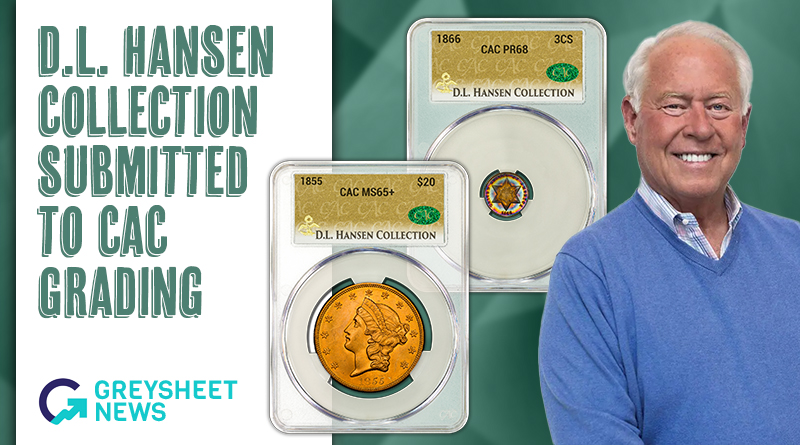
Prominent Collector Dell Loy Hansen Submitting His Historical Collection Of U.S. Coins To CAC Grading
8/8/2024
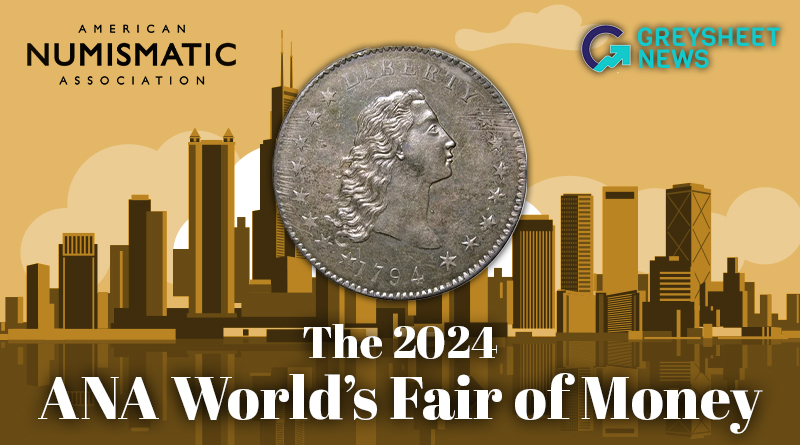
American Numismatic Association's Largest Coin Show, August 6-10 In Chicago
Dazzling rarities, free educational opportunities, family fun and more await at the Donald E. Stephens Convention Center
7/25/2024
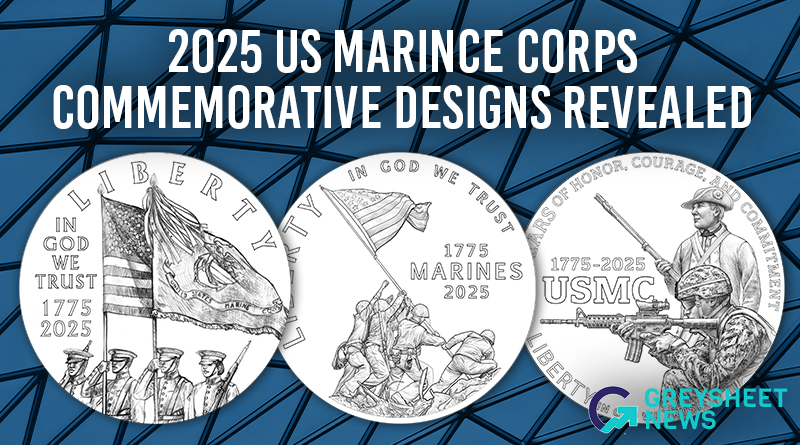
United States Mint Unveils Designs For The 2025 United States Marine Corps 250th Anniversary Commemorative Coin Program
The designs will be featured on a $5 gold coin, a $1 silver coin, and a half dollar clad coin.
7/23/2024
Events
Heritage Auctions: US Currency Tuesday Select Auction
Location: Heritage Auctions
Tuesday, June 2, 2026
Heritage Auctions: World Paper Money Tuesday Select Auction
Location: Heritage Auctions
Tuesday, June 2, 2026
Heritage Auctions: US Coins Tuesday & Wednesday Select Auction
Location: Heritage Auctions
Wednesday, June 3, 2026