


 Whitman Expo



The unprecedented crossover underscores his personal efforts to combat “grade inflation.”
Thank you to our sponsors!
Go check them out!




Obverse Description
A portrait bearing the likeness of a Native American in full headdress framed by the words UNITED STATES OF AMERICA around the periphery. The date is centered at the bottom under the portrait.
Reverse Description
The reverse bears the denomination of ONE CENT in the center surrounded by a wreath bearing a ribbon with arrows tied in at the bottom center.
Book Reference
1870 Cent Production: In 1870 the reverse design was changed slightly. The new design features a bold ONE CENT denomination. The previous design had a shallower denomination, with the N in ONE being especially shallow. A growing number of collectors seek both reverse designs for this year as well as for 1871 and 1872.
Since reverse dies do not have dates, the Mint had Shallow N (Type of 1869) a number of Shallow N dies on hand at the time, perhaps from the prior year. The Mint reworked many of these dies with the Bold N design, creating numerous doubled-die reverse varieties—a situation similar to the 1878, 7 Over 8 Clear Doubled Feathers Morgan dollar.
The production of all minor coinage was in a decreasing trend during this era. The main reason Bold N / Shallow N for this cutback was the lack of a redemption clause in any of the issuing legislation. The nickel and bronze coinage was beginning to accumulate in commercial channels.
Survivability: This issue was not saved to a great extent. Most of the coins were returned to the Mint over the next few years, during the 1870’s recoinage
Bold N (Type of 1870)
(see 1871 for further discussion). Without any authority from Congress, the Mint accepted nickel and bronze issues, which had been jammed in bank vaults in ever growing numbers, and melted them down to make new coins. The 1870 cents were most likely at the top of the heap of coins being returned to the Mint. Any that survived in circulation are today found in mostly very low grades. The few high-grade examples that are available survived mainly by chance.
Collecting Challenges: As with all dates of this era, finding attractive problem-free coins will be diffcult, though most are well struck. Shallow N reverse coins are slightly scarcer than those with the Bold N reverse, but not enough to warrant a premium.
Collecting Circulated Pieces: The optimal collecting grade for circulated coins is VF-20. Higher grades will be very diffcult to find. Lower grades are usually available. Avoid problem pieces, such as cleaned, scratched, or corroded coins. These are discounted in general, but usually not enough to make them good buys.
Collecting Mint State Pieces: The optimal collecting grade for Mint State coins is MS-64RB. These coins are typically red-brown, with even-colored pieces particularly diffcult to find. Many come with streaky toning due to an improperly mixed alloy in the planchets. Full red coins are rare, and collectors should beware of chemically altered pieces impersonating original full red coins.
When originally struck, all bronze coins are full red. The heat of striking creates a molecular shell, which somehow blocks any change in the color. When the acids in your hands come in contact with the surface of the coin, this layer is destroyed and the coin will start to turn brown. When a coin is cleaned, it is also susceptible to turning a brown color within a short period of time. For this reason, it is very important that any full red coin not have any indication of having been cleaned in the past.
Collecting Proof Issues: Proofs are usually found with medium mirrors. It seems that the dies were not polished very deeply to begin with. Any deep-mirror examples should be worthy of a significant premium. Cameo examples are rare; perhaps only 5% of high-quality examples qualify.
This date in Proof is found with the Shallow N reverse, in use from 1868, as well as a new Bold N reverse. There is a growing general collector interest in the reverse types.
VARIETIES:
Due to the reverse design change, and the subsequent reworking of the dies, there are at least 23 reverse doubled dies known. Some are very dramatic, but most are very minor. The most dramatic varieties are the misplaced dates (MPD). Snow-5 shows a bold 0 digit sticking into the field under the date. S-8 shows the remnants of multiple digits above the denticles, possibly as many as eight. Both garner premiums greater than five times normal value.
One popular variety, dubbed the Pickaxe, has die damage by the last feather, which looks like a miner’s axe. It is relatively common, being paired with at least five different dies.
Above all these in significance are the reverse design varieties: the Shallow N and Bold N. These are gaining in popularity with date collectors, as their existence becomes more widely known.
An 1870 Shield nickel variety is known with clash marks from the obverse Indian Head cent die! This gives rise to the question: does an 1870 Indian Head cent exist with the corresponding Shield nickel clash marks? None have yet been found.
Exclusive access for buyers and collectors to purchase coins and currency from authenticated sellers and dealers. Visit greysheet.com/marketplace today.
Catalog Information
GSID:
285617
Designer:
James B. Longacre
Obverse Designer:
James B. Longacre
Obverse Lettering:
UNITED STATES OF AMERICA, 1870
Reverse Designer:
James B. Longacre
Reverse Lettering:
ONE CENT
Weight (gr):
3.11 gr
Weight (oz):
0.11 oz
Strike Type:
Business
Diameter:
19
Coin Shape:
Round
Edge:
Plain
Variety:
Shallow N
Variety 2:
FS-901
Coin Date:
1870
Denomination:
1c
Designation:
MS
Mint Location:
Philadelphia
Mintage:
5,275,000
Coinage Type:
Indian Head Cent
Coinage Years:
1864-1909
Composition:
95% copper; 5% zinc & tin
PCGS #:
408017
Send Catalog Feedback
To: editor@greysheet.com
Subject: I would like to contribute catalog info to CDN for 1870 1c Shallow N, FS-901 MS BN
Body: Referring page: http://dev.greysheet.com/prices/item/1870-united-states-indian-cent-brown-surfaces-shallow-n-fs-901/gsid/285617 GSID: 285617 Title: 1870 1c Shallow N, FS-901 MS BN
Subscribe to View
View more data, info, and visualizations. Get access to retail and wholesale pricing as well as auction data.
Coin Value History
1870 1c Shallow N, FS-901 MS BN
Value By Grade
1870 1c Shallow N, FS-901 MS BN
CPG (retail) values
Currency
Grade Range
Grading Authority
Sort by
Pricing
Values
Greysheet & CPG® Values
| Grade | CAC | CPG Value (Retail) | Greysheet Price (Wholesale) |
|---|---|---|---|
| MS66 |

|
$4,300 | $1,234 |
| MS66 | - | $3,450 | $1,234 |
| MS65 |
|
$1,234 | $1,234 |
| MS65 | - | $1,234 | $1,234 |
| MS64 |
|
$1,234 | $1,234 |
| MS64 | - | $1,234 | $1,234 |
| MS63 |
|
$1,234 | $1,234 |
| MS63 | - | $1,234 | $1,234 |
| MS62 |
|
$1,234 | $1,234 |
| MS62 | - | $1,234 | $1,234 |
| MS61 |
|
$1,234 | $1,234 |
| MS61 | - | $1,234 | $1,234 |
| MS60 |
|
$1,234 | $1,234 |
| MS60 | - | $1,234 | $1,234 |
| AU58 |
|
$1,234 | $1,234 |
| AU58 | - | $1,234 | $1,234 |
| AU55 |
|
$1,234 | $1,234 |
| AU55 | - | $1,234 | $1,234 |
| AU53 |
|
$1,234 | $1,234 |
| AU53 | - | $1,234 | $1,234 |
| AU50 |
|
$1,234 | $1,234 |
| AU50 | - | $1,234 | $1,234 |
| XF45 |
|
$1,234 | $1,234 |
| XF45 | - | $1,234 | $1,234 |
| XF40 |
|
$1,234 | $1,234 |
| XF40 | - | $1,234 | $1,234 |
| VF35 |
|
$1,234 | $1,234 |
| VF35 | - | $1,234 | $1,234 |
| VF30 |
|
$1,234 | $1,234 |
| VF30 | - | $1,234 | $1,234 |
| VF25 |
|
$1,234 | $1,234 |
| VF25 | - | $1,234 | $1,234 |
| VF20 |
|
$1,234 | $1,234 |
| VF20 | - | $1,234 | $1,234 |
| F15 |
|
$1,234 | $1,234 |
| F15 | - | $1,234 | $1,234 |
| F12 |
|
$1,234 | $1,234 |
| F12 | - | $1,234 | $1,234 |
| VG10 |
|
$1,234 | $1,234 |
| VG10 | - | $1,234 | $1,234 |
| VG8 |
|
$1,234 | $1,234 |
| VG8 | - | $1,234 | $1,234 |
| G6 |
|
$1,234 | $1,234 |
| G6 | - | $1,234 | $1,234 |
| G4 |
|
$1,234 | $1,234 |
| G4 | - | $1,234 | $1,234 |
| AG3 |
|
$1,234 | $1,234 |
| AG3 | - | $1,234 | $1,234 |
Indian Head Cent 1c 1859, Reverse of 1858 MS [Type]
![Indian Head Cent 1c 1859, Reverse of 1858 MS [Type]](https://images.greysheet.com/ctc/catalog/Indian-Cent.jpg?MaxWidth=200&Mode=Pad&Scale=UpscaleCanvas&format=webp)
Worth: $5 – $25,000
1859 1c MS

Worth: $5 – $25,000
Indian Head Cent 1c Copper Nickel, 1860-1864 MS [Type]
![Indian Head Cent 1c Copper Nickel, 1860-1864 MS [Type]](https://images.greysheet.com/ctc/catalog/1863-obv.jpg?MaxWidth=200&Mode=Pad&Scale=UpscaleCanvas&format=webp)
Worth: $6 – $72,000
1860 1c Round Bust MS

Worth: $6 – $18,000
1860 1c Pointed Bust MS

Worth: $7 – $28,800
1861 1c MS

Worth: $14 – $72,000
1862 1c MS

Worth: $6 – $72,000
1863 1c MS

Worth: $6 – $18,750
1864 1c Copper Nickel MS

Worth: $14 – $20,000
Indian Head Cent 1c Bronze, 1864-1909 MS BN [Type]
![Indian Head Cent 1c Bronze, 1864-1909 MS BN [Type]](https://images.greysheet.com/Ctc/CatalogEntry/auctions_stacksbowers_com_lots_view_3_j4gae-0.20200712022457246.jpg?MaxWidth=200&Mode=Pad&Scale=UpscaleCanvas&format=webp)
Worth: $1 – $1,688
Indian Head Cent 1c Bronze, 1864-1909 MS RB [Type]
![Indian Head Cent 1c Bronze, 1864-1909 MS RB [Type]](https://images.greysheet.com/Ctc/Catalog/20250811/m7z2wm7kefb0wx6umy1d.webp?MaxWidth=200&Mode=Pad&Scale=UpscaleCanvas&format=webp)
Worth: $44 – $2,000
Indian Head Cent 1c Bronze, 1864-1909 MS RD [Type]
![Indian Head Cent 1c Bronze, 1864-1909 MS RD [Type]](https://images.greysheet.com/Ctc/Catalog/20200826/ha_com_131705_30309-0.20200826140250544.jpg?MaxWidth=200&Mode=Pad&Scale=UpscaleCanvas&format=webp)
Worth: $110 – $120,000
1864 1c Bronze MS BN

Worth: $10 – $625
1864 1c Bronze MS RB

Worth: $160 – $11,500
1864 1c Bronze MS RD

Worth: $300 – $18,000
1870 1C Shallow N, FS-901, AU55 PCGS. CDN: $484 Whsle. Bid for NGC/PCGS AU55. Mintage 5,275,000. ...
$490
1870 1C Shallow N, FS-901, AU53 ANACS. Mintage 5,275,000....
$348
1870 1C Shallow N, FS-901, Fine 15 PCGS. Mintage 5,275,000....

$198
1870 1C Shallow N, FS-901, VG10 PCGS. PCGS Population: (67/1295). Mintage 5,275,000....

$109
1870 1C Shallow N, FS-901, MS62 Brown PCGS. PCGS Population: (2/4). NGC Census: (0/0). MS62. Mintage 5,275,000. ...
$660
1870 1C Shallow N, FS-901, XF45 PCGS. PCGS Population: (3/13). NGC Census: (0/0). Mintage 5,275,000. ...
$376
Greysheet News
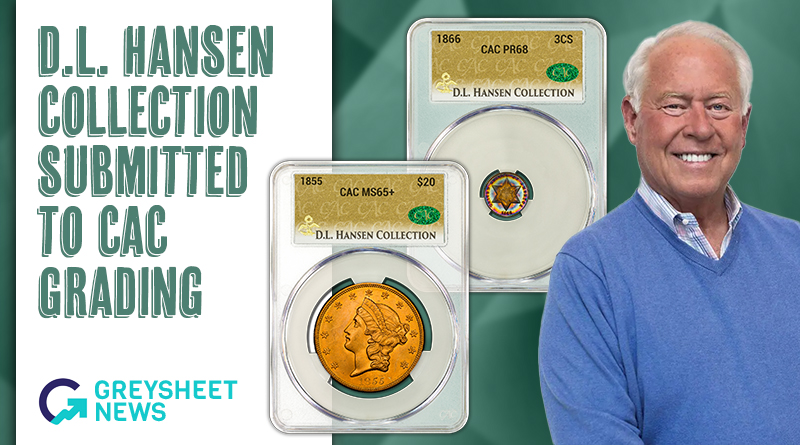
Prominent Collector Dell Loy Hansen Submitting His Historical Collection Of U.S. Coins To CAC Grading
8/8/2024
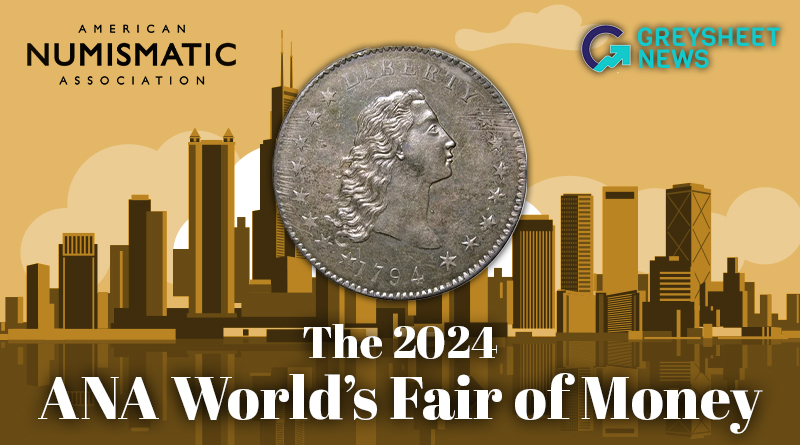
American Numismatic Association's Largest Coin Show, August 6-10 In Chicago
Dazzling rarities, free educational opportunities, family fun and more await at the Donald E. Stephens Convention Center
7/25/2024
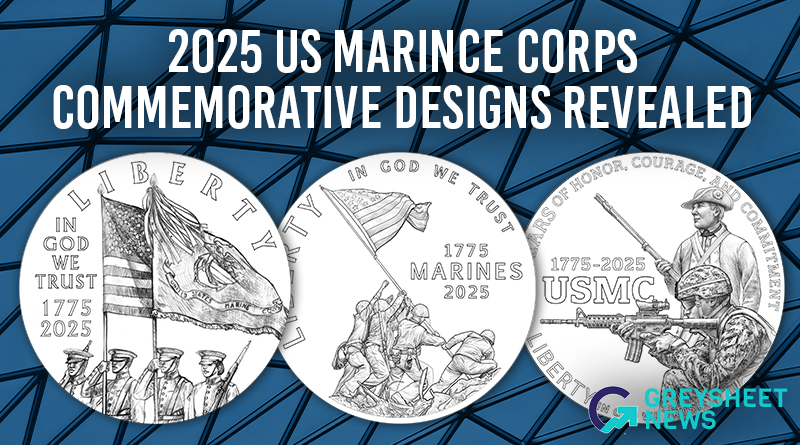
United States Mint Unveils Designs For The 2025 United States Marine Corps 250th Anniversary Commemorative Coin Program
The designs will be featured on a $5 gold coin, a $1 silver coin, and a half dollar clad coin.
7/23/2024
Events
Heritage Auctions: US Coins Tuesday & Wednesday Select Auction
Location: Heritage Auctions
Wednesday, July 1, 2026
Heritage Auctions: World & Ancient Coins Wednesday & Thursday Select Auction
Location: Heritage Auctions
Thursday, July 2, 2026