


 Whitman Expo



The unprecedented crossover underscores his personal efforts to combat “grade inflation.”
Thank you to our sponsors!
Go check them out!





The 1888 Indian Cent is a common issue in the Indian Cent Series. Circulated coins are extremely common and accessible. In order for uncirculated coins to be scarce and valuable there must be partial or complete red coloring. The finest gems can be very rare.
Obverse Description
A portrait bearing the likeness of a Native American in full headdress framed by the words UNITED STATES OF AMERICA around the periphery. The date is centered at the bottom under the portrait.
Reverse Description
The reverse bears the denomination of ONE CENT in the center surrounded by a wreath bearing a ribbon with arrows tied in at the bottom center.
Book Reference
1888 Cent Production: Production remained steady this year. One of the dies had its date repunched over an 1887 die (see 1888, 8 Over 7).
Survivability: There was no incentive for collectors to save this date, so most of the issue went into circulation and remained there until well worn.
Collecting Challenges: This date comes with an average strike, so it would be beneficial to take extra time to find a well-struck example. As with all other later-date Indian Head cents, average-quality specimens are widely available. You should make the extra effort to locate an example with a superior strike.
Collecting Circulated Pieces: The optimal collecting grade for circulated coins is AU-50. Select problem-free examples with exceptional eye appeal.
Collecting Mint State Pieces: The optimal collecting grade for Mint State coins is MS-64RB. The rarity of higher-grade Indian Head cents of this era depends on the chance survival of small groups of choice coins. If no original rolls are found then the date becomes rarer in higher grades. Likely, that is what happened to this date. True gems are very tough to find, regardless of the color designation. Full red examples are, of course, even tougher. This date will require extra effort to find nice, high-grade coins.
Collecting Proof Issues: Although this is one of the higher-mintage Proof dates, it remains slightly elusive in high grades. This date is very tough in full red, especially in gem. Cameos are very rare. Some of these come with golden-tan planchets. Most pieces are mostly brown or totally brown. Occasionally, some of these coins graded with the BN (for brown) color designation have vivid blue and purple colors. These are highly desired by collectors. Prices vary widely for these vividly toned coins. Sometimes, in an auction setting, prices for outstanding specimens can skyrocket to many multiples of the prices the typical BN designation warrants.
Many coins of this year are singly struck. This causes the coins to be less than what we expect for Proof issues of the era. Sometimes the feather tips or some of the denticles may show weakness, and rough planchet marks might not get totally struck out. The edge, which is usually sharp, will be highly beveled on singly struck coins. Sometimes singly struck examples with medium mirrors might be mistaken for prooflike circulation-strike coins. Typ ically, Proofs are double struck at slower speeds to bring out the design to its fullest. This takes time, and one might not be too surprised if the Mint, when producing 4,000+ coins, introduced some time-saving measure at the expense of quality. Perhaps a Mint employee at the time asked himself, “Who would care; after all, they are only pennies!”
VARIETIES:
Aside from the ultra-rare 1888/7 Snow-1, the top variety is the 1888 Snow-2, which is known to numismatists as 1888/7 Die #2, FF 010.7. Noted numismatic author Bill Fivaz discovered the variety in July 1990. It was confirmed at the time and included in my Flying Eagle and Indian Cents (1992) as 1888 Snow-2.
In 2000 the overdate status was questioned by one of 1888/888, Snow-2 the top collector-specialists, Dr. Tim Larson, in the pages of Longacre’s Ledger (the publication of the Fly-In Club, the specialty club devoted to this series). Tim convincingly questioned the status of the overdate using overlay photos. It appears that the overdate is most likely just a repunched date: 1888/888. There is a vertical line
Full-Date 1888, Snow-2
in the upper loop of the 8 on this variety, and that did not match up to date overlays that Tim prepared. He suggested that the line was a die scratch. This is still a neat variety with a misplaced digit in the first pearl. Because overdates carry a much higher premium, the label should be placed only on varieties that can be certainly shown to be overdates. (See “1888/7 S2—Is it an Overdate?”, Tim Larson, Longacre’s Ledger, Vol. 10.2, June 2000.)
An example of the 1888 Snow-2 cent is known struck in copper-nickel! The coin is graded by PCGS as a nickel die trial. The coin showed up in 1997 during the ANA Summer Seminar, which I happened to be attending as an instructor. (This is a very worthwhile way to spend a week in the cool Colorado summer sun.) After finishing my class, I sat in with my good friends, J.P. Martin and Bob Campbell, who were teaching the Counterfeit Detection class. They were demonstrating the use of the scanning electron microscope to extract alloy information of coins using x-ray spectroscopy. One of the coins to be tested was an 1888 cent that looked like it was copper-nickel. Sure enough, it tested 25% nickel and 75% copper. After the test I examined the coin and discovered the variety. Everyone was thrilled—and so, I guess, was the owner. Unfortunately the ANA did not tell the owner about the variety. He discovered it independently later. I subsequently found out that East Coast dealer George Maroskos owned the coin. He offered it to me but I declined at the time. I asked to photograph it, and it was put on the cover of Longacre’s Ledger, Vol. 9.3, August 1999.
The question remains: how did this coin come to be? The firm of Joseph Wharton sold both three-cent and five-cent nickel planchets to the Mint, along with cent planchets. Perhaps three-cent nickel stock was put in the cent blanking press and a few of these odd planchets found their way to the cent press just when the 1888 Snow-2 pieces were being struck. If this is the case, then perhaps there are other pieces yet to be discovered! Greysheet Catalog ID (GSIDSM) is the universal standard for cataloging and identification of U.S. and World Coins and Bank
Notes. Visit greysheet.com/gsid for details.
GREYSHEET ID:
Catalog Information
GSID:
1381
Designer:
James B. Longacre
Obverse Designer:
James B. Longacre
Obverse Lettering:
UNITED STATES OF AMERICA, 1888
Reverse Designer:
James B. Longacre
Reverse Lettering:
ONE CENT
Weight (gr):
3.11 gr
Weight (oz):
0.11 oz
Strike Type:
Business
Diameter:
19
Coin Shape:
Round
Edge:
Plain
Coin Date:
1888
Denomination:
1c
Designation:
MS
Mint Location:
Philadelphia
Mintage:
37,489,832
Coinage Type:
Indian Head Cent
Coinage Years:
1864-1909
Composition:
95% copper; 5% zinc & tin
PCGS #:
2167
Send Catalog Feedback
To: editor@greysheet.com
Subject: I would like to contribute catalog info to CDN for 1888 1c MS RB
Body: Referring page: http://dev.greysheet.com/prices/item/1888-united-states-indian-cent-red-brown-surfaces/gsid/1381 GSID: 1381 Title: 1888 1c MS RB
Subscribe to View
View more data, info, and visualizations. Get access to retail and wholesale pricing as well as auction data.
Coin Value History
1888 1c MS RB
Value By Grade
1888 1c MS RB
CPG (retail) values
Currency
Grade Range
Grading Authority
Sort by
Pricing
Values
Greysheet & CPG® Values
| Grade | CAC | CPG Value (Retail) | Greysheet Price (Wholesale) |
|---|---|---|---|
| MS66 |

|
$2,200 | $1,234 |
| MS66 | - | $1,750 | $1,234 |
| MS65 |
|
$1,234 | $1,234 |
| MS65 | - | $1,234 | $1,234 |
| MS64 |
|
$1,234 | $1,234 |
| MS64 | - | $1,234 | $1,234 |
| MS63 |
|
$1,234 | $1,234 |
| MS63 | - | $1,234 | $1,234 |
| MS62 |
|
$1,234 | $1,234 |
| MS62 | - | $1,234 | $1,234 |
| MS61 |
|
$1,234 | $1,234 |
| MS61 | - | $1,234 | $1,234 |
Indian Head Cent 1c 1859, Reverse of 1858 MS [Type]
![Indian Head Cent 1c 1859, Reverse of 1858 MS [Type]](https://images.greysheet.com/ctc/catalog/Indian-Cent.jpg?MaxWidth=200&Mode=Pad&Scale=UpscaleCanvas&format=webp)
Worth: $5 – $25,000
1859 1c MS

Worth: $5 – $25,000
Indian Head Cent 1c Copper Nickel, 1860-1864 MS [Type]
![Indian Head Cent 1c Copper Nickel, 1860-1864 MS [Type]](https://images.greysheet.com/ctc/catalog/1863-obv.jpg?MaxWidth=200&Mode=Pad&Scale=UpscaleCanvas&format=webp)
Worth: $6 – $72,000
1860 1c Round Bust MS

Worth: $6 – $18,000
1860 1c Pointed Bust MS

Worth: $7 – $28,800
1861 1c MS

Worth: $14 – $72,000
1862 1c MS

Worth: $6 – $72,000
1863 1c MS

Worth: $6 – $18,750
1864 1c Copper Nickel MS

Worth: $14 – $20,000
Indian Head Cent 1c Bronze, 1864-1909 MS BN [Type]
![Indian Head Cent 1c Bronze, 1864-1909 MS BN [Type]](https://images.greysheet.com/Ctc/CatalogEntry/auctions_stacksbowers_com_lots_view_3_j4gae-0.20200712022457246.jpg?MaxWidth=200&Mode=Pad&Scale=UpscaleCanvas&format=webp)
Worth: $1 – $1,688
Indian Head Cent 1c Bronze, 1864-1909 MS RB [Type]
![Indian Head Cent 1c Bronze, 1864-1909 MS RB [Type]](https://images.greysheet.com/Ctc/Catalog/20250811/m7z2wm7kefb0wx6umy1d.webp?MaxWidth=200&Mode=Pad&Scale=UpscaleCanvas&format=webp)
Worth: $44 – $2,000
Indian Head Cent 1c Bronze, 1864-1909 MS RD [Type]
![Indian Head Cent 1c Bronze, 1864-1909 MS RD [Type]](https://images.greysheet.com/Ctc/Catalog/20200826/ha_com_131705_30309-0.20200826140250544.jpg?MaxWidth=200&Mode=Pad&Scale=UpscaleCanvas&format=webp)
Worth: $110 – $120,000
1864 1c Bronze MS BN

Worth: $10 – $625
1864 1c Bronze MS RB

Worth: $160 – $11,500
1864 1c Bronze MS RD

Worth: $300 – $18,000
1888 1C MS63 Red and Brown PCGS. Housed in a Generation 3.1 green label holder. CDN: $170 Whsle. Bid for NGC/PCGS MS63. Min...

$192
1888 1C MS65 Red and Brown NGC. NGC Census: (74/7). Mintage 37,494,414. ...

$690
1888 1C MS66 Red and Brown PCGS. CAC. CAC Population: (5/0). Mintage 37,494,414. ...

$4,560
1888 1C MS64 Red and Brown NGC. NGC Census: (191/79). PCGS Population: (264/56). CDN: $310 Whsle. Bid for NGC/PCGS MS64. Mi...

$348
1888 1C Misplaced Date, MPD-005, MS62 Red and Brown ANACS. Plate. Mintage 37,494,414.Flynn Reference and Cross Refere...

$129
1888 1C Snow-2, FS-302, VG8 ANACS. Mintage 37,494,416....
$84
1888 1C Repunched Date , FS-302 , S-2 -- Polished -- ANACS. XF45 Details. NGC Census: (0/0). PCGS Population: (0/0). Minta...

$141
1888 1C -- Altered Surface -- Genuine PCGS. This PCGS number ending in 94 suggests Altered Surface as the reason, or perha...

$50
1888 1C MS61 Red and Brown ANACS. NGC Census: (0/240). PCGS Population (0/208). Mintage: 37,494,416. (#2167)...
$75
1888 1C MS63 Red and Brown NGC. Mintage 37,494,414. ...

$300
1888 1C MS65 Red and Brown PCGS. PCGS Population: (53/3 and 3/0+). NGC Census: (72/7 and 2/0+). CDN: $660 Whsle. Bid for NG...

$780
1888 1C MS66 Red and Brown NGC. CAC. Eagle Eye Photo Seal. Housed in a circa-2000 holder. NGC Census: (7/0). PCGS Populatio...

$1,620
1888 1C MS64 Red and Brown PCGS. PCGS Population: (264/56). NGC Census: (191/79). CDN: $310 Whsle. Bid for NGC/PCGS MS64. M...

$408
1888 1C MS62 Red and Brown ANACS. Mintage 37,494,414. ...

$85
1888 1C -- Cleaned -- ANACS. VG8 Details. FS-302, S-2. NGC Census: (0/582). PCGS Population (0/327). Mintage: 37,494,416. ...

$50
1888 1C Misplaced Date, MPD-007, MS63 Red and Brown ANACS. Mintage 37,494,414.Flynn Reference and Cross Reference: ...

$192
1888 1C MS65 Red and Brown PCGS. CAC. Eagle eye seal and photo card included. PCGS Population: (58/3). NGC Census: (72/7). ...

$1,740
1888 1C MS66 Red and Brown NGC. NGC Census: (7/0). PCGS Population: (2/0). CDN: $1,400 Whsle. Bid for problem-free NGC/PCGS...

$1,079
1888 1C MS64 Red and Brown PCGS. PCGS Population: (264/56). NGC Census: (191/79). CDN: $310 Whsle. Bid for NGC/PCGS MS64. M...

$314
1888 1C MS62 Red and Brown NGC. NGC Census: (12/319). PCGS Population: (22/459). Mintage 37,494,416. ...

$132
Greysheet News
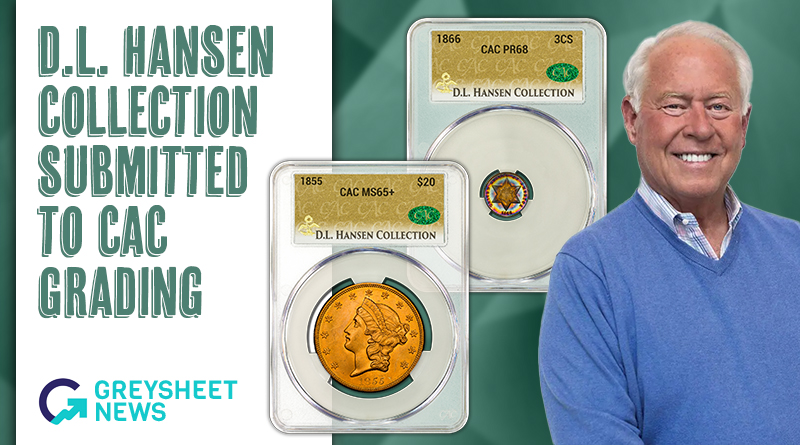
Prominent Collector Dell Loy Hansen Submitting His Historical Collection Of U.S. Coins To CAC Grading
8/8/2024
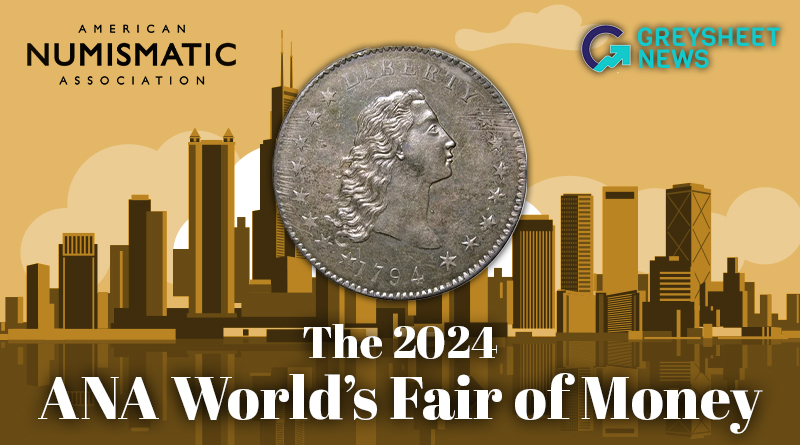
American Numismatic Association's Largest Coin Show, August 6-10 In Chicago
Dazzling rarities, free educational opportunities, family fun and more await at the Donald E. Stephens Convention Center
7/25/2024
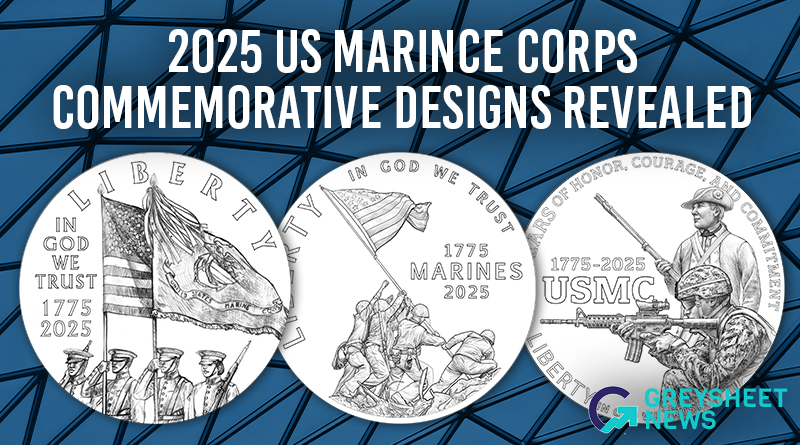
United States Mint Unveils Designs For The 2025 United States Marine Corps 250th Anniversary Commemorative Coin Program
The designs will be featured on a $5 gold coin, a $1 silver coin, and a half dollar clad coin.
7/23/2024
Events
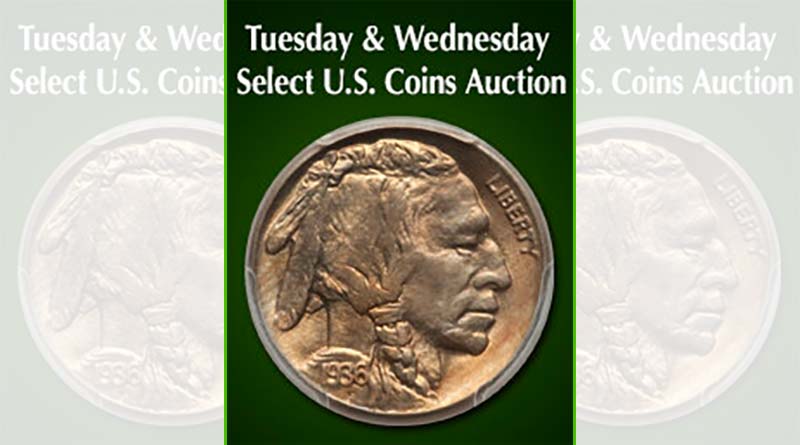
Heritage Auctions: US Coins Tuesday & Wednesday Select Auction
Location: Heritage Auctions
Wednesday, July 1, 2026
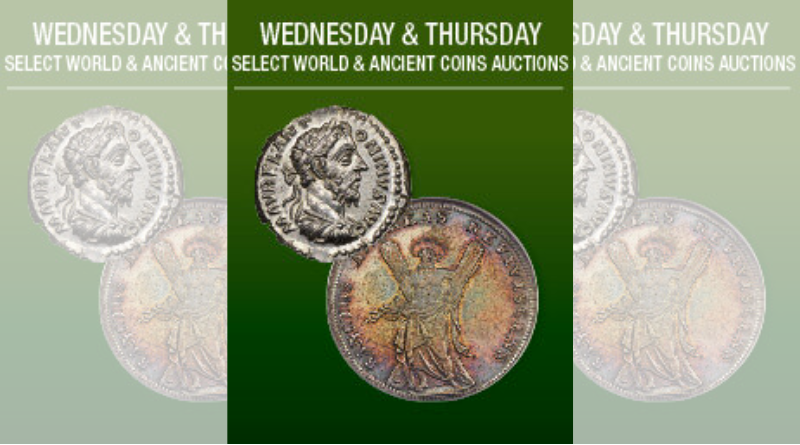
Heritage Auctions: World & Ancient Coins Wednesday & Thursday Select Auction
Location: Heritage Auctions
Thursday, July 2, 2026