



 Whitman Expo



The unprecedented crossover underscores his personal efforts to combat “grade inflation.”
Thank you to our sponsors!
Go check them out!





The obverse dies were changed in 1886 making 2 separate varieties that are differentiated by the placement of 'America.' These two varieties are worth about the same; but, it is popular knowledge that Variety 2 is slightly more scarce. All the color designations increase gradually from brown to red with all gems being very scarce.
Obverse Description
A portrait bearing the likeness of a Native American in full headdress framed by the words UNITED STATES OF AMERICA around the periphery. The date is centered at the bottom under the portrait.
Reverse Description
The reverse bears the denomination of ONE CENT in the center surrounded by a wreath bearing a ribbon with arrows tied in at the bottom center.
Book Reference
1886, Variety 2, Cent Production: It is not known when the Mint produced the new obverse master die by Charles Barber, although it was probably made during the hiatus of cent and nickel production early in the year. If so, then the estimated 15 Variety 2 dies dated 1886 would have struck coins at the same time as older Variety 1 dies when coinage resumed. A larger number of coins from the Variety 2 dies show extreme die wear. Per-between the I and C in AMERICA. haps near the end of the year the Mint chose to stretch the life of the dies rather than make more. Dies used to strike Proofs were also put into service to strike regular issues.
Survivability: There was no special significance placed on the Variety 2 style early on, as it was a relatively minor alteration. It was only after 1954 that collectors started to collect these coins as separate entities. As a result, nearly the entire mintage went into circula-points between the C and A. tion and stayed there until they were well worn. The survival of any examples is based on chance rather than from collector hoards. A roll of 50 coins from the same dies appeared in Superior Galleries’ section of Auction ’81, bringing $30,000. While the appearance of a roll like this greatly altered the relative rarity of this date, it did little to lower the prices. It just made more coins available to collectors.
Collecting Challenges: Quality is quite poor on most of the pieces encountered. Search out pieces struck from an early-die-state die. These will have crisp details and flat fields. Many have been chemically altered by dishonest people seeking to capture the high prices asked for high-grade pieces.
Collecting Circulated Pieces: The optimal collecting grade for circulated coins is EF-40. Select coins with attractive original surfaces. Target this date early on in your collecting, as it will take a while to find an attractive example.
Collecting Mint State Pieces: The optimal collecting grade for Mint State coins is MS-63RB. This is one of the tougher dates in all grades. However, as small groups have come to light its rarity has lessened slightly. It is believed that the 50 pieces that came from the Auction ’81 roll were mostly full red and all from the same die. These were all later-die-state coins, which have a look likened to melted butterscotch. Another group of 32 1886 Variety 2 pieces was found in 1994 in a bottle buried in Connecticut. Later, they were placed in the Bowers & Merena “Boys Town” sale in March 1998 (lots 353 to 363) where they were graded MS-61RB to MS-64RB. Among these pieces, 18 were of the same variety, Snow-7.
Full red gems are still very rare. Prices for MS-64RD and MS-65RD certified coins have climbed to levels seen only for the top three or four dates in the series.
Collecting Proof Issues: The mintage is estimated from the quantity of known survivors. No offcial figures break down the division between the two types. The 1886 Variety 2 Proof is prohibitively rare in full red gem condition. Cameo examples are nearly impossible to find. Most available examples are red-brown or totally brown, sometimes with vivid blue toning. The limited quantity of full red coins is curious. Many original coins exhibit a tan-golden color which grading services may find unusual. Perhaps the majority of remaining Proofs at the end of the year were Variety 2 pieces. If so, they may have been purchased by dealers, as was most of the leftover Proof minor coinage. If this is the case, then these would have sat for extended periods in their Mint wrappers, slowly toning to purple or brown.
Some of the five known die pairs used for Proof production were later used on regular coinage.
VARIETIES:
There are a few minor repunched dates. The Snow variety listings must show the design type as well as the variety number (1886, Variety 2, Snow-3, for example).
Catalog Information
GSID:
1375
Designer:
James B. Longacre
Obverse Designer:
James B. Longacre
Obverse Lettering:
UNITED STATES OF AMERICA, 1886
Reverse Designer:
James B. Longacre
Reverse Lettering:
ONE CENT
Weight (gr):
3.11 gr
Weight (oz):
0.11 oz
Strike Type:
Business
Diameter:
19
Coin Shape:
Round
Edge:
Plain
Variety:
Type 2
Coin Date:
1886
Denomination:
1c
Designation:
MS
Mint Location:
Philadelphia
Mintage:
17,650,000
Coinage Type:
Indian Head Cent
Coinage Years:
1864-1909
Composition:
95% copper; 5% zinc & tin
PCGS #:
92155
Send Catalog Feedback
To: editor@greysheet.com
Subject: I would like to contribute catalog info to CDN for 1886 1c Type 2 MS RB
Body: Referring page: http://dev.greysheet.com/prices/item/1886-red-brown-surfaces-type-2-united-states-indian-cent/gsid/1375 GSID: 1375 Title: 1886 1c Type 2 MS RB
Subscribe to View
View more data, info, and visualizations. Get access to retail and wholesale pricing as well as auction data.
Coin Value History
1886 1c Type 2 MS RB
Value By Grade
1886 1c Type 2 MS RB
CPG (retail) values
Currency
Grade Range
Grading Authority
Sort by
Pricing
Values
Greysheet & CPG® Values
| Grade | CAC | CPG Value (Retail) | Greysheet Price (Wholesale) |
|---|---|---|---|
| MS66 |

|
$10,000 | $1,234 |
| MS66 | - | $8,000 | $1,234 |
| MS65 |
|
$1,234 | $1,234 |
| MS65 | - | $1,234 | $1,234 |
| MS64 |
|
$1,234 | $1,234 |
| MS64 | - | $1,234 | $1,234 |
| MS63 |
|
$1,234 | $1,234 |
| MS63 | - | $1,234 | $1,234 |
| MS62 |
|
$1,234 | $1,234 |
| MS62 | - | $1,234 | $1,234 |
Indian Head Cent 1c 1859, Reverse of 1858 MS [Type]
![Indian Head Cent 1c 1859, Reverse of 1858 MS [Type]](https://images.greysheet.com/ctc/catalog/Indian-Cent.jpg?MaxWidth=200&Mode=Pad&Scale=UpscaleCanvas&format=webp)
Worth: $5 – $25,000
1859 1c MS

Worth: $5 – $25,000
Indian Head Cent 1c Copper Nickel, 1860-1864 MS [Type]
![Indian Head Cent 1c Copper Nickel, 1860-1864 MS [Type]](https://images.greysheet.com/ctc/catalog/1863-obv.jpg?MaxWidth=200&Mode=Pad&Scale=UpscaleCanvas&format=webp)
Worth: $6 – $72,000
1860 1c Round Bust MS

Worth: $6 – $18,000
1860 1c Pointed Bust MS

Worth: $7 – $28,800
1861 1c MS

Worth: $14 – $72,000
1862 1c MS

Worth: $6 – $72,000
1863 1c MS

Worth: $6 – $18,750
1864 1c Copper Nickel MS

Worth: $14 – $20,000
Indian Head Cent 1c Bronze, 1864-1909 MS BN [Type]
![Indian Head Cent 1c Bronze, 1864-1909 MS BN [Type]](https://images.greysheet.com/Ctc/CatalogEntry/auctions_stacksbowers_com_lots_view_3_j4gae-0.20200712022457246.jpg?MaxWidth=200&Mode=Pad&Scale=UpscaleCanvas&format=webp)
Worth: $1 – $1,688
Indian Head Cent 1c Bronze, 1864-1909 MS RB [Type]
![Indian Head Cent 1c Bronze, 1864-1909 MS RB [Type]](https://images.greysheet.com/Ctc/Catalog/20250811/m7z2wm7kefb0wx6umy1d.webp?MaxWidth=200&Mode=Pad&Scale=UpscaleCanvas&format=webp)
Worth: $44 – $2,000
Indian Head Cent 1c Bronze, 1864-1909 MS RD [Type]
![Indian Head Cent 1c Bronze, 1864-1909 MS RD [Type]](https://images.greysheet.com/Ctc/Catalog/20200826/ha_com_131705_30309-0.20200826140250544.jpg?MaxWidth=200&Mode=Pad&Scale=UpscaleCanvas&format=webp)
Worth: $110 – $120,000
1864 1c Bronze MS BN

Worth: $10 – $625
1864 1c Bronze MS RB

Worth: $160 – $11,500
1864 1c Bronze MS RD

Worth: $300 – $18,000
1886 1C Type Two MS64 Red and Brown PCGS....
$930
1886 1C Type Two MS62 Red and Brown PCGS. PCGS Population: (22/289)....

$384
1886 1C Type Two MS65 Red and Brown PCGS. CAC. Eagle Eye Photo Seal. CAC Population: (16/2)....

$1,680
1886 1C Type Two MS63 Red and Brown NGC. NGC Census: (45/127). PCGS Population: (76/209). CDN: $740 Whsle. Bid for NGC/PCGS...

$700
1886 1C Type Two MS66 Red and Brown NGC. ...

$3,360
1886 1C Type Two -- Questionable Color -- PCGS Genuine. Unc Details. NGC Census: (0/154). PCGS Population (1/205)....

$482
1886 1C Type 2 Feather to 'CA'--Recolored--ANACS. AU58 Details. NGC Census: (18/227). PCGS Population (17/90). Mintage: 17,...

$161
1886 1C Type Two AU53 ICG. NGC Census: (0/140). PCGS Population (0/161). (#92155)...

$161
1886 1C Type Two--Improperly Cleaned--NCS. AU50 Details. NGC Census: (0/139). PCGS Population (0/152). (#92155)...

$150
1886 1C Type Two--Corroded, Cleaned--ANACS. AU55 Details. NGC Census: (0/126). PCGS Population (0/140). (#92155)...
$75
1886 1C Type Two XF40 Red and Brown--Whizzed--ANACS, AU Details....
$86
1886 1C Type Two MS64 Red and Brown PCGS. ...
$1,080
1886 1c NGC MS62 RB (Type 2)

$475
1886 1C Type Two MS65 Red and Brown PCGS. CAC. Eagle Eye Photo Seal. PCGS Population: (43/3 and 1/0+). NGC Census: (36/3 an...

$3,360
1886 1C Type Two MS63 Red and Brown PCGS. PCGS Population: (75/210). NGC Census: (45/127). CDN: $720 Whsle. Bid for NGC/PCG...

$780
1886 1C Type Two MS66 Red and Brown PCGS. ...

$6,462
1886 1C Type Two Red and Brown--Cleaned--ICG. MS60 Details. NGC Census: (0/141). PCGS Population (1/165). (#92155)...

$150
1886 1C Type Two MS64 Red and Brown PCGS. ...

$960
1886 1C Type Two MS62 Red and Brown PCGS. PCGS Population: (18/231). NGC Census: (10/152). ...

$240
1886 1C Type Two MS65 Red and Brown PCGS. Eagle eye seal and photo card included. PCGS Population: (42/3). NGC Census: (36/...

$1,680
Greysheet News
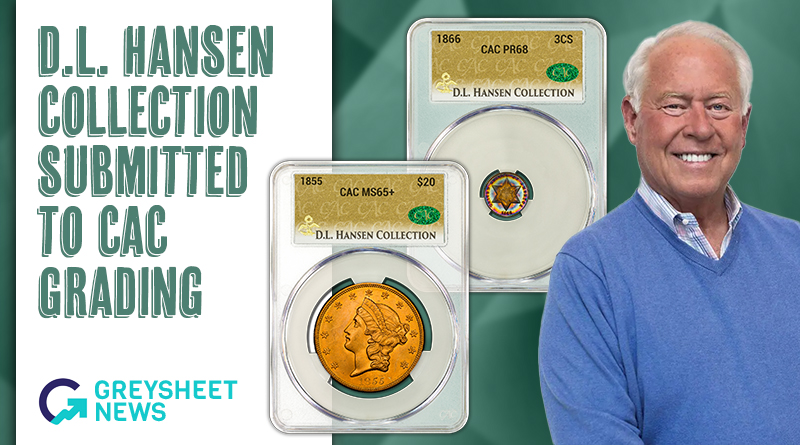
Prominent Collector Dell Loy Hansen Submitting His Historical Collection Of U.S. Coins To CAC Grading
8/8/2024
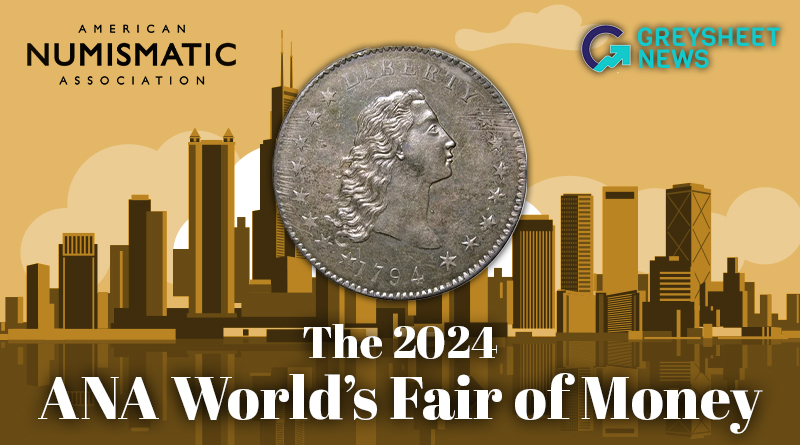
American Numismatic Association's Largest Coin Show, August 6-10 In Chicago
Dazzling rarities, free educational opportunities, family fun and more await at the Donald E. Stephens Convention Center
7/25/2024
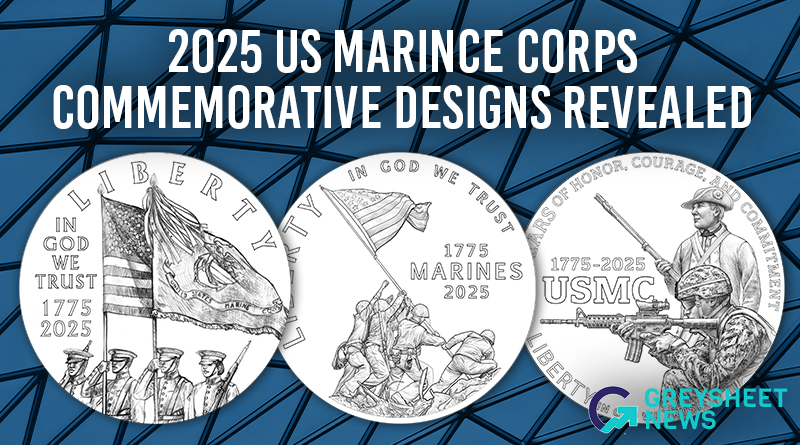
United States Mint Unveils Designs For The 2025 United States Marine Corps 250th Anniversary Commemorative Coin Program
The designs will be featured on a $5 gold coin, a $1 silver coin, and a half dollar clad coin.
7/23/2024
Events
Heritage Auctions: US Currency Tuesday Select Auction
Location: Heritage Auctions
Tuesday, June 2, 2026
Heritage Auctions: World Paper Money Tuesday Select Auction
Location: Heritage Auctions
Tuesday, June 2, 2026
Heritage Auctions: US Coins Tuesday & Wednesday Select Auction
Location: Heritage Auctions
Wednesday, June 3, 2026