




 Whitman Expo



The unprecedented crossover underscores his personal efforts to combat “grade inflation.”
Thank you to our sponsors!
Go check them out!





The obverse dies were changed in 1886 making 2 separate varieties that are differentiated by the placement of 'America.' These two varieties are worth about the same; but, it is popular knowledge that Variety 2 is slightly more scarce. All the color designations increase gradually from brown to red with all gems being very scarce.
Obverse Description
A portrait bearing the likeness of a Native American in full headdress framed by the words UNITED STATES OF AMERICA around the periphery. The date is centered at the bottom under the portrait.
Reverse Description
The reverse bears the denomination of ONE CENT in the center surrounded by a wreath bearing a ribbon with arrows tied in at the bottom center.
Book Reference
Variety 1 and Variety 2 Identification: The change in the design this year was not noticed by collectors until 1954. The redesign by Charles Barber only slightly altered the shape of the portrait, and slightly lowered the relief. The reason for the change may have been the elimination of the extra outlines found on Longacre’s master die since the 1864 With L design was introduced. Extra outlines are found on many of Longacre’s designs. They are light shelves around the devices and letters. As a master die artifact, these were transferred to each hub that was made. The dies made from these hubs did not always have this detail. It depended on whether the dies were sunk deep enough to show it clearly.
Collectors often call the different styles Type I (or Type 1) and Type II (or Type 2). The use of the Roman numeral Extra Outlines rather than the Arabic numeral is more custom than convention. A seldom used, but more accurate, way to describe the difference would be Type of 1885 and Type of 1887. Some grading services and collector-album makers use Variety 1 and Variety 2, as does the Red Book. In my opinion this might confuse collectors, as the difference is considered to be not an individual die variety, but a minor design change. This book follows the Red Book convention.
The easiest way to determine the difference is the placement of the last feather in relation to the ICA in AMERICA. On a Variety 1 coin, the feather points between I and C. On a Variety 2 coin, the feather points between C and A. While these differences are well known, many collectors have trouble remembering which definition fits which design. I would recommend thinking of the feather as a clock hand, with the Variety 1 being an earlier “time” than the Variety 2. Comparison with earlier and later dates will also help.
1886, Variety 1, Cent Production: Overall this is a scarcer date in the context of the decade. The further division of this date between the two design styles raises their scarcity even more. The estimated division of the mintage is based on the survivor ratio rather than actual pieces produced.
Although coin production ceased in early 1885, die production did not. Records show 44 dies being made in 1885, and 45 dies in 1886. It is likely that about 75 undated Variety 1 dies were made in early 1885, with only 44 dated 1885. The remaining 30 or so undated dies would then have been dated and used when production started up again in late 1886. Then, to satisfy the demand from the coining department, the Mint made 15 or so more dies of the new design. Both designs could have been struck at the same time.
Survivability: These cents have survived as well as any other date of the 1880’s. There was no added collector demand for the date until many years after they were mostly all worn down. Any survivors exist strictly by chance.
Collecting Challenges: These are slightly scarcer than the 1885 issue. Most are well struck. Search for problem-free examples with good eye appeal. Extra effort should be placed in searching for the Variety 1. Typically, the higher value for the Variety 2 will bring more examples on the market than Variety 1 pieces.
Collecting Circulated Pieces: The optimal collecting grade for circulated coins is AU-50. Beware of cleaned and corroded coins. Choice chocolate-brown coins are very diffcult to find.
Collecting Mint State Pieces: The optimal collecting grade for Mint State coins is MS-64RB. These are only slightly scarcer than the 1885 issue. Survivors mainly come from the chance find, rather than old-time collector accumulations. Most are well struck with sharp dies. Full red gems are very diffcult to find. These are usually similarly priced to the 1885, but in practice are slightly scarcer.
Collecting Proof Issues: The estimated breakdown of the mintage figures between the two types is not known from Mint records. The estimate is based on observed survivors rather than actual production. As one of the highest-mintage dates overall, it would be expected that these would be widely available. This is true only in red-brown grades. Full red examples are rare, with cameo examples very diffcult. The planchets for some of this issue come a lighter tan-gold color.
VARIETIES:
Some minor repunched dates are known. None are of any substantial interest. Listings of the Snow variety numbers include the design type as part of the variety identification (1886, Variety 1, Snow-3, for example).
Catalog Information
GSID:
1372
Designer:
James B. Longacre
Obverse Designer:
James B. Longacre
Obverse Lettering:
UNITED STATES OF AMERICA, 1886
Reverse Designer:
James B. Longacre
Reverse Lettering:
ONE CENT
Weight (gr):
3.11 gr
Weight (oz):
0.11 oz
Strike Type:
Business
Diameter:
19
Coin Shape:
Round
Edge:
Plain
Variety:
Type 1
Coin Date:
1886
Denomination:
1c
Designation:
MS
Mint Location:
Philadelphia
Mintage:
17,650,000
Coinage Type:
Indian Head Cent
Coinage Years:
1864-1909
Composition:
95% copper; 5% zinc & tin
PCGS #:
2155
Send Catalog Feedback
To: editor@greysheet.com
Subject: I would like to contribute catalog info to CDN for 1886 1c Type 1 MS RB
Body: Referring page: http://dev.greysheet.com/prices/item/1886-red-brown-surfaces-type-1-united-states-indian-cent/gsid/1372 GSID: 1372 Title: 1886 1c Type 1 MS RB
Subscribe to View
View more data, info, and visualizations. Get access to retail and wholesale pricing as well as auction data.
Coin Value History
1886 1c Type 1 MS RB
Value By Grade
1886 1c Type 1 MS RB
CPG (retail) values
Currency
Grade Range
Grading Authority
Sort by
Pricing
Values
Greysheet & CPG® Values
| Grade | CAC | CPG Value (Retail) | Greysheet Price (Wholesale) |
|---|---|---|---|
| MS66 |

|
$7,000 | $1,234 |
| MS66 | - | $5,000 | $1,234 |
| MS65 |
|
$1,234 | $1,234 |
| MS65 | - | $1,234 | $1,234 |
| MS64 |
|
$1,234 | $1,234 |
| MS64 | - | $1,234 | $1,234 |
| MS63 |
|
$1,234 | $1,234 |
| MS63 | - | $1,234 | $1,234 |
| MS62 |
|
$1,234 | $1,234 |
| MS62 | - | $1,234 | $1,234 |
Indian Head Cent 1c 1859, Reverse of 1858 MS [Type]
![Indian Head Cent 1c 1859, Reverse of 1858 MS [Type]](https://images.greysheet.com/ctc/catalog/Indian-Cent.jpg?MaxWidth=200&Mode=Pad&Scale=UpscaleCanvas&format=webp)
Worth: $5 – $25,000
1859 1c MS

Worth: $5 – $25,000
Indian Head Cent 1c Copper Nickel, 1860-1864 MS [Type]
![Indian Head Cent 1c Copper Nickel, 1860-1864 MS [Type]](https://images.greysheet.com/ctc/catalog/1863-obv.jpg?MaxWidth=200&Mode=Pad&Scale=UpscaleCanvas&format=webp)
Worth: $6 – $72,000
1860 1c Round Bust MS

Worth: $6 – $18,000
1860 1c Pointed Bust MS

Worth: $7 – $28,800
1861 1c MS

Worth: $14 – $72,000
1862 1c MS

Worth: $6 – $72,000
1863 1c MS

Worth: $6 – $18,750
1864 1c Copper Nickel MS

Worth: $14 – $20,000
Indian Head Cent 1c Bronze, 1864-1909 MS BN [Type]
![Indian Head Cent 1c Bronze, 1864-1909 MS BN [Type]](https://images.greysheet.com/Ctc/CatalogEntry/auctions_stacksbowers_com_lots_view_3_j4gae-0.20200712022457246.jpg?MaxWidth=200&Mode=Pad&Scale=UpscaleCanvas&format=webp)
Worth: $1 – $1,688
Indian Head Cent 1c Bronze, 1864-1909 MS RB [Type]
![Indian Head Cent 1c Bronze, 1864-1909 MS RB [Type]](https://images.greysheet.com/Ctc/Catalog/20250811/m7z2wm7kefb0wx6umy1d.webp?MaxWidth=200&Mode=Pad&Scale=UpscaleCanvas&format=webp)
Worth: $44 – $2,000
Indian Head Cent 1c Bronze, 1864-1909 MS RD [Type]
![Indian Head Cent 1c Bronze, 1864-1909 MS RD [Type]](https://images.greysheet.com/Ctc/Catalog/20200826/ha_com_131705_30309-0.20200826140250544.jpg?MaxWidth=200&Mode=Pad&Scale=UpscaleCanvas&format=webp)
Worth: $110 – $120,000
1864 1c Bronze MS BN

Worth: $10 – $625
1864 1c Bronze MS RB

Worth: $160 – $11,500
1864 1c Bronze MS RD

Worth: $300 – $18,000
1886 1C Type One MS64 Red and Brown NGC. Mintage 17,654,290. ...

$720
1886 1C Type One, Feather to 'IC', MS63 Red and Brown ANACS. Mintage 17,654,290....
$360
1886 1C Type One MS66 Red and Brown PCGS....

$3,720
1886 1C Type One MS65 Red and Brown PCGS. CAC. Eagle eye seal and photo card included. PCGS Population: (56/7). NGC Census:...

$1,440
1886 1C Type One MS61 Red and Brown ANACS. Mintage 17,654,290. ...

$164
1886 1C Type One MS62 Red and Brown PCGS. PCGS Population: (14/324). NGC Census: (12/186). CDN: $210 Whsle. Bid for NGC/PCG...

$336
1886 1c PCGS AU50 (Variety 1 Tip Between I and C)

$87
1886 1C Type One MS60 Red and Brown ANACS. BREEN-2008. NGC Census: (0/186). PCGS Population (0/254). Mintage: 17,654,290. ...

$182
1886 1C Type One MS64 Red and Brown NGC. Mintage 17,654,290. ...

$660
1886 1C Type One MS63 Red and Brown PCGS. PCGS Population: (84/258). Mintage 17,654,290. ...

$324
1886 1C Type One MS66 Red and Brown PCGS. PCGS Population: (6/0). NGC Census: (5/1). CDN: $4,000 Whsle. Bid for NGC/PCGS MS...

$5,280
1886 1C Type One MS65 Red and Brown PCGS. PCGS Population: (56/6 and 2/2+). NGC Census: (52/6 and 0/1+). CDN: $1,150 Whsle....

$1,320
1886 1C Type One MS61 Red and Brown ANACS. NGC Census: (0/167). PCGS Population (0/201). Mintage: 17,654,290. Numismedia Ws...

$150
1886 1C Type One MS62 Red and Brown ANACS. NGC Census: (11/186). PCGS Population: (13/321). Mintage 17,654,290. ...

$210
1886 1C Type One --Repunched Date,Cleaned-Retoned--ANACS.UNC Details, Net AU50. Snow-1....
$104
1886 1C Type One Red and Brown--Cleaned--ANACS. MS60 Details. NGC Census: (0/158). PCGS Population (0/192). Mintage: 17,654...
$184
1886 1C Type One MS64 Red and Brown PCGS. PCGS Population: (194/63). NGC Census: (106/60). CDN: $650 Whsle. Bid for NGC/PCG...

$660
1886 1C Type One MS63 Red and Brown PCGS. PCGS Population: (84/256). NGC Census: (32/165). CDN: $325 Whsle. Bid for NGC/PCG...

$252
1886 1C Type One MS66 Red and Brown NGC. NGC Census: (5/1). PCGS Population: (6/0). CDN: $4,000 Whsle. Bid for NGC/PCGS MS6...

$2,640
1886 1C Type One MS65 Red and Brown PCGS. PCGS Population: (56/6). NGC Census: (52/6). CDN: $1,150 Whsle. Bid for NGC/PCGS ...

$1,920
Greysheet News
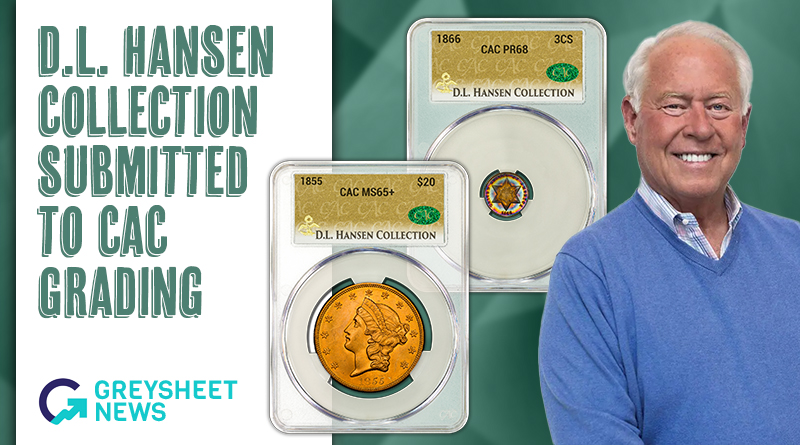
Prominent Collector Dell Loy Hansen Submitting His Historical Collection Of U.S. Coins To CAC Grading
8/8/2024
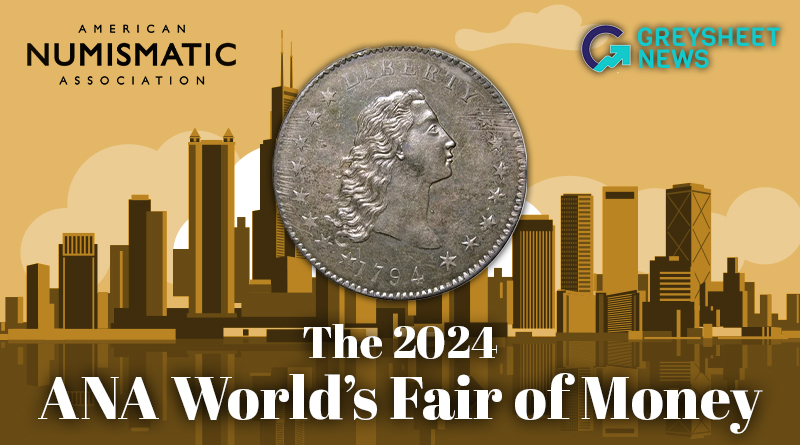
American Numismatic Association's Largest Coin Show, August 6-10 In Chicago
Dazzling rarities, free educational opportunities, family fun and more await at the Donald E. Stephens Convention Center
7/25/2024
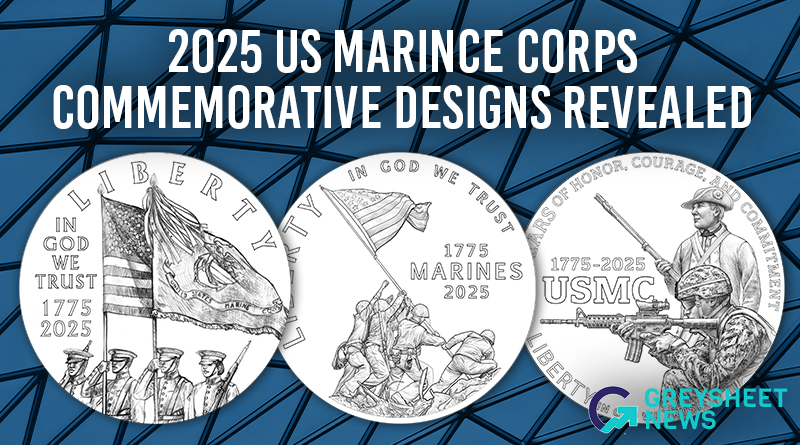
United States Mint Unveils Designs For The 2025 United States Marine Corps 250th Anniversary Commemorative Coin Program
The designs will be featured on a $5 gold coin, a $1 silver coin, and a half dollar clad coin.
7/23/2024
Events
Heritage Auctions: US Coins Tuesday & Wednesday Select Auction
Location: Heritage Auctions
Wednesday, July 1, 2026
Heritage Auctions: World & Ancient Coins Wednesday & Thursday Select Auction
Location: Heritage Auctions
Thursday, July 2, 2026