


 Whitman Expo



The unprecedented crossover underscores his personal efforts to combat “grade inflation.”
Thank you to our sponsors!
Go check them out!




This popular key date comes from a relatively lower mintage, of which many of them were melted down, making this a very scarce Indian Cent. The 1872 is a better date in circulated grades, becoming scarce in Mint State. It is notably rare in gem condition and very difficult to find with red color.
Obverse Description
A portrait bearing the likeness of a Native American in full headdress framed by the words UNITED STATES OF AMERICA around the periphery. The date is centered at the bottom under the portrait.
Reverse Description
The reverse bears the denomination of ONE CENT in the center surrounded by a wreath bearing a ribbon with arrows tied in at the bottom center.
Book Reference
1872 Cent Production: These cents were struck in quantities similar to those of 1871. Aside from the 1877, this is the toughest date to find today. The planchets made from the recoinage melt were not of a consistent quality. Most coins of this date are streaky due to uneven alloy mixes. Many examples were poorly struck or are found with missing detail due to some liquid, such as machine oil or water, getting on the planchet or dies.
A minority of these coins was struck with the Shallow N reverse (see 1871). This is becoming a well-known design change that is increasing in value as specialists become more familiar with its existence.
Survivability: The ongoing recoinage effort created a crazy situation where the recently issued coinage was being sent back to the Mint to be melted and struck into new coins. As soon as the new coins reached the banks, many may have been piled on top of older coins that were scheduled to be shipped back to the Mint. As a result, most of this issue was melted soon after its production.
Examples that survived are usually very low-grade pieces. It is very diffcult to find problem-free coins. In the past, many examples in the Very Fine to Extremely Fine grades were wire-brushed to simulate mint luster. These whizzed coins were dangerous to collectors until the advent of certified grading. Many coins were ruined in the process of being whizzed.
Collecting Challenges: It is very diffcult to find attractive, problem-free examples. Most are poorly struck, or are struck through machine oil. Any attractive problem-free example should be considered for your collection. Some collectors target this date for investment potential. One Detroit collector, Carl Herkowitz, spent 25 years buying problem-free examples of this date. Even so, he had a diffcult time finding more than 200 pieces. His hoard contained 22 Mint State examples, 20 About Uncirculated, 50 Extremely Fine, 50 Very Fine, 50 Fine, and 20 Very Good. His hoard was sold from 2003 to 2005. Only one example in this group had a Shallow N reverse, and it was bought already attributed as such. Hoards of high-quality pieces like these do not cause concern about price drops if they were to be sold—on the contrary, if large groups of rare coins enter the market at once, they excite collectors and prices may actually rise.
Collecting Circulated Pieces: The optimal collecting grade for circulated coins is F-12. This is one of the toughest dates in the series to find in attractive shape, without any problems. Consider dropping strict standards on strike and light hits to acquire this date. These are very rare when properly graded in Extremely Fine and About Uncirculated. Some collectors attempt to find the Shallow N reverse as well as the typically found Bold N reverse.
Collecting Mint State Pieces: The optimal collecting grade for Mint State coins is MS-63RB. It is very diffcult to locate with a full strike. Many are missing detail, usually on the reverse, due to machine oil or water resting on the planchet or on the dies. Coins that were struck through liquid will have good strikes on one side and missing details on the other. Weakly struck coins will have missing detail on both sides.
This issue will be mostly streaky red-brown, due to improperly mixed alloy. Full red coins are very rare. This is the toughest date to find in MS-65RD.
A growing number of collectors attempt to acquire both reverse types. The Shallow N is about ten times rarer than the Bold N.
Collecting Proof Issues: Proofs of 1872 are much more readily available than high-grade Mint State coins. As a result, many substitute the less expensive Proof in their collections of Uncirculated coins, although the different texture may be distracting to most collectors.
These are a bit more readily available than 1871 and earlier dates, but because of date collector pressure they 1872, Bulging T receive similar prices. While they tend to be red-brown, they are not as streaky as other dates. This makes finding attractive examples a bit easier. Proofs of this date are quite scarce in full red, and gems are very tough.
It is diffcult to find deep mirrors on this issue and examples with full cameo contrast are rare.
A new Bold N reverse die with a distinctive bulging right pennant of the T in CENT is found on all Proof issues. This die was used intermittently until 1878.
VARIETIES:
At least three different Shallow N dies were used this year. The die pairs without obverse varieties are listed as Snow-4. Shallow N dies paired with obverse varieties are listed as S-13 (repunched date) and S-14 (bold misplaced digit). There are a number of minor repunched dates, but because of the high price of this date, premiums are small.
A small part of the D in UNITED started to deteriorate on the hub starting this year. (The hub is the undated steel positive used to make dies for coinage. A hub can be used over many years since it does not carry the date.) This hub deterioration, resulting in a “broken D,” is an interesting aspect to trace over the next few years, but its coins do not warrant a premium.
Catalog Information
GSID:
1324
Designer:
James B. Longacre
Obverse Designer:
James B. Longacre
Obverse Lettering:
UNITED STATES OF AMERICA, 1872
Reverse Designer:
James B. Longacre
Reverse Lettering:
ONE CENT
Weight (gr):
3.11 gr
Weight (oz):
0.11 oz
Strike Type:
Business
Diameter:
19
Coin Shape:
Round
Edge:
Plain
Coin Date:
1872
Denomination:
1c
Designation:
MS
Mint Location:
Philadelphia
Mintage:
4,042,000
Coinage Type:
Indian Head Cent
Coinage Years:
1864-1909
Composition:
95% copper; 5% zinc & tin
PCGS #:
2104
Send Catalog Feedback
To: editor@greysheet.com
Subject: I would like to contribute catalog info to CDN for 1872 1c MS RB
Body: Referring page: http://dev.greysheet.com/prices/item/1872-united-states-indian-cent-red-brown-surfaces/gsid/1324 GSID: 1324 Title: 1872 1c MS RB
Subscribe to View
View more data, info, and visualizations. Get access to retail and wholesale pricing as well as auction data.
Coin Value History
1872 1c MS RB
Value By Grade
1872 1c MS RB
CPG (retail) values
Currency
Grade Range
Grading Authority
Sort by
Pricing
Values
Greysheet & CPG® Values
| Grade | CAC | CPG Value (Retail) | Greysheet Price (Wholesale) |
|---|---|---|---|
| MS66 |

|
$6,000 | $1,234 |
| MS66 | - | $4,400 | $1,234 |
| MS65 |
|
$1,234 | $1,234 |
| MS65 | - | $1,234 | $1,234 |
| MS64 |
|
$1,234 | $1,234 |
| MS64 | - | $1,234 | $1,234 |
| MS63 |
|
$1,234 | $1,234 |
| MS63 | - | $1,234 | $1,234 |
| MS62 |
|
$1,234 | $1,234 |
| MS62 | - | $1,234 | $1,234 |
| MS61 |
|
$1,234 | $1,234 |
| MS61 | - | $1,234 | $1,234 |
| MS60 | - | $1,234 | $1,234 |
| AU58 | - | $1,234 | $1,234 |
Indian Head Cent 1c 1859, Reverse of 1858 MS [Type]
![Indian Head Cent 1c 1859, Reverse of 1858 MS [Type]](https://images.greysheet.com/ctc/catalog/Indian-Cent.jpg?MaxWidth=200&Mode=Pad&Scale=UpscaleCanvas&format=webp)
Worth: $5 – $25,000
1859 1c MS

Worth: $5 – $25,000
Indian Head Cent 1c Copper Nickel, 1860-1864 MS [Type]
![Indian Head Cent 1c Copper Nickel, 1860-1864 MS [Type]](https://images.greysheet.com/ctc/catalog/1863-obv.jpg?MaxWidth=200&Mode=Pad&Scale=UpscaleCanvas&format=webp)
Worth: $6 – $72,000
1860 1c Round Bust MS

Worth: $6 – $18,000
1860 1c Pointed Bust MS

Worth: $7 – $28,800
1861 1c MS

Worth: $14 – $72,000
1862 1c MS

Worth: $6 – $72,000
1863 1c MS

Worth: $6 – $18,750
1864 1c Copper Nickel MS

Worth: $14 – $20,000
Indian Head Cent 1c Bronze, 1864-1909 MS BN [Type]
![Indian Head Cent 1c Bronze, 1864-1909 MS BN [Type]](https://images.greysheet.com/Ctc/CatalogEntry/auctions_stacksbowers_com_lots_view_3_j4gae-0.20200712022457246.jpg?MaxWidth=200&Mode=Pad&Scale=UpscaleCanvas&format=webp)
Worth: $1 – $1,688
Indian Head Cent 1c Bronze, 1864-1909 MS RB [Type]
![Indian Head Cent 1c Bronze, 1864-1909 MS RB [Type]](https://images.greysheet.com/Ctc/Catalog/20250811/m7z2wm7kefb0wx6umy1d.webp?MaxWidth=200&Mode=Pad&Scale=UpscaleCanvas&format=webp)
Worth: $44 – $2,000
Indian Head Cent 1c Bronze, 1864-1909 MS RD [Type]
![Indian Head Cent 1c Bronze, 1864-1909 MS RD [Type]](https://images.greysheet.com/Ctc/Catalog/20200826/ha_com_131705_30309-0.20200826140250544.jpg?MaxWidth=200&Mode=Pad&Scale=UpscaleCanvas&format=webp)
Worth: $110 – $120,000
1864 1c Bronze MS BN

Worth: $10 – $625
1864 1c Bronze MS RB

Worth: $160 – $11,500
1864 1c Bronze MS RD

Worth: $300 – $18,000
1872 1C MS64 Red and Brown NGC. CDN: $1,800 Whsle. Bid for NGC/PCGS MS64. Mintage 4,042,000. ...
$2,074
1872 1C MS63 Red and Brown PCGS. Bold N in ONE. CDN: $1,500 Whsle. Bid for NGC/PCGS MS63. Mintage 4,042,000....

$1,440
1872 1C MS65 Red and Brown PCGS....
$2,100
1872 1C MS62 Red and Brown NGC. NGC Census: (17/244). PCGS Population: (21/466). CDN: $850 Whsle. Bid for NGC/PCGS MS62. Mi...

$900
1872 1C MS61 Red and Brown ANACS. Ex: Dan Brown. NGC Census: (2/244). PCGS Population: (0/449). Mintage 4,042,000....

$600
1872 1C MS66 Red and Brown PCGS. CAC. ...

$4,230
1872 1C AU58 PCGS. PCGS Population (0/382). NGC Census: (1/233). Mintage: 4,042,000. From The Malibou Lake Collection....

$940
1872 1C Red and Brown -- Cleaned -- Genuine PCGS. Unc Details. NGC Census: (0/225). PCGS Population (1/367). Mintage: 4,042...

$575
1872 1C VG10 BN NGC. NGC Census: (0/224). PCGS Population (1/362). Mintage: 4,042,000. (#2104)...

$138
1872 1C Good 6 NGC. NGC Census: (0/224). PCGS Population (0/363). Mintage: 4,042,000. (#2104)...

$89
1872 1C --Repunched Date--AU55 ICG. NGC Census: (0/0). PCGS Population (0/348). Mintage: 4,042,000. (#2104)...

$575
1872 1C --Scratched--ICG. G4 Details. NGC Census: (0/0). PCGS Population (1/345). Mintage: 4,042,000. (#2104)...

$50
1872 1C VG8 ICG. NGC Census: (0/214). PCGS Population (0/340). Mintage: 4,042,000. (#2104)...

$98
1872 1C --Cleaned, Scratched--ICG. AU53 Details. NGC Census: (0/213). PCGS Population (0/336). Mintage: 4,042,000. (#2104)...

$299
1872 1C --Severely Corroded, Mount Removed--ANACS. XF40 Details. NGC Census: (0/205). PCGS Population (0/312). Mintage: 4,04...

$75
1872 1C MS64 Red and Brown PCGS. Bold N in ONE. Mintage 4,042,000....

$2,100
1872 1C Indian Cent -- Struck Thru Obverse/Reverse -- MS63 Red and Brown PCGS....

$552
1872 1C MS65 Red and Brown PCGS. PCGS Population: (92/15 and 4/0+). Mintage 4,042,000. ...

$3,120
1872 1C MS62 Red and Brown PCGS. PCGS Population: (20/459 and 0/4+). NGC Census: (15/232 and 0/1+). CDN: $850 Whsle. Bid fo...

$1,080
1872 1C MS61 Red and Brown ANACS. Softly struck on the reverse peripheral devices, but well detailed on the obverse, this s...
$632
Greysheet News
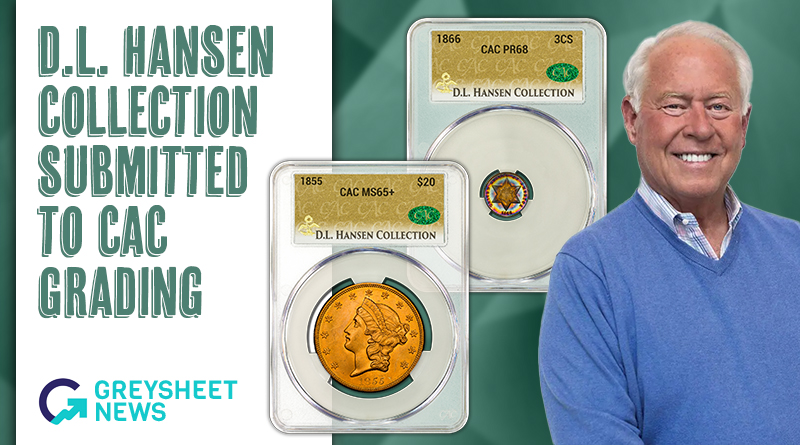
Prominent Collector Dell Loy Hansen Submitting His Historical Collection Of U.S. Coins To CAC Grading
8/8/2024
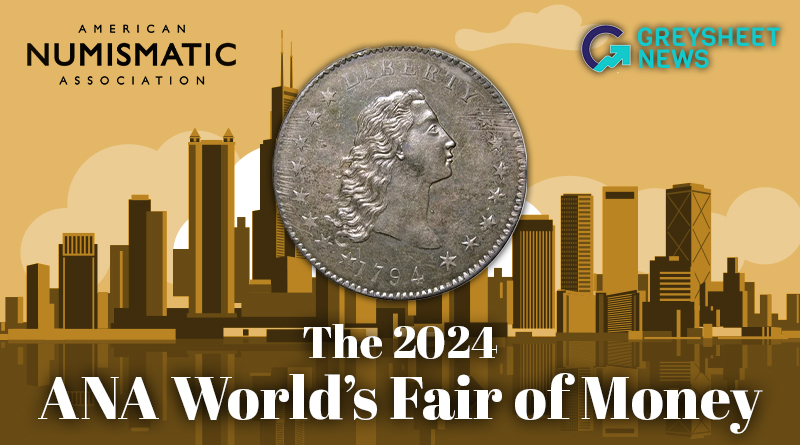
American Numismatic Association's Largest Coin Show, August 6-10 In Chicago
Dazzling rarities, free educational opportunities, family fun and more await at the Donald E. Stephens Convention Center
7/25/2024
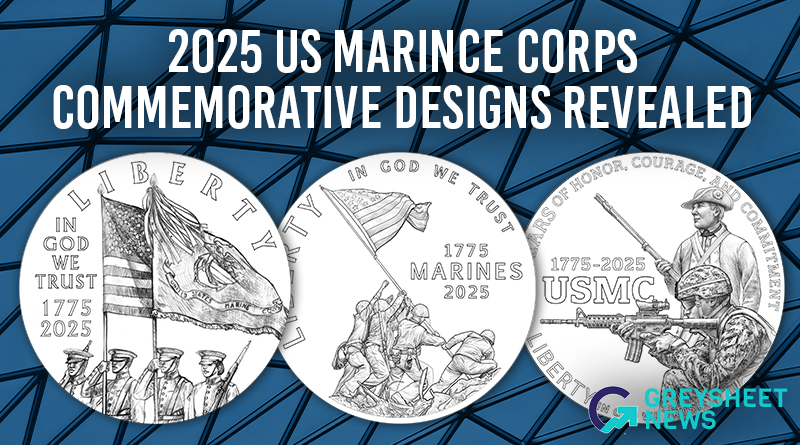
United States Mint Unveils Designs For The 2025 United States Marine Corps 250th Anniversary Commemorative Coin Program
The designs will be featured on a $5 gold coin, a $1 silver coin, and a half dollar clad coin.
7/23/2024
Events
Heritage Auctions: US Coins Tuesday & Wednesday Select Auction
Location: Heritage Auctions
Wednesday, July 1, 2026
Heritage Auctions: World & Ancient Coins Wednesday & Thursday Select Auction
Location: Heritage Auctions
Thursday, July 2, 2026