




 Whitman Expo



The unprecedented crossover underscores his personal efforts to combat “grade inflation.”
Thank you to our sponsors!
Go check them out!





From a total mintage of 300 coins for the year, the small letters variety is the more common of the two letter types with a mintage of 200. With that said any proof Flying Eagle is scarce, and underrated especially compared to the 1856, with a mintage close to 1,500 coins. Proof examples of this issue are truly underrated.
Obverse Description
An eagle with wings extended in full flight fills the central obverse design with the words UNITED STATES OF AMERICA around the top periphery. The date is centered at the bottom.
Reverse Description
The reverse bears the denomination of ONE CENT in the center surrounded by a wreath bearing a ribbon tied in at the bottom center.
Book Reference
1858, Small Letters, Cent Production: The Small Letters design was an attempt to lower the relief of the Flying Eagle design. It is believed that Assistant Engraver Anthony C. Paquet supplied the letter punches for this variety. The obvious difference is the smaller letters, which are similar to a font used on some medals ascribed to Paquet’s hand. Whitman’s Red Book Large Letters describes the difference as having the AM in AMERICA separated, which is a very easy way to describe the differences. The eagle was also modified slightly, although most collectors key in on the lettering style. As this was also the last year of the Flying Eagle motif, the Small Letters can be considered a one-year design change.Small Letters
There is no record as to when the letter style was changed, but it was used extensively on pattern issues of this year, so perhaps it was initially a pattern design made early in the year that was found acceptable to be put into regular production the same year. If so, the Small Letters dies may have been used side by side with any Large Letters dies made at the beginning of the year.
It is interesting to note that the Mint increased the die spacing to maximize the longer die life promised by the shallower design. As a result, many more Small Letters coins are found weakly struck. It is not unusual to find these coins with an anomaly called strike doubling, which is caused by a shifting of the dies at the time the coins are struck. The result is a slight doubling around some of the design elements, including the date and letters. Many collectors confuse this doubling with the highly prized doubled dies. In the Flying Eagle series, true doubled dies will be seen only in the eagle and letters, not the date, which is added to the die in a separate process. A Flying Eagle cent with doubling on the letters and date is most likely a strike-doubled coin, and not worth an added premium.
Survivability: There is no information regarding the release of these coins. It is believed that they were first issued side by side with the Large Letters cents until those dies were used up. Today, we find no overwhelming scarcity of the Small Letters design over the Large Letters design. As such, the estimated mintage for both the Small Letters and Large Letters designs is given as half the total mintage.
As with all the copper-nickel cents, these were popular and circulated widely. By 1860, their presence in circulation was overwhelming. It was not uncommon to bundle the cents in 25- and 50-coin bags. During the coinage crisis of the Civil War, these coins were totally removed from circulation. In 1863, they quickly returned to circulation where they stayed until the redemption period of the 1870’s. Most of the issue was melted at this time. The coins that survived are either median Mint State grades that never returned to circulation after the war or very well-worn coins that stayed in circulation until the 1880’s.
Collecting Challenges: These are widely available in low grades and in moderate Mint State grades (such as MS-63). It is diffcult to find fully struck examples, but it is better to be patient and wait for the right coin to present itself than to quickly fill a hole in your album with a weakly struck example.
There were two reverse styles used this year: High Leaves and Low Leaves (see also 1858, Large Letters). Both are found paired with the Small Letters obverse, with the High Leaves reverse a bit harder to find. If collectors start adding all four die combinations (including the two Large Letters combinations) to their sets, the added demand should push the value of all 1858 Flying Eagles slightly higher.
Collecting Circulated Pieces: The optimal collecting grade for circulated coins is EF-40. As low-grade examples are quite plentiful, it would be advisable to purchase higher-grade examples with original uncleaned surfaces. Selecting a well-struck example is also desirable for an attractive collection. The overwhelming demand for this issue is in the About Uncirculated grade, and as such, their prices have advance steadily over the years.
Collecting Mint State Pieces: The optimal collecting grade for Mint State coins is MS-64. This is the toughest Flying Eagle cent (of the regular issues) to locate in top condition. The prices in Mint State are not much higher than those of the 1858 Large Letters or even the 1857. Some prooflike pieces exist, which are quite attractive and command an added premium.
Collecting Proof Issues: Proof Flying Eagle cents are some of the most attractive coins in numismatics! They all are rare, so when examples become available, they are very expensive or sell very quickly. Most if not all of the Proof issues were struck to be included in a 12-piece pattern set the Mint sold to collectors between 1858 and 1860 (see below).
There are prooflike Mint State examples that may be confused for actual Proof coins. True Proofs should have deeply mirrored fields and superb strikes. The 1858 Small Letters Proof is found with both the High Leaves (rare) and Low Leaves reverse. Few collectors attempt to acquire both types, mainly due to the cost.
VARIETIES:
A few scarce repunched dates are known for this year. Only one obverse doubled die is known. All other reported obverse doubled dies have proven to be strike-doubled coins, which garner no additional premium. Some of the Low Leaves dies show reworking on the denomination—these are doubled dies, but are really too minor to attract much attention.
PATTERNS:
The Mint was busy this year trying to increase the die life and striking quality of the cents. In addition to the Small Letters obverse, which was put into production, two other obverse designs were tested: a Small Eagle and an Indian Head design. These were struck together with four reverse wreaths, including the regular wreath then in production, the Plain Oak Wreath, the Oak Wreath With an Ornamented Shield, and the Laurel Wreath.
The Mint produced 12-piece sets of all these die combinations (11 pieces with the regular-issue Small Letters Flying Eagle cent). This became a staple of the Mint’s sales (along with the 1856 Flying Eagle cent) and about 150 to 200 sets were produced and sold over the next few years. Some combinations, such as the 1858 Indian Head / Laurel Wreath die combination, were struck in larger quantities to satisfy demand. Today, many advanced collectors are interested in assembling this set. Some examples of these pattern coins are found in circulated grades.
Catalog Information
GSID:
15318
Designer:
James B. Longacre
Obverse Designer:
James B. Longacre
Obverse Lettering:
UNITED STATES OF AMERICA, 1858
Reverse Designer:
James B. Longacre
Reverse Lettering:
ONE CENT
Weight (gr):
4.67 gr
Weight (oz):
0.165 oz
Strike Type:
Proof
Diameter:
19
Coin Shape:
Round
Edge:
Plain
Variety:
Flying Eagle, Small Letters
Coin Date:
1858
Denomination:
1c
Designation:
PR
Mint Location:
Philadelphia
Mintage:
200
Coinage Type:
Flying Eagle Cent
Coinage Years:
1856-1858
Composition:
0.880 Copper; 0.120 Nickel
PCGS #:
2043
Send Catalog Feedback
To: editor@greysheet.com
Subject: I would like to contribute catalog info to CDN for 1858 1c Flying Eagle, Small Letters PR
Body: Referring page: http://dev.greysheet.com/prices/item/1858-1c-small-letters-united-states-flying-eagle-cents-proof/gsid/15318 GSID: 15318 Title: 1858 1c Flying Eagle, Small Letters PR
Subscribe to View
View more data, info, and visualizations. Get access to retail and wholesale pricing as well as auction data.
Coin Value History
1858 1c Flying Eagle, Small Letters PR
Value By Grade
1858 1c Flying Eagle, Small Letters PR
CPG (retail) values
Currency
Grade Range
Grading Authority
Sort by
Pricing
Values
Greysheet & CPG® Values
| Grade | CAC | CPG Value (Retail) | Greysheet Price (Wholesale) |
|---|---|---|---|
| PR67 |

|
$93,500 | $1,234 |
| PR67 | - | $84,000 | $1,234 |
| PR66 |
|
$1,234 | $1,234 |
| PR66 | - | $1,234 | $1,234 |
| PR65 |
|
$1,234 | $1,234 |
| PR65 | - | $1,234 | $1,234 |
| PR64 |
|
$1,234 | $1,234 |
| PR64 | - | $1,234 | $1,234 |
| PR63 |
|
$1,234 | $1,234 |
| PR63 | - | $1,234 | $1,234 |
| PR62 |
|
$1,234 | $1,234 |
| PR62 | - | $1,234 | $1,234 |
| PR61 |
|
$1,234 | $1,234 |
| PR61 | - | $1,234 | $1,234 |
| PR60 |
|
$1,234 | $1,234 |
| PR60 | - | $1,234 | $1,234 |
Flying Eagle Cent 1c 1856-1858 PR [Type]
![Flying Eagle Cent 1c 1856-1858 PR [Type]](https://images.greysheet.com/ctc/catalog/1856FlyingEagleCent_Obv.jpg?MaxWidth=200&Mode=Pad&Scale=UpscaleCanvas&format=webp)
Worth: $3,800 – $78,000
1856 1c Flying Eagle PR

Worth: $8,000 – $160,000
1856 1c Flying Eagle PR CAM

Worth: $19,500 – $75,000
1857 1c Flying Eagle PR

Worth: $3,800 – $55,000
1857 1c Flying Eagle PR CAM

Worth: $7,500 – $76,800
1858 1c Flying Eagle, Large Letters PR

Worth: $3,800 – $78,000
1858 1c Flying Eagle, Large Letters PR CAM

Worth: $8,500 – $90,000
1858 1c Flying Eagle, Small Letters PR CAM

Worth: $6,000 – $150,000
1858 1c Flying Eagle, Large Letters PR DCAM
Worth: $110,000 – $130,000
Flying Eagle Cent Set 1c 4 Coins PR

Worth: $25,600 – $213,000
1858 1C Small Letters PR64 PCGS. CAC. Snow-PR2....

$17,400
1858 1C Small Letters PR65 PCGS. CAC. Snow-PR1. ...

$26,400
1858 1C Small Letters PR63 PCGS. ...

$5,640
1858 1C Small Letters PR66 NGC. Snow-PR3. ...

$32,900
1858 1C Small Letters PR61 ANACS. Snow-PR2. ...

$4,025
1858 1C Small Letters PR62 PCGS. Snow-PR1. ...

$6,325
1858 1C Small Letters--Cleaned--ANACS. AU55 Details. NGC Census: (7/341). PCGS Population (59/1356). Mintage: 24,600,000. N...

$161
1858 1C Small Letters PR64+ PCGS. Snow-PR2. ...

$8,100
1858 1C Small Letters PR65 NGC. NGC Census: (4/4). PCGS Population: (10/3). CDN: $14,000 Whsle. Bid for NGC/PCGS PR65. ...

$18,000
1858 1C Small Letters PR63 PCGS. ...

$5,520
1858 1C Small Letters PR66 NGC. ...

$21,850
1858 1C Small Letters PR62 NGC. ...

$4,600
1858 1C Small Letters PR64 PCGS. ...

$6,600
1C 1858 SMALL LETTERS. PCGS PR65 CAC

$27,025
1858 1C Small Letters PR63 PCGS. ...

$9,000
1858 1C Small Letters PR66 Cameo NGC. ...

$40,250
1858 1C Small Letters PR62 NGC. ...

$6,325
1858 1C Small Letters PR64 Cameo NGC. Snow-PR3. ...

$6,600
$7,050
1C 1858 SMALL LETTERS PCGS PR63 CAC

$7,050
Greysheet News
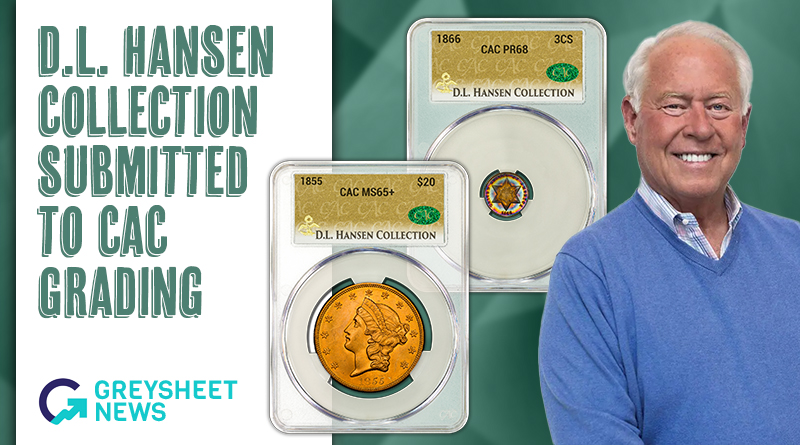
Prominent Collector Dell Loy Hansen Submitting His Historical Collection Of U.S. Coins To CAC Grading
8/8/2024
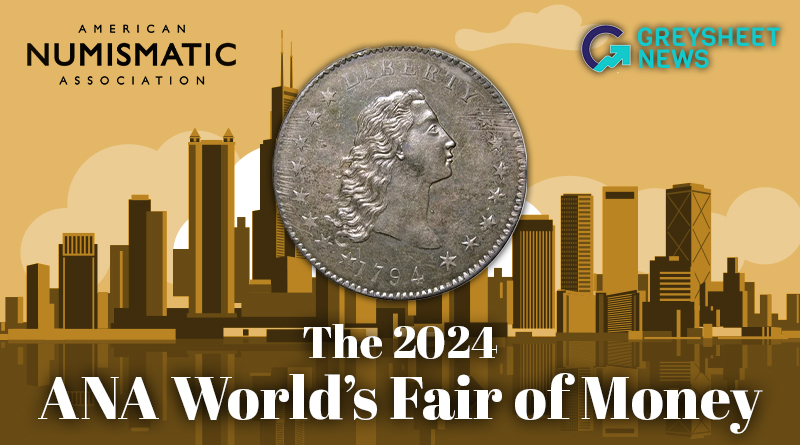
American Numismatic Association's Largest Coin Show, August 6-10 In Chicago
Dazzling rarities, free educational opportunities, family fun and more await at the Donald E. Stephens Convention Center
7/25/2024
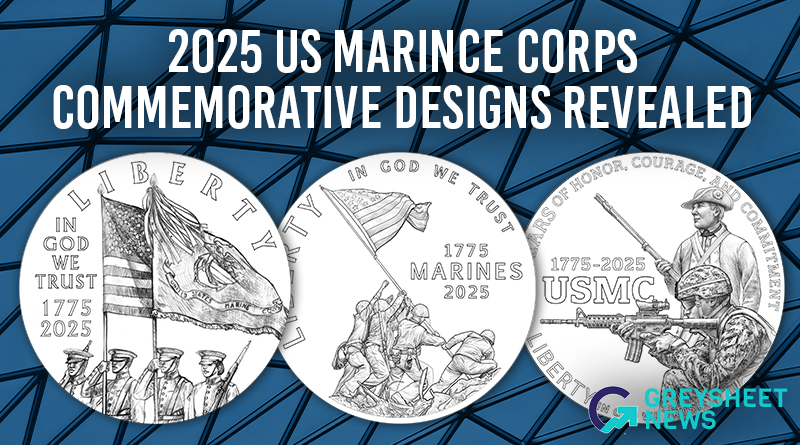
United States Mint Unveils Designs For The 2025 United States Marine Corps 250th Anniversary Commemorative Coin Program
The designs will be featured on a $5 gold coin, a $1 silver coin, and a half dollar clad coin.
7/23/2024
Events
Heritage Auctions: US Coins Tuesday & Wednesday Select Auction
Location: Heritage Auctions
Wednesday, July 1, 2026
Heritage Auctions: World & Ancient Coins Wednesday & Thursday Select Auction
Location: Heritage Auctions
Thursday, July 2, 2026