




 Whitman Expo
![Image for Flying Eagle Cent 1c 1856-1858 PR [Type]](https://images.greysheet.com/ctc/catalog/1856FlyingEagleCent_Obv.jpg?MaxHeight=640&Mode=Pad&Scale=UpscaleCanvas&format=webp)


The unprecedented crossover underscores his personal efforts to combat “grade inflation.”
Thank you to our sponsors!
Go check them out!





America's first small-cent was the Flying Eagle cent, which was originally struck in 1856 as a pattern and was produced for mass circulation in 1857 and 1858. The change came after the United States Mint began experimenting with new pattern cents in the mid 1850s due to increased costs of producing the large cent. The Flying Eagle cent was designed by United States Mint Chief Engraver James B. Longacre and is an adaption of the Christian Gobrecht pattern silver dollars struck in the mid 1830s.
Approximately 1,800 Flying Eagle cents were struck with the 1856 date for use as presentation pieces, and possibly some were made at a later point to satisfy the demands of collectors who wanted examples of the coin. The Flying Eagle cent was officially unveiled for circulation on May 25, 1857, which was during the period that the United States government was demonetizing foreign coinage that was still circulating throughout the nation as legal tender. The Flying Eagle cent is made from a composition of 88% copper, 12% nickel, and were widely dubbed "nicks." Though the Flying Eagle cent was in regular production for just two years, more than 40 million were struck and became quite popular with the public.
For a coin that was produced for only two years (three when counting the popularly collected 1856 presentation piece, which did see limited circulation) at just the Philadelphia Mint, there are a surprising number of issues and varieties. These include the 1856 and 1857 regular issues, 1858 Large or Small Letters varieties, 1858/7 overdates, and proof specimens from 1856 and 1857, as well as proof variants of each the 1858 Small and Large Letters. While the Flying Eagle cent is widely collected as an extension of the Indian Head cent series, Flying Eagle pennies offer enough complexity as a standalone series to provide plenty of challenge to anyone desiring to focus solely on collecting and studying this first incarnation of the small cent.
Obverse Description
An eagle with wings extended in full flight fills the central obverse design with the words UNITED STATES OF AMERICA around the top periphery. The date is centered at the bottom.
Reverse Description
The reverse bears the denomination of ONE CENT in the center surrounded by a wreath bearing a ribbon tied in at the bottom center.
Book Reference
Designer: James B. Longacre. Weight: 4.67 grams. Composition: .880 copper, .120 nickel. Diameter: 19 mm. Edge: Plain. Mint: Philadelphia.
Key to Collecting: The Flying Eagle cents first appeared in circulation on May 25, 1857. Within a year, most old copper “large” cents had disappeared, and the new small cents were standard in the channels of commerce. These were struck in quantity for the remainder of 1857 and in 1858, after which the design was abandoned, as problems resulted in striking. Examples are easy to obtain today. Most are in worn grades from G to F or better. Mint State pieces are plentiful in the marketplace, but within any assigned grading number, quality is apt to vary widely. Cherrypicking for a choice example is highly advised.
Aspects of Striking and Appearance: Striking is usually fairly good. However, some are weak on the eagle’s head and tail feathers and, sometimes, in the lettering on the obverse. The reverse tends to be better struck, but weakness can occur on the higher areas of the wreath. Most Mint State coins are lustrous.
Proof Coins: Proof coins of the 1856 pattern are plentiful, with over 1,500 believed to have been made, most as restrikes. Among regular issues, Proofs of 1857 are very rare and those of 1858 are quite rare but not in the league of the 1857.
Catalog Information
GSID:
73857
Designer:
James B. Longacre
Obverse Designer:
James B. Longacre
Obverse Lettering:
UNITED STATES OF AMERICA, 1856
Reverse Designer:
James B. Longacre
Reverse Lettering:
ONE CENT
Weight (gr):
4.67 gr
Weight (oz):
0.165 oz
Strike Type:
Proof
Diameter:
19
Coin Shape:
Round
Edge:
Plain
Variety:
1856-1858
Coin Date:
Flying Eagle Cent
Denomination:
1c
Designation:
PR
Mint Location:
Philadelphia
Coinage Type:
Flying Eagle Cent
Coinage Years:
1856-1858
Composition:
0.880 Copper; 0.120 Nickel
PCGS #:
2034
Send Catalog Feedback
To: editor@greysheet.com
Subject: I would like to contribute catalog info to CDN for Flying Eagle Cent 1c 1856-1858 PR [Type]
Body: Referring page: http://dev.greysheet.com/prices/item/1856-1858-1c-proof-type-coin/gsid/73857 GSID: 73857 Title: Flying Eagle Cent 1c 1856-1858 PR [Type]
Subscribe to View
View more data, info, and visualizations. Get access to retail and wholesale pricing as well as auction data.
Coin Value History
Flying Eagle Cent 1c 1856-1858 PR [Type]
Value By Grade
Flying Eagle Cent 1c 1856-1858 PR [Type]
CPG (retail) values
Currency
Grade Range
Grading Authority
Sort by
Pricing
Values
Greysheet & CPG® Values
| Grade | CAC | CPG Value (Retail) | Greysheet Price (Wholesale) |
|---|---|---|---|
| PR67 |

|
$93,500 | $1,234 |
| PR67 | - | $78,000 | $1,234 |
| PR66 |
|
$1,234 | $1,234 |
| PR66 | - | $1,234 | $1,234 |
| PR65 |
|
$1,234 | $1,234 |
| PR65 | - | $1,234 | $1,234 |
| PR64 |
|
$1,234 | $1,234 |
| PR64 | - | $1,234 | $1,234 |
| PR63 |
|
$1,234 | $1,234 |
| PR63 | - | $1,234 | $1,234 |
| PR62 |
|
$1,234 | $1,234 |
| PR62 | - | $1,234 | $1,234 |
| PR61 |
|
$1,234 | $1,234 |
| PR61 | - | $1,234 | $1,234 |
| PR60 |
|
$1,234 | $1,234 |
| PR60 | - | $1,234 | $1,234 |
1856 1c Flying Eagle PR

Worth: $8,000 – $160,000
1856 1c Flying Eagle PR CAM

Worth: $19,500 – $75,000
1857 1c Flying Eagle PR

Worth: $3,800 – $55,000
1857 1c Flying Eagle PR CAM

Worth: $7,500 – $76,800
1858 1c Flying Eagle, Large Letters PR

Worth: $3,800 – $78,000
1858 1c Flying Eagle, Large Letters PR CAM

Worth: $8,500 – $90,000
1858 1c Flying Eagle, Small Letters PR

Worth: $4,200 – $78,000
1858 1c Flying Eagle, Small Letters PR CAM

Worth: $6,000 – $150,000
1858 1c Flying Eagle, Large Letters PR DCAM
Worth: $110,000 – $130,000
Flying Eagle Cent Set 1c 4 Coins PR

Worth: $25,600 – $213,000
1856 1C Snow-9 PR12 PCGS. ...
$10,980
1856 1C Snow-9 PR45+ PCGS. CAC. ...
$18,301
1856 1C Snow-9 PR64 PCGS. ...
$29,890
1856 1C Snow-9 PR65 NGC. ...
$28,060
1856 1C Snow-9 PR8 PCGS....

$9,600
1856 Flying Eagle PCGS AU details/plugged
$6,313
1856 1C Snow-3 PR63 PCGS. CAC....
$22,800
1856 1C Snow-9 PR62 PCGS....

$13,800
1857 1C Flying Eagle PR66 PCGS. Snow-PR1....

$46,800
1856 1C Snow-3 PR67+ PCGS. CAC....

$312,000
1856 1C Snow-9 PR30 PCGS....

$10,200
1856 1C Snow-9 PR61 PCGS....

$13,200
1856 1C Snow-9 PR58 NGC....

$12,000
1856 1C Snow-9 -- Edge Damage -- NCS. Proof, VF Details....

$9,600
1856 1C Snow-5 PR60 ANACS. ...

$16,200
1856 1C Snow-9 PR15 PCGS. CAC. ...
$9,900
1856 1C Snow-9 -- Holed -- NCS. Proof Good Details. ...
$4,320
1856 1C Snow-9 PR53 PCGS. ...
$12,408
1856 1C PR50 PCGS. PCGS Population: (8/645). NGC Census: (6/357). ...

$11,750
1856 Flying Eagle PCGS PR-25
$8,625
Greysheet News
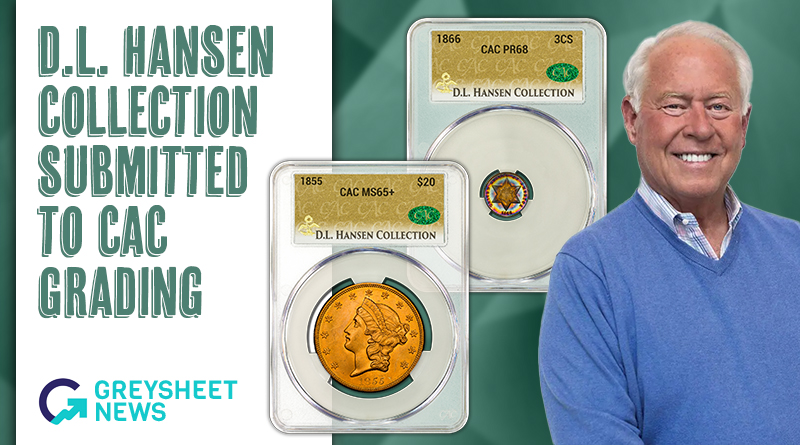
Prominent Collector Dell Loy Hansen Submitting His Historical Collection Of U.S. Coins To CAC Grading
8/8/2024
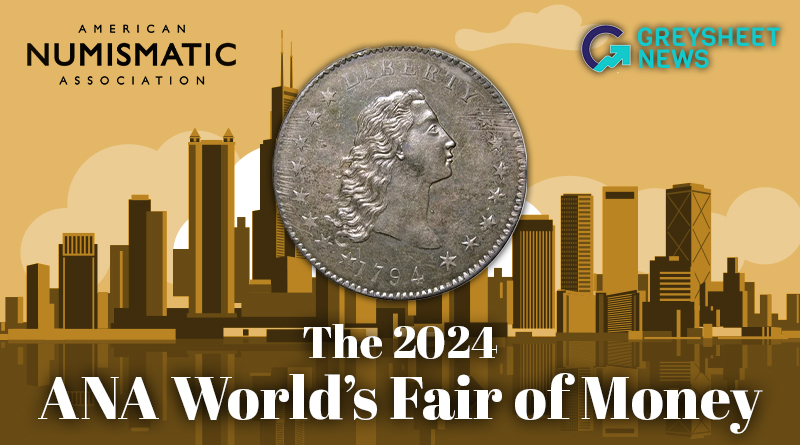
American Numismatic Association's Largest Coin Show, August 6-10 In Chicago
Dazzling rarities, free educational opportunities, family fun and more await at the Donald E. Stephens Convention Center
7/25/2024
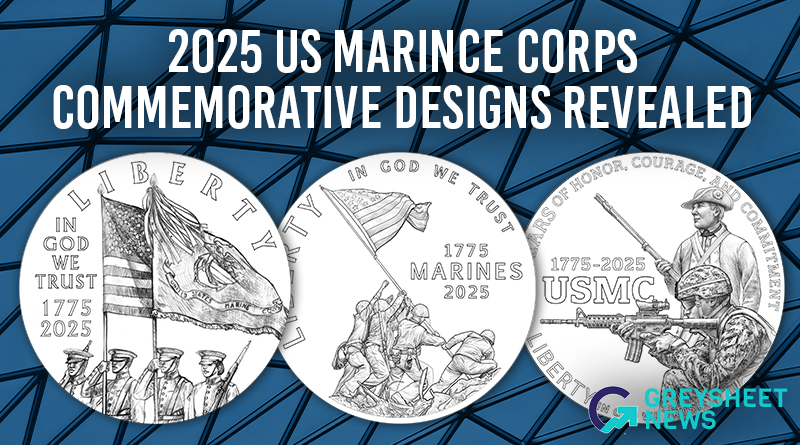
United States Mint Unveils Designs For The 2025 United States Marine Corps 250th Anniversary Commemorative Coin Program
The designs will be featured on a $5 gold coin, a $1 silver coin, and a half dollar clad coin.
7/23/2024
Events
Heritage Auctions: US Coins Tuesday & Wednesday Select Auction
Location: Heritage Auctions
Wednesday, July 1, 2026
Heritage Auctions: World & Ancient Coins Wednesday & Thursday Select Auction
Location: Heritage Auctions
Thursday, July 2, 2026