




 Whitman Expo



The unprecedented crossover underscores his personal efforts to combat “grade inflation.”
Thank you to our sponsors!
Go check them out!




This key date issue comes from the lowest mintage for the V Nickel Series with only 238,000 coins struck. The 1912-S is the final year in the Liberty Nickel Series and the only one minted in San Francisco. Like many other coins out of this mint, the strikes are on the weaker side. Scarce in circulated grades through Mint State with gems being even more tough to find. The finest gems of this issue are quite rare.
Obverse Description
Lady Liberty with the word LIBERTY on her crown faces left with 13 stars around the periphery and the date positioned at the bottom center.
Reverse Description
Large V (roman numeral 5) is centered in the design surrounded by an ornate wreath with UNITED STATES OF AMERICA * CENTS * around the periphery. The motto E PLURIBUS UNUM appears near the top between the wreath and letters STATES OF AME.
Book Reference
Key to Collecting: With its enticingly small mintage figure of just 238,000 coins—far and away the lowest in the series to this point—and its status as the only San Francisco Mint coin of this design, the 1912-S has been popular since day one. In the marketplace, examples are usually either Mint State or well worn. Very few exist at intermediate levels such as Extremely Fine or About Uncirculated.
All examples seen have bulging in the obverse field and are somewhat lightly detailed (see below). Any sharp piece is likely an alteration from a Philadelphia Mint coin, made by adding an S. Such fakes used to be common in collecting circles, but today the leading grading services know how to spot one, and it is a virtual certainty that a certified coin is genuine.
CIRCULATION STRIKES:
Characteristics and Appearance: All authentic examples have lightness of details on Liberty’s hair above her forehead. On most (but not all) on the reverse, the corn ear to the left of the ribbon bow does not show the details of the kernels. However, some others have most kernels visible, but are light on the hair. No Full Details coins have been seen. Both the obverse and reverse field can be somewhat “mushy” and undulating (not flat), this being best seen by holding the coin at an angle to the light. Often, the left obverse field is bulged. Denticles, particularly on the obverse, can be softly struck, blending together in some areas. All 1912-S nickels show weakness; since multiple die pairs were used, this situation can be laid on the shoulders of the press technician, who spaced the dies ever too slightly far apart.
The luster is usually soft and somewhat “greasy,” not deeply frosty. Sometimes the luster is greasy on the portrait, but softly lustrous (not deeply frosty) in the fields. Overall, a 1912-S nickel is so distinctive that you can recognize this variety simply by looking at the obverse—no need to check for an S mintmark!
Mintage and Distribution Notes: At the San Francisco Mint in 1912, at least 11 obverse dies were on hand and 10 reverses. However, it seems that some dies remained unused, the reverses being destroyed not because they were unusable, but because the Liberty Head motif had been discontinued. Otherwise, it is likely that just a handful of reverses would have been destroyed, in addition to all of the dated obverses. In his Annual Report, Mint Director George E. Roberts stated that the average life of a die for the 1912-S coinage was 23,972 strikes.
He probably used the number of dies made and the total mintage and did some math, not knowing that not all of the dies were used. This theory seems to be borne out by the fact that 160 dies were made at the Philadelphia Mint for a coinage of more than 26 million pieces, which would figure to more than 160,000 coins per die. As noted under the 1912-D commentary, the coinage actually amounted to about 90,000 impressions per die.
One reverse die has the S directly opposite the punctuation dot and equidistant between the dot and the denticles; another has the S slightly right of center and slightly closer to the denticles. Still another has the S close to the dot, ever so slightly to the right of its center, and distant from the denticles.
With a mintage of just 238,000 circulation strikes, in terms of mintage for commerce the 1912-S handily outranks its two closest contenders—the 1885 (1,476,490) and the 1886 (3,326,000). However, in 1885 and 1886 such pieces were not saved as novelties, as collectors simply ordered Proofs, which were made to the extent of several thousand for each year.
I have always found Mint State 1912-S nickels to be more available in the marketplace than the higher-mintage 1912-D issues. In The Numismatist, November 1931, William Pukall, of Union City, New Jersey, offered for sale an Uncirculated 1912-D Liberty nickel for $1.25, while a 1912-S of the same grade cost $1. I recall that in the 1950’s, it was not unusual to encounter 1912-S nickels in small groups in dealers’ stocks, but that this was not true of 1912-D nickels.
While the certification-service data show more Mint State 1912-D coins graded than 1912-S, the ratio is less than 2 to 1. For the 1912-D series, there were 8,474,000 nickels coined, so the mathematical ratio is 36 to 1—clearly an ample verification of the saving of Mint State coins in their era.
SPOTLIGHT ON THE 1912-S NICKEL
Coinage of the 1912-S nickel commenced on December 24, 1912, and lasted just four days.
On December 30, San Francisco Mayor James S. (“Sunny Jim”) Rolph Jr. used one of the first-struck coins, provided by Acting Treasurer of the U.S. Sub-Treasury Thomas P. Burns, to launch the city’s first electric streetcar. In fact, it was the first in the nation that was owned by a municipality rather than a traction company (as they were called).7 As part of the inaugural event, trolley cars filled with civil officials went up Geary Street to the St. Francis Hotel, with a crowd estimated at 50,000 watching the proceedings.
An early advertisement for this particular coin appeared in The Numismatist, November 1913, and was placed by Burton Fraser, located in Oakland, across the bay from San Francisco. In circus style, the headline included “Nickels. 1912 San Francisco Mint 1912,” with the tagline in boldface type: “The first nickels ever coined in the San Francisco Mint and the last of the Lady’s Head design.” The accompanying text noted the following: “Nickels were made in the San Francisco Mint for the first time December 24, 1912, and were coined but four days. No dealer in the U.S. has any. Strictly Uncirculated specimens 25¢ each. Supply limited. Burton Fraser, 768 Ninth St., Oakland, Cal.”
Not much is known about Fraser. If he was a dealer, his business must have been modest. The strong claim that “no dealer in the U.S. has any” seems to reflect a knowledge of the market.
This particular issue has been the subject of a fair amount of numismatic attention. In Mehl’s Numismatic Monthly, January 1916, the editor commented:
The 1912 San Francisco nickels are somewhat rare, being coined only four days in the last part of December. The hardness of the metal broke several sets of dies. Nearly every specimen met with in circulation has one or more die breaks on them, and I have one specimen in my collection that has six cracks from the border into the coin on the reverse.
From this we learn that Mehl had at least one 1912-S—with six die cracks—in his personal collection, although the implication is that he had several. Similar to many other dealers, Mehl often acquired examples as novelties in this series, and then sold them when the passion faded.
Catalog Information
GSID:
2979
Designer:
Charles E. Barber
Obverse Designer:
Charles Barber
Obverse Lettering:
LIBERTY, 1912
Reverse Designer:
Charles Barber
Reverse Lettering:
V, UNITED STATES OF AMERICA, E PLURIBUS UNUM, CENTS
Weight (gr):
5 gr
Weight (oz):
0.1608 oz
Strike Type:
Business
Diameter:
21.2
Coin Shape:
Round
Edge:
Plain
Coin Date:
1912-S
Denomination:
5c
Designation:
MS
Mint Location:
San Francisco
Mint Mark:
S
Mintage:
238,000
Coinage Type:
Liberty head nickel
Coinage Years:
1883-1912
Composition:
75% copper; 25% nickel
PCGS #:
3875
Send Catalog Feedback
To: editor@greysheet.com
Subject: I would like to contribute catalog info to CDN for 1912-S 5c MS
Body: Referring page: http://dev.greysheet.com/prices/item/1912-s-five-cents-liberty-v-nickel/gsid/2979 GSID: 2979 Title: 1912-S 5c MS
Subscribe to View
View more data, info, and visualizations. Get access to retail and wholesale pricing as well as auction data.
Coin Value History
1912-S 5c MS
Value By Grade
1912-S 5c MS
CPG (retail) values
Currency
Grade Range
Grading Authority
Sort by
Pricing
Values
Greysheet & CPG® Values
| Grade | CAC | CPG Value (Retail) | Greysheet Price (Wholesale) |
|---|---|---|---|
| MS66 |

|
$8,750 | $1,234 |
| MS66 | - | $5,500 | $1,234 |
| MS65 |
|
$1,234 | $1,234 |
| MS65 | - | $1,234 | $1,234 |
| MS64 |
|
$1,234 | $1,234 |
| MS64 | - | $1,234 | $1,234 |
| MS63 |
|
$1,234 | $1,234 |
| MS63 | - | $1,234 | $1,234 |
| MS62 |
|
$1,234 | $1,234 |
| MS62 | - | $1,234 | $1,234 |
| MS61 |
|
$1,234 | $1,234 |
| MS61 | - | $1,234 | $1,234 |
| MS60 |
|
$1,234 | $1,234 |
| MS60 | - | $1,234 | $1,234 |
| AU58 |
|
$1,234 | $1,234 |
| AU58 | - | $1,234 | $1,234 |
| AU55 |
|
$1,234 | $1,234 |
| AU55 | - | $1,234 | $1,234 |
| AU53 |
|
$1,234 | $1,234 |
| AU53 | - | $1,234 | $1,234 |
| AU50 |
|
$1,234 | $1,234 |
| AU50 | - | $1,234 | $1,234 |
| XF45 |
|
$1,234 | $1,234 |
| XF45 | - | $1,234 | $1,234 |
| XF40 |
|
$1,234 | $1,234 |
| XF40 | - | $1,234 | $1,234 |
| VF35 |
|
$1,234 | $1,234 |
| VF35 | - | $1,234 | $1,234 |
| VF30 |
|
$1,234 | $1,234 |
| VF30 | - | $1,234 | $1,234 |
| VF25 |
|
$1,234 | $1,234 |
| VF25 | - | $1,234 | $1,234 |
| VF20 |
|
$1,234 | $1,234 |
| VF20 | - | $1,234 | $1,234 |
| F15 |
|
$1,234 | $1,234 |
| F15 | - | $1,234 | $1,234 |
| F12 |
|
$1,234 | $1,234 |
| F12 | - | $1,234 | $1,234 |
| VG10 |
|
$1,234 | $1,234 |
| VG10 | - | $1,234 | $1,234 |
| VG8 |
|
$1,234 | $1,234 |
| VG8 | - | $1,234 | $1,234 |
| G6 |
|
$1,234 | $1,234 |
| G6 | - | $1,234 | $1,234 |
| G4 |
|
$1,234 | $1,234 |
| G4 | - | $1,234 | $1,234 |
| AG3 |
|
$1,234 | $1,234 |
| AG3 | - | $1,234 | $1,234 |
Liberty (V) Nickel 5c No Cents, 1883 MS [Type]
![Liberty (V) Nickel 5c No Cents, 1883 MS [Type]](https://images.greysheet.com/Ctc/CatalogEntry/ha_com_1314_3218-0.20200626064157466.jpg?MaxWidth=200&Mode=Pad&Scale=UpscaleCanvas&format=webp)
Worth: $3 – $2,600
1883 5c No Cents MS

Worth: $3 – $2,500
Liberty (V) Nickel 5c With Cents, 1883-1912 MS [Type]
![Liberty (V) Nickel 5c With Cents, 1883-1912 MS [Type]](https://images.greysheet.com/ctc/catalog/Vobv.jpg?MaxWidth=200&Mode=Pad&Scale=UpscaleCanvas&format=webp)
Worth: $1 – $3,600
1883 5c Cents MS

Worth: $8 – $3,600
1884 5c MS

Worth: $8 – $12,000
1885 5c MS

Worth: $125 – $26,000
1886 5c MS

Worth: $58 – $35,000
1887 5c MS

Worth: $5 – $10,000
1888 5c MS

Worth: $10 – $9,000
1889 5c MS

Worth: $5 – $12,000
1890 5c MS

Worth: $3 – $12,000
1891 5c MS

Worth: $2 – $12,500
1892 5c MS

Worth: $2 – $26,400
1893 5c MS

Worth: $2 – $16,000
1894 5c MS

Worth: $5 – $12,000
1912-S 5C Fine 12 PCGS. CDN: $150 Whsle. Bid for NGC/PCGS Fine 12. Mintage 238,000. ...
$183
1912-S 5C VG10 PCGS. CDN: $125 Whsle. Bid for NGC/PCGS VG10. Mintage 238,000....
$139
1912-S 5C AU58 PCGS. PCGS Population: 32 in 58 (2 in 58+), 1014 finer (11/25). CDN: $1,350 Whsle. Bid for NGC/PCGS AU58. Mi...
$1,342
1912-S 5C VF25 PCGS. PCGS Population: 65 in 25, 1180 finer (11/25). CDN: $400 Whsle. Bid for NGC/PCGS VF25. Mintage 238,000...

$528
1912-S 5C MS64 NGC. CDN: $1,750 Whsle. Bid for NGC/PCGS MS64. Mintage 238,000. ...

$1,620
1912-S 5C MS63 PCGS. CAC. CAC: 18 in 63, 112 finer (10/25). CDN: $1,620 Whsle. Bid for NGC/PCGS MS63. Mintage 238,000. ...

$2,220
1912-S 5C VG8 PCGS. Mintage 238,000. ...

$110
1912-S 5C VF20 ANACS. Housed in a small-sized holder. Mintage 238,000....
$468
1912-S 5C Fine 15 PCGS. Mintage 238,000. ...

$216
1912-S 5C MS65 PCGS. Mintage 238,000. ...

$2,424
1912-S 5C MS66 PCGS....

$4,200
1912-S 5C Good 6 NGC. Mintage 238,000. ...

$81
1912-S 5C MS62 ANACS. Mintage 238,000. ...

$1,380
1912-S 5C XF45 NGC. NGC Census: (2/554). PCGS Population: (20/967). CDN: $1,000 Whsle. Bid for NGC/PCGS XF45. Mintage 238,0...

$960
1912-S 5C Liberty Nickel -- Reverse Half of Split Planchet -- AU50 PCGS....

$720
1912-S 5C -- Corroded -- ANACS. XF40 Details. Mintage 238,000....

$372
1912-S 5C Good 4 PCGS. PCGS Population: (79/3037). NGC Census: (106/1566). CDN: $90 Whsle. Bid for NGC/PCGS Good 4 . Mintag...

$87
1912-S 5c PCGS/CAC AU53

$1,750
1912-S 5C MS61 NGC. NGC Census: (9/506). PCGS Population: (3/883). CDN: $1,350 Whsle. Bid for NGC/PCGS MS61. Mintage 238,00...

$1,260
1912-S 5C VF30 PCGS. PCGS Population: (32/1023). NGC Census: (9/556). CDN: $400 Whsle. Bid for NGC/PCGS VF30. Mintage 238,0...

$504
Greysheet News
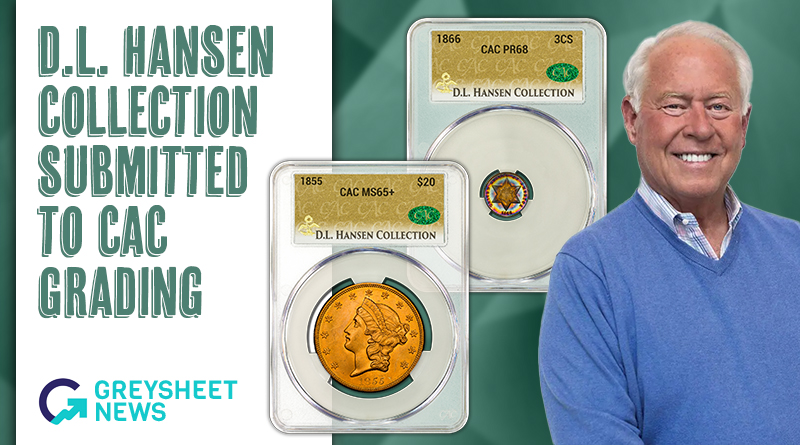
Prominent Collector Dell Loy Hansen Submitting His Historical Collection Of U.S. Coins To CAC Grading
8/8/2024
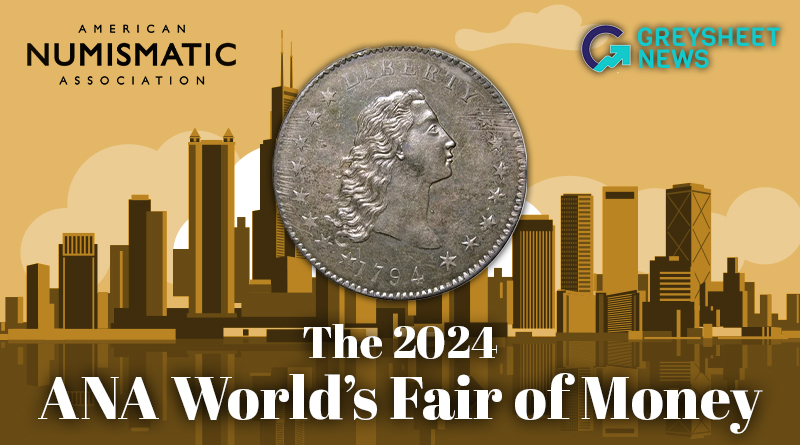
American Numismatic Association's Largest Coin Show, August 6-10 In Chicago
Dazzling rarities, free educational opportunities, family fun and more await at the Donald E. Stephens Convention Center
7/25/2024
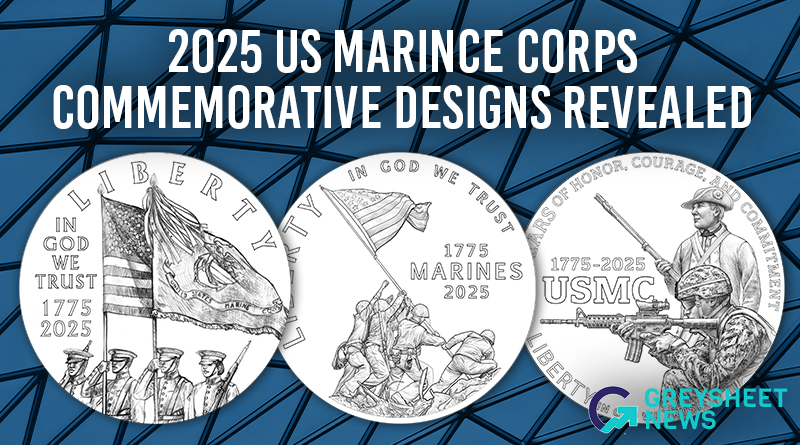
United States Mint Unveils Designs For The 2025 United States Marine Corps 250th Anniversary Commemorative Coin Program
The designs will be featured on a $5 gold coin, a $1 silver coin, and a half dollar clad coin.
7/23/2024
Events
Heritage Auctions: US Currency Tuesday Select Auction
Location: Heritage Auctions
Tuesday, June 2, 2026
Heritage Auctions: World Paper Money Tuesday Select Auction
Location: Heritage Auctions
Tuesday, June 2, 2026
Heritage Auctions: US Coins Tuesday & Wednesday Select Auction
Location: Heritage Auctions
Wednesday, June 3, 2026