




 Whitman Expo



The unprecedented crossover underscores his personal efforts to combat “grade inflation.”
Thank you to our sponsors!
Go check them out!





Obverse Description
A shield flanked on the left and right by leaves topped with a cross with arrows positioned behind at the bottom so the arrow heads and shanks protrude at the sides. The motto IN GOD WE TRUST appears at the top periphery with the date positioned at the bottom center.
Reverse Description
A large numeral 5 surrounded by 13 stars centered in the design with UNITED STATES OF AMERICA * CENTS around the periphery.
Book Reference
Key to Collecting: As its high mintage suggests, the 1882 is plentiful in all grades today. Many Mint State coins exist, including into the MS-65 and 66 categories. Most such high-grade pieces are well struck and have excellent eye appeal. Proofs are plentiful as well and are usually of high quality.
CIRCULATION STRIKES:
Characteristics and Appearance: Slight weakness in the horizontal shield stripes is normal; otherwise, other areas are usually sharp. Many have the 2 in 1882 filled in (some of these have been incorrectly called overdates). Some coins are partially prooflike. Mint records indicate that in January 1883, for circulation-strike nickels of 1882, 507 obverse and 367 reverse dies were destroyed, and 18 reverses were held over for later use.39
Mintage and Distribution Notes: The January 1882 issue of Banker’s Magazine included this:
Owing to the small amount of five-cent nickel pieces in the Treasury, the Secretary has instructed the Director of the Mint to cause $17,540 in old copper cents and $104,018 in copper nickel cents, now in the Philadelphia Mint, to be recoined into five-cent nickel pieces, and instructions have already been given to carry out the direction. It will be some weeks before the Mint will be ready to begin the recoinage of these pieces, or to receive orders for the five-cent nickel coins from banks and others.
In February, the same magazine followed up with this:
The coinage of five-cent silver nickels has been resumed by the mint at Philadelphia, and applications for the new coins, accompanied by money or checks, should be made to the superintendent. The cost of transportation of the nickels, in exchange for lawful money, in multiples of $20, will be paid by the mint.
The circulation-strike mintage of 11,472,900 and the destruction of 507 obverse dies after the end of the year indicate an average output of 22,629 coins per die. Although Mint records do not reflect this, some unused obverse dies were kept in service past 1882, and not destroyed, these being the several obverses used to create the 1883, 3 Over 2, overdates. Reverse dies destroyed amounted to 367, with 18 retained for later use.
PROOF STRIKES:
Characteristics and Appearance: Usually well struck. Deep mirror surface is the rule, although some have a grainy, non-Proof surface on the reverse near the 5. One obverse die has a slight bulge at the denticles below the first 8 in the date. Another has 882 repunched south. Mint records indicate that in January 1883, for Proof nickels of 1882, two obverse dies and one reverse die were destroyed.40
Catalog Information
GSID:
2942
Designer:
James B. Longacre
Obverse Designer:
James B. Longacre
Obverse Lettering:
IN GOD WE TRUST, 1882
Reverse Designer:
James B. Longacre
Reverse Lettering:
5, UNITED STATES OF AMERICA, CENTS
Weight (gr):
5 gr
Weight (oz):
0.1608 oz
Strike Type:
Proof
Diameter:
20.5
Coin Shape:
Round
Edge:
Plain
Coin Date:
1882
Denomination:
5c
Designation:
PR
Mint Location:
Philadelphia
Mintage:
3,100
Coinage Type:
Shield nickel
Coinage Years:
1867-1883
Composition:
75% copper; 25% nickel
PCGS #:
93837
Send Catalog Feedback
To: editor@greysheet.com
Subject: I would like to contribute catalog info to CDN for 1882 5c PR DCAM
Body: Referring page: http://dev.greysheet.com/prices/item/1882-five-cents-proof-deep-cameo-shield-nickel/gsid/2942 GSID: 2942 Title: 1882 5c PR DCAM
Subscribe to View
View more data, info, and visualizations. Get access to retail and wholesale pricing as well as auction data.
Coin Value History
1882 5c PR DCAM
Value By Grade
1882 5c PR DCAM
CPG (retail) values
Currency
Grade Range
Grading Authority
Sort by
Pricing
Values
Greysheet & CPG® Values
| Grade | CAC | CPG Value (Retail) | Greysheet Price (Wholesale) |
|---|---|---|---|
| PR67 |

|
$10,500 | $1,234 |
| PR67 | - | $8,750 | $1,234 |
| PR66 |
|
$1,234 | $1,234 |
| PR66 | - | $1,234 | $1,234 |
| PR65 |
|
$1,234 | $1,234 |
| PR65 | - | $1,234 | $1,234 |
| PR64 |
|
$1,234 | $1,234 |
| PR64 | - | $1,234 | $1,234 |
| PR63 |
|
$1,234 | $1,234 |
| PR63 | - | $1,234 | $1,234 |
Shield Nickel 5c Rays, 1866-1867 PR [Type]
![Shield Nickel 5c Rays, 1866-1867 PR [Type]](https://images.greysheet.com/Ctc/CatalogEntry/ha_com_1316_3020-2.20200624040933286.jpg?MaxWidth=200&Mode=Pad&Scale=UpscaleCanvas&format=webp)
Worth: $875 – $12,600
1866 5c Rays PR

Worth: $875 – $12,600
1867 5c Rays PR

Worth: $18,000 – $50,000
Shield Nickel 5c No Rays, 1867-1883 PR [Type]
![Shield Nickel 5c No Rays, 1867-1883 PR [Type]](https://images.greysheet.com/Ctc/Catalog/ha_com_1291_4375-0.20200718080538892.jpg?MaxWidth=200&Mode=Pad&Scale=UpscaleCanvas&format=webp)
Worth: $180 – $6,600
1867 5c No Rays PR

Worth: $180 – $1,800
1867 5c No Rays, Pattern Reverse, FS-1902 PR

Worth: $1,800 – $13,200
1868 5c PR

Worth: $180 – $3,500
1869 5c PR

Worth: $180 – $3,960
1870 5c PR

Worth: $180 – $1,080
1871 5c PR

Worth: $180 – $5,400
1872 5c PR

Worth: $180 – $3,600
1873 5c Closed 3 PR

Worth: $180 – $2,880
1874 5c PR

Worth: $180 – $3,120
1875 5c PR

Worth: $180 – $6,000
1876 5c PR

Worth: $180 – $2,640
1882 5C PR67+ Deep Cameo PCGS. CAC. ...

$15,275
1882 5C PR66 Deep Cameo PCGS. ...

$2,585
1882 5C PR65 Ultra Cameo NGC. ...

$1,645
1882 5C PR64 Ultra Cameo NGC. NGC Census: (1/4). PCGS Population (0/3). ...

$1,292
$10,030
1882 5C PR66 Deep Cameo PCGS. ...

$3,055
1882 5C PR65 Deep Cameo PCGS. ...

$1,725
1882 5C PR64 Ultra Cameo NGC. Boldly struck with shimmering mint frost and deeply reflective fields. A bit of milky patina ...
$460
1882 5C PR67 Deep Cameo PCGS. CAC. ...

$17,625
1882 5C PR66 Deep Cameo PCGS. ...

$4,112
1882 5C PR67 Ultra Cameo NGC. ...

$7,475
1882 5C PR66 Ultra Cameo NGC. NGC Census: (2/2). PCGS Population (1/1). (#93837)...

$2,415
1882 5C PR67 Deep Cameo NGC. This is a gorgeous proof ...
$5,060
1882 5C PR66 Deep Cameo PCGS. Mostly brilliant with solid ...
$8,625
1882 5C PR67 Ultra Cameo NGC. Fully brilliant and as ...
$3,680
1882 5C PR 66 Deep Cameo PCGS. ...
$1,782
1882 5C PR66 Deep Cameo PCGS. Light streaky tan patina. ...
$1,552
Greysheet News
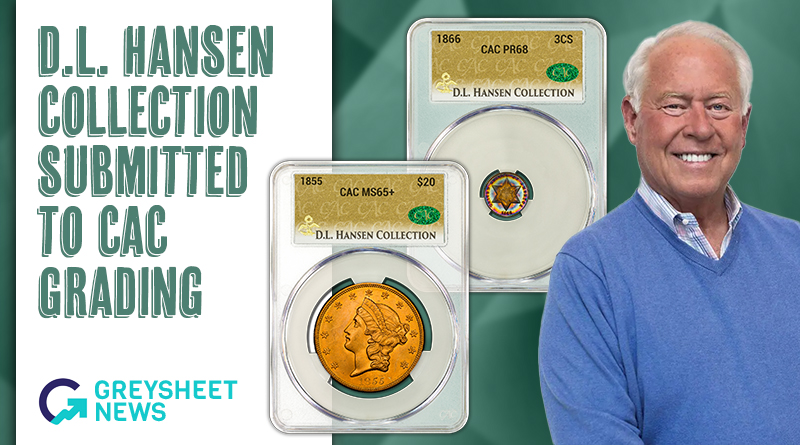
Prominent Collector Dell Loy Hansen Submitting His Historical Collection Of U.S. Coins To CAC Grading
8/8/2024
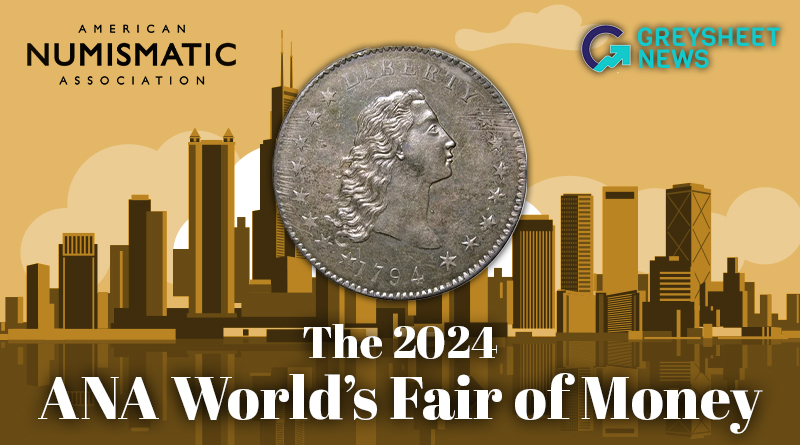
American Numismatic Association's Largest Coin Show, August 6-10 In Chicago
Dazzling rarities, free educational opportunities, family fun and more await at the Donald E. Stephens Convention Center
7/25/2024
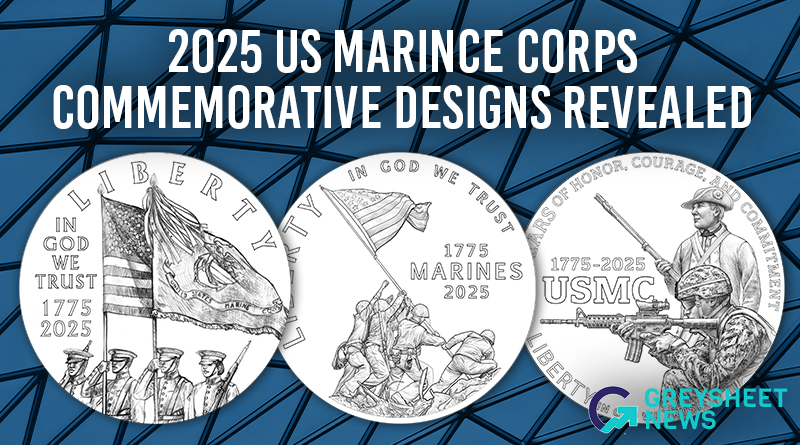
United States Mint Unveils Designs For The 2025 United States Marine Corps 250th Anniversary Commemorative Coin Program
The designs will be featured on a $5 gold coin, a $1 silver coin, and a half dollar clad coin.
7/23/2024
Events
Heritage Auctions: US Currency Tuesday Select Auction
Location: Heritage Auctions
Tuesday, June 2, 2026
Heritage Auctions: World Paper Money Tuesday Select Auction
Location: Heritage Auctions
Tuesday, June 2, 2026
Heritage Auctions: US Coins Tuesday & Wednesday Select Auction
Location: Heritage Auctions
Wednesday, June 3, 2026