




 Whitman Expo



The unprecedented crossover underscores his personal efforts to combat “grade inflation.”
Thank you to our sponsors!
Go check them out!





Moderate mintage of 3,200 coins (highest in the series, thus far, as mintages keep rising) of which most did not survive, making this issue more scarce than one would surmise from the original mintage. Scarce in all grades and becoming rare as a high-end gem. Gradually tougher with cameo surfaces and deep cameo surfaces, which are very rare.
Obverse Description
A shield flanked on the left and right by leaves topped with a cross with arrows positioned behind at the bottom so the arrow heads and shanks protrude at the sides. The motto IN GOD WE TRUST appears at the top periphery with the date positioned at the bottom center.
Reverse Description
A large numeral 5 surrounded by 13 stars centered in the design with UNITED STATES OF AMERICA * CENTS around the periphery.
Book Reference
Key to Collecting: The 1879 Shield nickel is very rare in Mint State, but the market value is lower than expected, as Proofs are readily available and, indeed, are plentiful in the context of Proofs of the era. Mint State pieces are somewhat prooflike, rendering historical auction listings unreliable for research purposes. Moreover, one die pair was used to make both Proofs and circulation strikes. In worn grades the 1879 is very elusive, and a key to the series.
Proofs are easy enough to find, and are usually of nice strike and eye appeal. Many have repunching at the 9 and are attributed as “1879, 9 Over 8” by some. In my opinion, however, such coins are from a regular 1879 die with slight repunching.
CIRCULATION STRIKES:
Characteristics and Appearance: Well struck, with satiny luster and somewhat prooflike, easily confused with Proofs. David W. Lange commented,
Because of their very low, non-Proof mintages, business-strike nickels of 1879 through 1881 were made from dies that retained much of their initial brilliance. Combined with the fact that the Mint was somewhat careless in its Proof production during this period, the result is that both Proof and non-proof nickels look very much alike!29
PROOF STRIKES:
Characteristics and Appearance: Usually well struck, with mirror surfaces and good contrast. Proofs have mirror edges (when viewed edge-on), while circulation strikes do not; this can help differentiate Proofs and circulation strikes of the same die pair. Some Proofs have a doubled date (F-01; see below) and are especially interesting (one in the Walter Childs Collection, sold in 1999, had been kept in the same family since it was ordered from the Mint). Another variety is B-2414, discussed below.
One obverse die, apparently comprising about 40% of the production run of Proofs, has a repunched 9 and is sometimes called an overdate (see below). Two Proof obverse dies are described by Edward L. Fletcher Jr.; one of these was later used to make circulation strikes. Peters and Mohon describe five different obverse dies—the “overdate” plus four with regular date. For dies with the date deeply punched, the numerals are close together, while lighter impressions have wider spacing.
VARIETIES:
Doubled Date—F-01 (Proof) and 02 (same die used to make circulation strikes; FS-unlisted). Sharply repunched, with the lighter, earlier date slightly west of the final date—most noticeable to the left of the 1 in 1879.
So-Called Overdate “1879, 9 Over 8”—Breen-2414; FS-unlisted. Confirmed only with Proof finish, although Breen (Encyclopedia, 1988) mentions two circulation strikes and further mentions that there are “at least two varieties.” Overdate status not determined, but likely a regular 1879 with slight repunching. Last digit with repunching within 9, said by Walter Breen to be an overdate, and long cataloged as such by many numismatists. However, in connection with the present study, I have been unable to match the 1878 logotype with the repunching in the 9, and there is no trace of the prominent lower-outside-right bulge of an 8 at the 9 of B-2414. In conversation with a numismatic expert at a leading grading service, Breen agreed wholeheartedly, adding, “but people want to call it an overdate anyway.” On the other hand, Thomas K. DeLorey believes it is a true overdate.30 Howard Spindel comments,
I can’t see anything that makes me want to conclusively state that it’s an overdate. There just isn’t enough extra metal there to make a solid judgment. The curve of the visible metal in the bottom bowl doesn’t really look like the curve of a 9 to me, but I can’t state for sure it’s the curve of an 8. I don’t think there’s even enough metal there to do an effective overlay study. My feeling is that it is so visually unimpressive that it doesn’t pay to get too worked up over whether it’s an overdate or not.”31
R.W. Julian advised that there is no record of any 1878 obverse dies having been destroyed, although five obverse dies of 1878 had been made.32 If this is a fact (Mint records occasionally are erroneous), this would strengthen the case for an 1879, 9 Over 8 overdate. Perhaps a high-resolution image overlay—one of these and an 1878 logotype—would resolve the question.
According to Julian, records state that in January 1880, six obverse dies of 1879 were destroyed. Could these have included some dated 1878? Such are the intrigues of Shield nickel research!
1879, 9 Over 8: Proof Strike Only:
Catalog Information
GSID:
2931
Designer:
James B. Longacre
Obverse Designer:
James B. Longacre
Obverse Lettering:
IN GOD WE TRUST, 1879
Reverse Designer:
James B. Longacre
Reverse Lettering:
5, UNITED STATES OF AMERICA, CENTS
Weight (gr):
5 gr
Weight (oz):
0.1608 oz
Strike Type:
Proof
Diameter:
20.5
Coin Shape:
Round
Edge:
Plain
Coin Date:
1879
Denomination:
5c
Designation:
PR
Mint Location:
Philadelphia
Mintage:
3,200
Coinage Type:
Shield nickel
Coinage Years:
1867-1883
Composition:
75% copper; 25% nickel
PCGS #:
3833
Send Catalog Feedback
To: editor@greysheet.com
Subject: I would like to contribute catalog info to CDN for 1879 5c PR
Body: Referring page: http://dev.greysheet.com/prices/item/1879-five-cents-proof-shield-nickel/gsid/2931 GSID: 2931 Title: 1879 5c PR
Subscribe to View
View more data, info, and visualizations. Get access to retail and wholesale pricing as well as auction data.
Coin Value History
1879 5c PR
Value By Grade
1879 5c PR
CPG (retail) values
Currency
Grade Range
Grading Authority
Sort by
Pricing
Values
Greysheet & CPG® Values
| Grade | CAC | CPG Value (Retail) | Greysheet Price (Wholesale) |
|---|---|---|---|
| PR68 |

|
$8,250 | $1,234 |
| PR68 | - | $7,000 | $1,234 |
| PR67 |
|
$1,234 | $1,234 |
| PR67 | - | $1,234 | $1,234 |
| PR66 |
|
$1,234 | $1,234 |
| PR66 | - | $1,234 | $1,234 |
| PR65 |
|
$1,234 | $1,234 |
| PR65 | - | $1,234 | $1,234 |
| PR64 |
|
$1,234 | $1,234 |
| PR64 | - | $1,234 | $1,234 |
| PR63 |
|
$1,234 | $1,234 |
| PR63 | - | $1,234 | $1,234 |
| PR62 |
|
$1,234 | $1,234 |
| PR62 | - | $1,234 | $1,234 |
| PR61 |
|
$1,234 | $1,234 |
| PR61 | - | $1,234 | $1,234 |
| PR60 |
|
$1,234 | $1,234 |
| PR60 | - | $1,234 | $1,234 |
| AU58 |
|
$1,234 | $1,234 |
| AU58 | - | $1,234 | $1,234 |
| AU55 |
|
$1,234 | $1,234 |
| AU55 | - | $1,234 | $1,234 |
| AU53 |
|
$1,234 | $1,234 |
| AU53 | - | $1,234 | $1,234 |
| AU50 |
|
$1,234 | $1,234 |
| AU50 | - | $1,234 | $1,234 |
| XF45 |
|
$1,234 | $1,234 |
| XF45 | - | $1,234 | $1,234 |
| XF40 |
|
$1,234 | $1,234 |
| XF40 | - | $1,234 | $1,234 |
Shield Nickel 5c Rays, 1866-1867 PR [Type]
![Shield Nickel 5c Rays, 1866-1867 PR [Type]](https://images.greysheet.com/Ctc/CatalogEntry/ha_com_1316_3020-2.20200624040933286.jpg?MaxWidth=200&Mode=Pad&Scale=UpscaleCanvas&format=webp)
Worth: $875 – $12,600
1866 5c Rays PR

Worth: $875 – $12,600
1867 5c Rays PR

Worth: $18,000 – $50,000
Shield Nickel 5c No Rays, 1867-1883 PR [Type]
![Shield Nickel 5c No Rays, 1867-1883 PR [Type]](https://images.greysheet.com/Ctc/Catalog/ha_com_1291_4375-0.20200718080538892.jpg?MaxWidth=200&Mode=Pad&Scale=UpscaleCanvas&format=webp)
Worth: $180 – $6,600
1867 5c No Rays PR

Worth: $180 – $1,800
1867 5c No Rays, Pattern Reverse, FS-1902 PR

Worth: $1,800 – $13,200
1868 5c PR

Worth: $180 – $3,500
1869 5c PR

Worth: $180 – $3,960
1870 5c PR

Worth: $180 – $1,080
1871 5c PR

Worth: $180 – $5,400
1872 5c PR

Worth: $180 – $3,600
1873 5c Closed 3 PR

Worth: $180 – $2,880
1874 5c PR

Worth: $180 – $3,120
1875 5c PR

Worth: $180 – $6,000
1876 5c PR

Worth: $180 – $2,640
1879 5C PR62 PCGS. PCGS Population: 18 in 62, 498 finer (12/25). CDN: $310 Whsle. Bid for NGC/PCGS PR62. Mintage 3,200. ...
$444
1879 5C PR65 NGC. CDN: $550 Whsle. Bid for NGC/PCGS PR65. Mintage 3,200. ...

$690
1879 5C PR67 NGC. NGC Census: (25/1). Mintage 3,200. ...

$1,500
1879 5C PR64 PCGS. Mintage 3,200. ...

$457
1879 5C PR58 PCGS. PCGS Population: (11/498). Mintage 3,200. ...

$420
1879 5C PR40 PCGS. PCGS Population: (2/513). Mintage 3,200. ...

$720
1879 5C PR66 NGC. Mintage 3,200. ...

$853
1879 5C PR45 PCGS. PCGS Population: (2/496 and 0/9+). NGC Census: (0/531 and 0/6+). Mintage 3,200. ...

$540
1879 5C PR68 NGC. ...

$4,500
1879 5C PR61 NGC. NGC Census: (5/519). PCGS Population: (3/471). PR61. Mintage 3,200. ...

$312
1879 5C -- Tooled -- ANACS. PR60 Details. NGC Census: (0/522). PCGS Population: (0/474). PR60. Mintage 3,200....

$300
1879 5C PR63 NGC. NGC Census: (37/458). PCGS Population: (39/406). CDN: $230 Whsle. Bid for problem-free NGC/PCGS PR63. Min...

$306
1879 5C PR55 PCGS. PCGS Population: (2/467). NGC Census: (0/516). Mintage 3,200. ...

$164
$661
1879 5C --Tooled, Cleaned--ANACS. Net PR50. The field left ...
$236
1879 5C PR62 NGC. NGC Census: 22 in 62 (1 in 62+), 558 finer (11/25). CDN: $310 Whsle. Bid for NGC/PCGS PR62. Mintage 3,200...

$348
1879 5C PR65 PCGS. Mintage 3,200. ...
$840
1879 5C PR67 NGC. NGC Census: (24/1). Mintage 3,200. ...

$1,800
1879 5C PR64 NGC. NGC Census: (169/309). PCGS Population: (146/283). CDN: $400 Whsle. Bid for NGC/PCGS PR64. Mintage 3,200....

$540
1879 5C PR58 NGC. NGC Census: (2/552). PCGS Population: (10/493). CDN: $195 Whsle. Bid for NGC/PCGS PR58. Mintage 3,200. ...

$480
Greysheet News
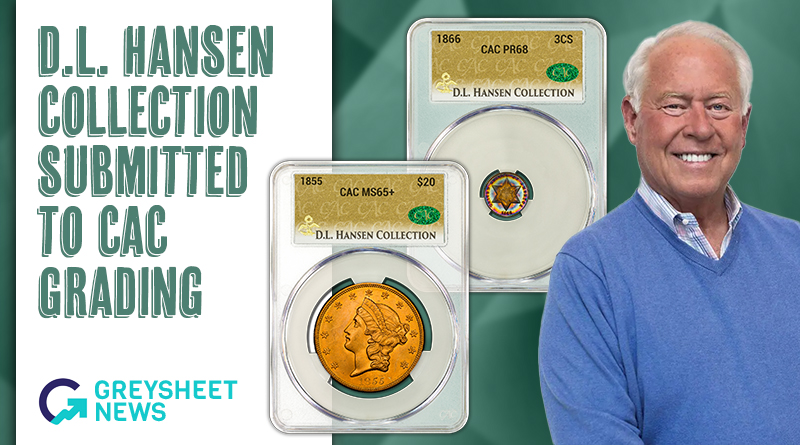
Prominent Collector Dell Loy Hansen Submitting His Historical Collection Of U.S. Coins To CAC Grading
8/8/2024
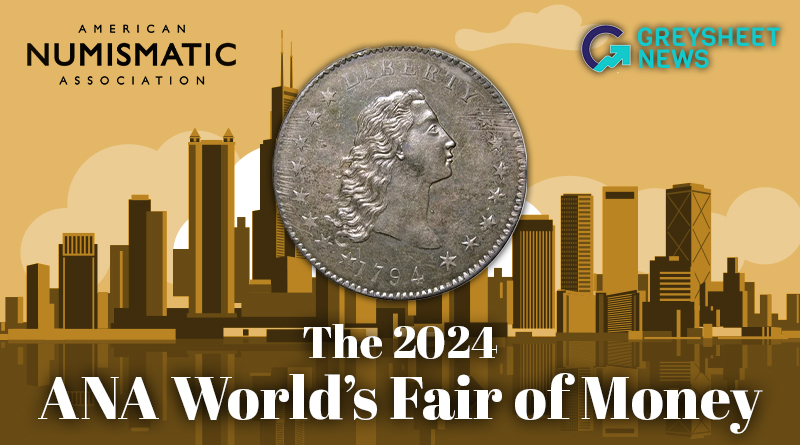
American Numismatic Association's Largest Coin Show, August 6-10 In Chicago
Dazzling rarities, free educational opportunities, family fun and more await at the Donald E. Stephens Convention Center
7/25/2024
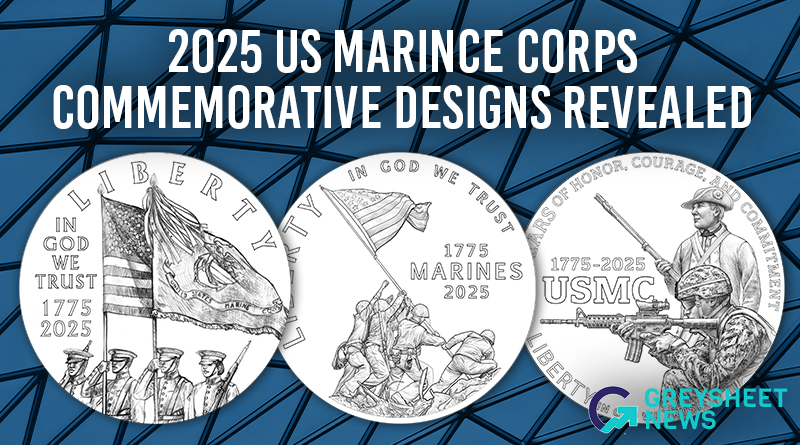
United States Mint Unveils Designs For The 2025 United States Marine Corps 250th Anniversary Commemorative Coin Program
The designs will be featured on a $5 gold coin, a $1 silver coin, and a half dollar clad coin.
7/23/2024
Events
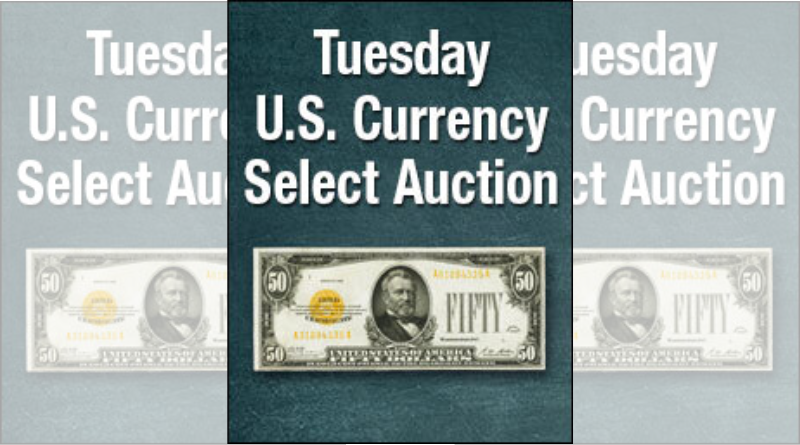
Heritage Auctions: US Currency Tuesday Select Auction
Location: Heritage Auctions
Tuesday, June 2, 2026
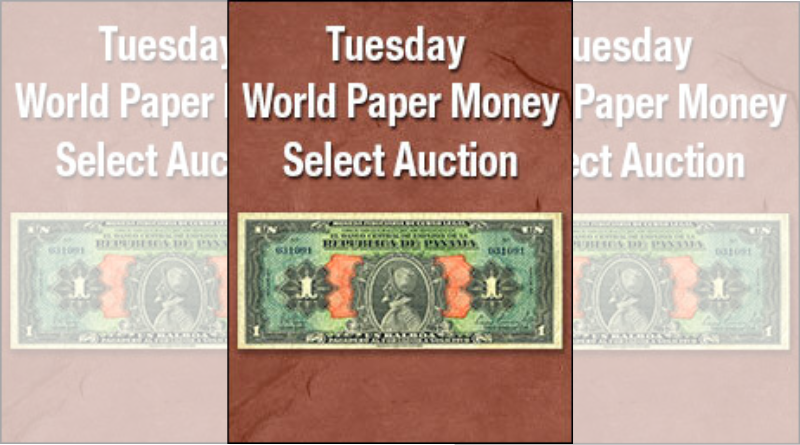
Heritage Auctions: World Paper Money Tuesday Select Auction
Location: Heritage Auctions
Tuesday, June 2, 2026
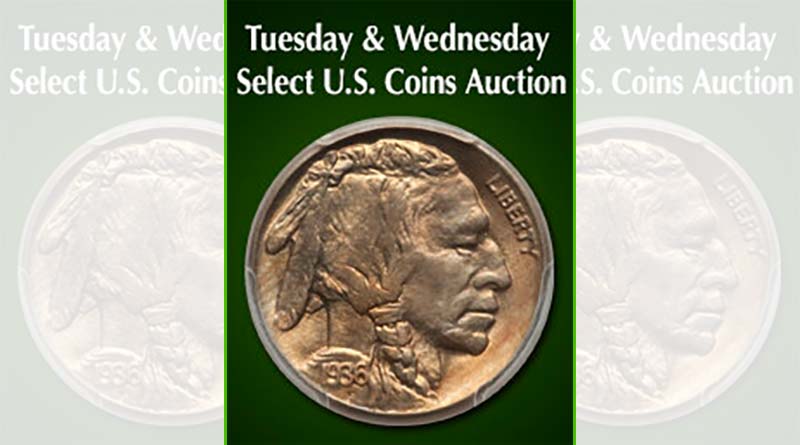
Heritage Auctions: US Coins Tuesday & Wednesday Select Auction
Location: Heritage Auctions
Wednesday, June 3, 2026