




 Whitman Expo



The unprecedented crossover underscores his personal efforts to combat “grade inflation.”
Thank you to our sponsors!
Go check them out!





Obverse Description
A shield flanked on the left and right by leaves topped with a cross with arrows positioned behind at the bottom so the arrow heads and shanks protrude at the sides. The motto IN GOD WE TRUST appears at the top periphery with the date positioned at the bottom center.
Reverse Description
A large numeral 5 surrounded by 13 stars centered in the design with UNITED STATES OF AMERICA * CENTS around the periphery.
Book Reference
Key to Collecting: With a mintage of just 2,350 “Proofs” and no circulation strikes, this is one of the rarest issues in the series. Nearly all Proofs are somewhat lustrous rather than deeply mirrorlike. It is an interesting debate whether pieces should be called Proofs because they were called that by the Mint and sold as Proofs to collectors, or whether they should be called Uncirculated, for they appear to be in the latter grade. Tradition dictates the Proof classification. The 1878 nickel usually has very attractive eye appeal.
Characteristics and Appearance: The strike is usually excellent on this issue. Many are from unpolished or incompletely polished dies, with mint luster or a combination of satiny luster and semi-prooflike surface. Few are deeply mirrored Proofs.
Walter Breen’s Encyclopedia of United States and Colonial Proof Coins (1979) states that a single die pair was used for this coinage, and that the “rare earliest state has shaft of 7 in lower loop of last 8.” This information is also found in the 1988 edition of Breen. Peters and Mohon (1995) wrote that “Experts do not agree that a genuine ‘overdate’ of this date exists.”
Five obverse dies were made, but most remained unused. On the Internet, “low grade 1873 Close 3 nickels are often presented as impaired Proof 1878 nickels.”27
Mintage and Distribution Notes: All 1878 Shield nickels were distributed as part of the year’s minor Proof sets, which also included the Indian Head cent and the nickel three-cent piece. Some of these were distributed with the silver Proof sets. This is the first year for which the mintage figure is definitely known for a minor Proof set. Perhaps a circulation issue was envisioned, as five obverse dies are known to have been destroyed. R.W. Julian suggests that the large mintage for 1878 Proofs, in comparison to the number made in 1877, was from “demand from speculators, accelerated by the fact that 1877 nickels had been sold out by the end of that year.”28
Catalog Information
GSID:
2930
Designer:
James B. Longacre
Obverse Designer:
James B. Longacre
Obverse Lettering:
IN GOD WE TRUST, 1878
Reverse Designer:
James B. Longacre
Reverse Lettering:
5, UNITED STATES OF AMERICA, CENTS
Weight (gr):
5 gr
Weight (oz):
0.1608 oz
Strike Type:
Proof
Diameter:
20.5
Coin Shape:
Round
Edge:
Plain
Coin Date:
1878
Denomination:
5c
Designation:
PR
Mint Location:
Philadelphia
Mintage:
2,350
Coinage Type:
Shield nickel
Coinage Years:
1867-1883
Composition:
75% copper; 25% nickel
PCGS #:
93832
Send Catalog Feedback
To: editor@greysheet.com
Subject: I would like to contribute catalog info to CDN for 1878 5c PR DCAM
Body: Referring page: http://dev.greysheet.com/prices/item/1878-five-cents-proof-deep-cameo-shield-nickel/gsid/2930 GSID: 2930 Title: 1878 5c PR DCAM
Subscribe to View
View more data, info, and visualizations. Get access to retail and wholesale pricing as well as auction data.
Coin Value History
1878 5c PR DCAM
Value By Grade
1878 5c PR DCAM
CPG (retail) values
Currency
Grade Range
Grading Authority
Sort by
Pricing
Shield Nickel 5c Rays, 1866-1867 PR [Type]
![Shield Nickel 5c Rays, 1866-1867 PR [Type]](https://images.greysheet.com/Ctc/CatalogEntry/ha_com_1316_3020-2.20200624040933286.jpg?MaxWidth=200&Mode=Pad&Scale=UpscaleCanvas&format=webp)
Worth: $875 – $12,600
1866 5c Rays PR

Worth: $875 – $12,600
1867 5c Rays PR

Worth: $18,000 – $50,000
Shield Nickel 5c No Rays, 1867-1883 PR [Type]
![Shield Nickel 5c No Rays, 1867-1883 PR [Type]](https://images.greysheet.com/Ctc/Catalog/ha_com_1291_4375-0.20200718080538892.jpg?MaxWidth=200&Mode=Pad&Scale=UpscaleCanvas&format=webp)
Worth: $180 – $6,600
1867 5c No Rays PR

Worth: $180 – $1,800
1867 5c No Rays, Pattern Reverse, FS-1902 PR

Worth: $1,800 – $13,200
1868 5c PR

Worth: $180 – $3,500
1869 5c PR

Worth: $180 – $3,960
1870 5c PR

Worth: $180 – $1,080
1871 5c PR

Worth: $180 – $5,400
1872 5c PR

Worth: $180 – $3,600
1873 5c Closed 3 PR

Worth: $180 – $2,880
1874 5c PR

Worth: $180 – $3,120
1875 5c PR

Worth: $180 – $6,000
1876 5c PR

Worth: $180 – $2,640
1878 5C PR67 Ultra Cameo NGC. ...

$8,812
1878 5C PR66 Ultra Cameo NGC. ...

$4,465
1878 5C PR68 ★ Ultra Cameo NGC. ...

$25,850
1878 5C PR65 Deep Cameo PCGS. ...

$4,259
1878 5C PR66 Deep Cameo PCGS. The black fields have a ...
$4,140
Greysheet News
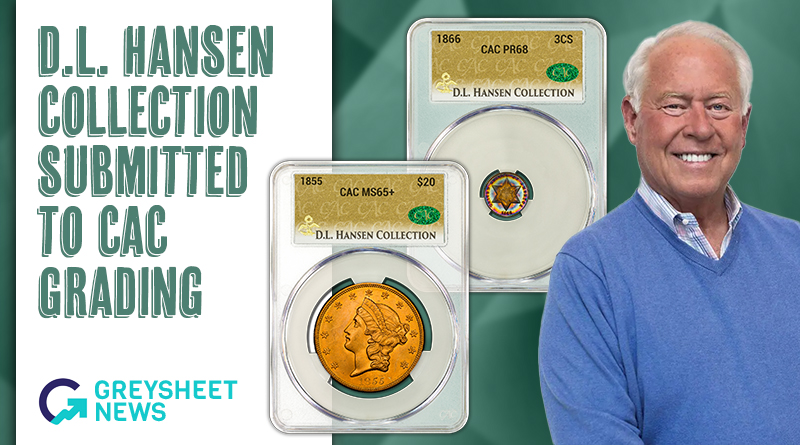
Prominent Collector Dell Loy Hansen Submitting His Historical Collection Of U.S. Coins To CAC Grading
8/8/2024
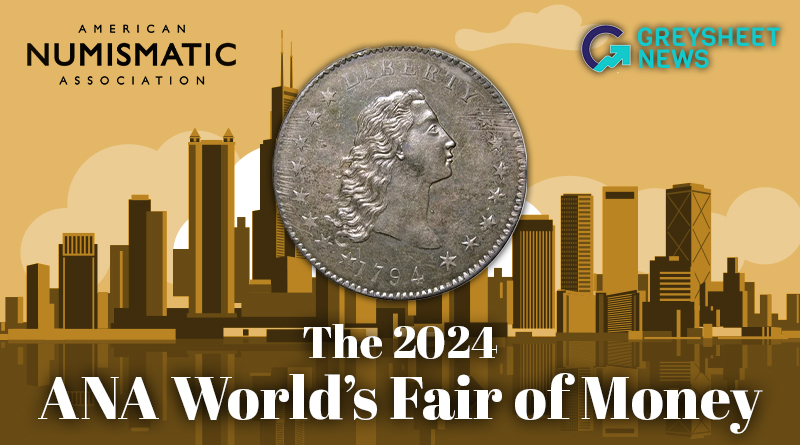
American Numismatic Association's Largest Coin Show, August 6-10 In Chicago
Dazzling rarities, free educational opportunities, family fun and more await at the Donald E. Stephens Convention Center
7/25/2024
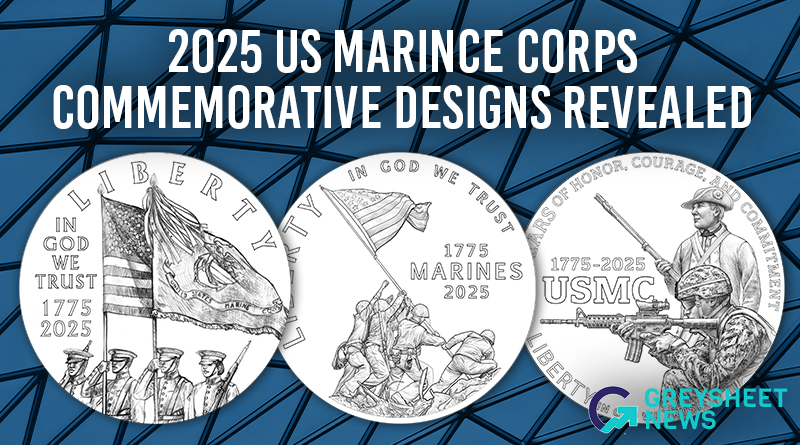
United States Mint Unveils Designs For The 2025 United States Marine Corps 250th Anniversary Commemorative Coin Program
The designs will be featured on a $5 gold coin, a $1 silver coin, and a half dollar clad coin.
7/23/2024
Events
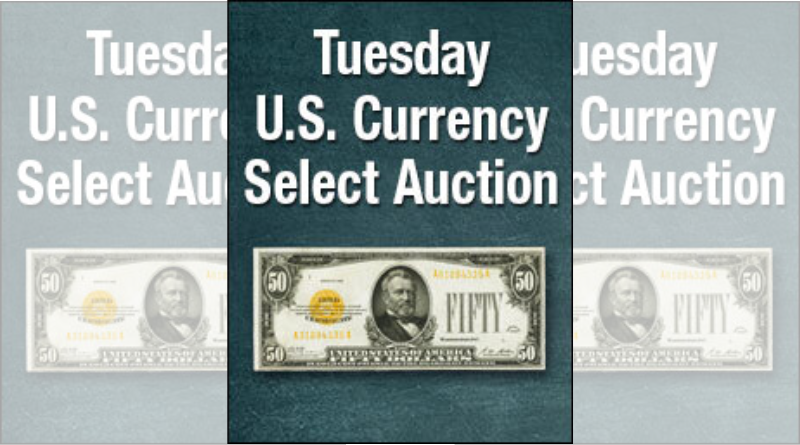
Heritage Auctions: US Currency Tuesday Select Auction
Location: Heritage Auctions
Tuesday, June 2, 2026
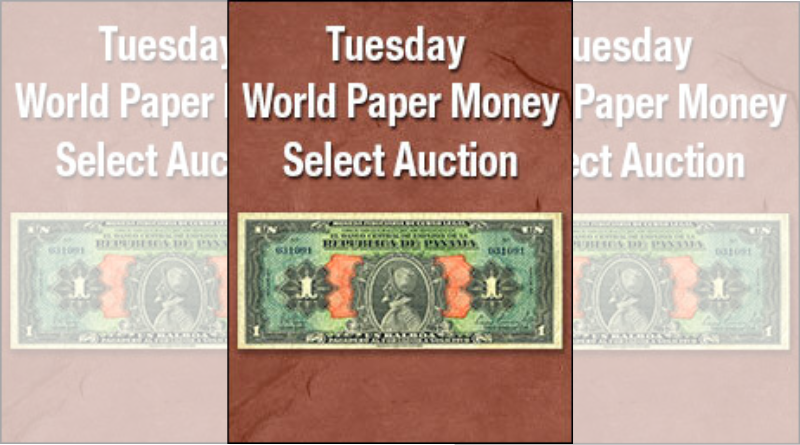
Heritage Auctions: World Paper Money Tuesday Select Auction
Location: Heritage Auctions
Tuesday, June 2, 2026
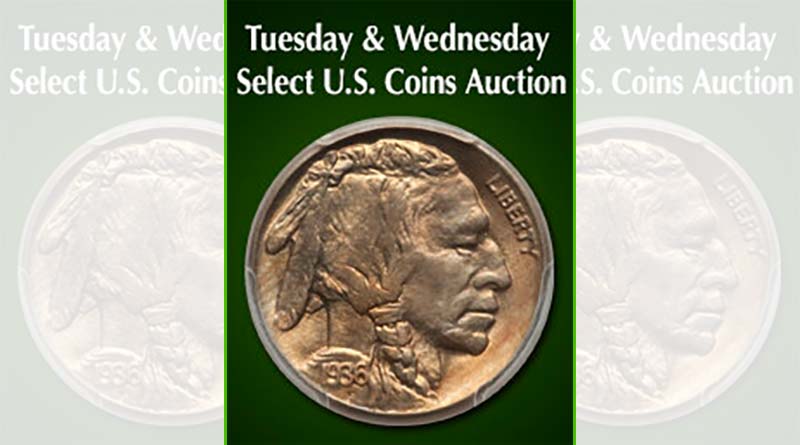
Heritage Auctions: US Coins Tuesday & Wednesday Select Auction
Location: Heritage Auctions
Wednesday, June 3, 2026