



 Whitman Expo



The unprecedented crossover underscores his personal efforts to combat “grade inflation.”
Thank you to our sponsors!
Go check them out!




Obverse Description
A shield flanked on the left and right by leaves topped with a cross with arrows positioned behind at the bottom so the arrow heads and shanks protrude at the sides. The motto IN GOD WE TRUST appears at the top periphery with the date positioned at the bottom center.
Reverse Description
A large numeral 5 surrounded by 13 stars centered in the design with UNITED STATES OF AMERICA * CENTS around the periphery.
Book Reference
Key to Collecting: The 1872 Shield nickel is available in all grades through gem Mint State, but is somewhat scarce at higher levels. Proofs often lack eye appeal, and care is suggested when buying. Most Proofs have slight doubling of the date numerals.
CIRCULATION STRIKES:
Characteristics and Appearance: Usually fairly well struck. Mint State coins have satiny (rather than deeply frosty) luster. The Proof die pair with doubled-date obverse was also used to make a few circulation strikes.14 About 10% of the 1872 nickels are of Obverse Style 1b, with the remaining being of Obverse Style 1c.15
PROOF STRIKES:
Characteristics and Appearance: Lintmarks can be a problem on Proofs of this era. Some Proofs have tiny nicks and marks in the shield stripes, the result of the original planchet’s not being flattened completely during the striking process. One Proof die has doubling on the obverse (see the illustration above), most obvious at the annulet at the lower tip of the cross and at the meeting of the horizontal and vertical shield lines. Most seen today are from this die. A rare variant from the same die has the alignment in the same direction as the reverse, or medal-wise. “I have seen exactly one of these in years of searching,” Howard Spindel reported.16 As noted above, this die and its mate were also used to make some circulation strikes. Proofs have a mirrored edge (when viewed edge- on), while circulation strikes do not.
VARIETIES:
Doubled Die—Many doubled obverse dies are described in the literature, including FS-101 through FS-107; one of these (FS-105, F-05) is tripled.17 FS-103, (F-124, shown) is strongly doubled, including the upper frame of the shield. One curious die of this year is tagged with this comment by Fivaz and Stanton: “We just love this series, and with the number of new, great varieties that continue to turn up, you should too!” It is truly amazing that only a tiny fraction of the die doublings, repunchings, and so on described by Fivaz-Stanton, Fletcher, and Peters-Mohon were known to numismatists a generation ago.
In total, the CONECA files, maintained by Ken Hill, identify 32 doubled dies for 187218 (a number second only to that for the year 1868). These examples are documented in the panorama of photographs in Howard Spindel’s Shield Nickel Viewer as well.
Small Over Large Date—FS-308, F-102. A too-large, four-digit date logotype for a Liberty Seated dime was first used, mostly effaced in the die, and the standard (Small Date) 1872 nickel punch was used. Traces of the Large Date remain. This variety was first reported by Ken Hill in the summer 1988 issue of Nickel News. URS-4. A similar error (FS-301) exists for the 1867 With Rays.
Catalog Information
GSID:
377272
Designer:
James B. Longacre
Obverse Designer:
James B. Longacre
Obverse Lettering:
IN GOD WE TRUST, 1872
Reverse Designer:
James B. Longacre
Reverse Lettering:
5, UNITED STATES OF AMERICA, CENTS
Weight (gr):
5 gr
Weight (oz):
0.1608 oz
Strike Type:
Business
Diameter:
20.5
Coin Shape:
Round
Edge:
Plain
Variety:
Double Die Obverse
Variety 2:
FS-103
Coin Date:
1872
Denomination:
5c
Designation:
MS
Mint Location:
Philadelphia
Mintage:
6,036,000
Coinage Type:
Shield nickel
Coinage Years:
1867-1883
Composition:
75% copper; 25% nickel
PCGS #:
38377
Send Catalog Feedback
To: editor@greysheet.com
Subject: I would like to contribute catalog info to CDN for 1872 5c Double Die Obverse, FS-103 MS
Body: Referring page: http://dev.greysheet.com/prices/item/1872-5c-shield-nickel-fs-103/gsid/377272 GSID: 377272 Title: 1872 5c Double Die Obverse, FS-103 MS
Subscribe to View
View more data, info, and visualizations. Get access to retail and wholesale pricing as well as auction data.
Pricing Data Not Yet Available
We are constantly adding to our pricing database and prioritize user requests. Click below to request pricing for this item.
Request PricingShield Nickel 5c Rays, 1866-1867 MS [Type]
![Shield Nickel 5c Rays, 1866-1867 MS [Type]](https://images.greysheet.com/ctc/catalog/raysMS.jpg?MaxWidth=200&Mode=Pad&Scale=UpscaleCanvas&format=webp)
Worth: $15 – $36,000
1866 5c Rays MS

Worth: $15 – $36,000
1866/1866 5c Rays, Repunched Date MS

Worth: $150 – $14,400
1867 5c Rays MS

Worth: $17 – $36,000
Shield Nickel 5c No Rays, 1867-1883 MS [Type]
![Shield Nickel 5c No Rays, 1867-1883 MS [Type]](https://images.greysheet.com/ctc/catalog/noRaysMS.jpg?MaxWidth=200&Mode=Pad&Scale=UpscaleCanvas&format=webp)
Worth: $13 – $2,592
1867 5c No Rays MS

Worth: $13 – $10,800
1868 5c MS

Worth: $13 – $9,600
1869 5c MS

Worth: $13 – $6,000
1870 5c MS

Worth: $15 – $2,200
1871 5c MS

Worth: $45 – $12,600
1872 5c MS

Worth: $25 – $12,600
1873 5c Closed 3 MS

Worth: $30 – $4,800
1873 5c Open 3 MS

Worth: $18 – $3,250
1873 5c Large/Small 3, Open 3, FS-1301 MS

Worth: $6,000 – $19,000
1873 5c Doubled Die Obverse MS

Worth: $70 – $3,000
Greysheet News
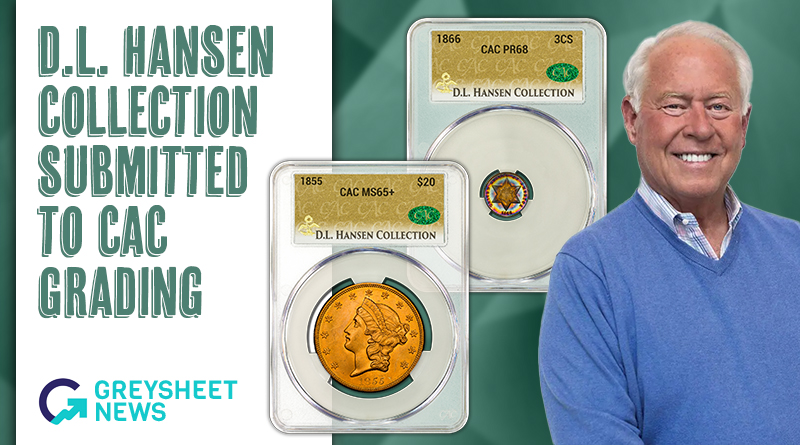
Prominent Collector Dell Loy Hansen Submitting His Historical Collection Of U.S. Coins To CAC Grading
8/8/2024
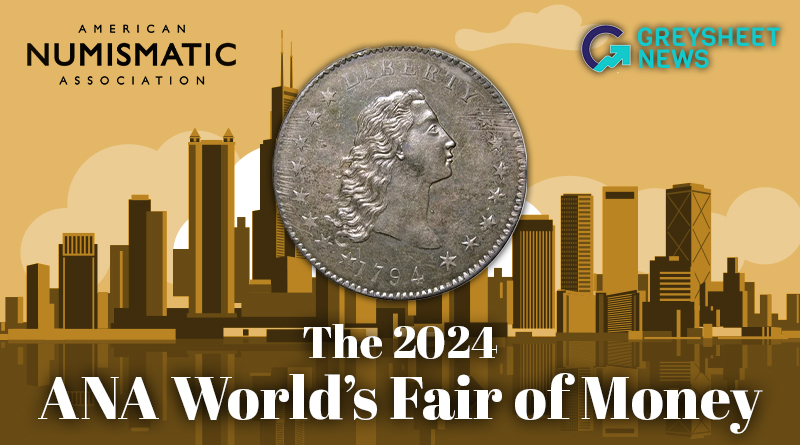
American Numismatic Association's Largest Coin Show, August 6-10 In Chicago
Dazzling rarities, free educational opportunities, family fun and more await at the Donald E. Stephens Convention Center
7/25/2024
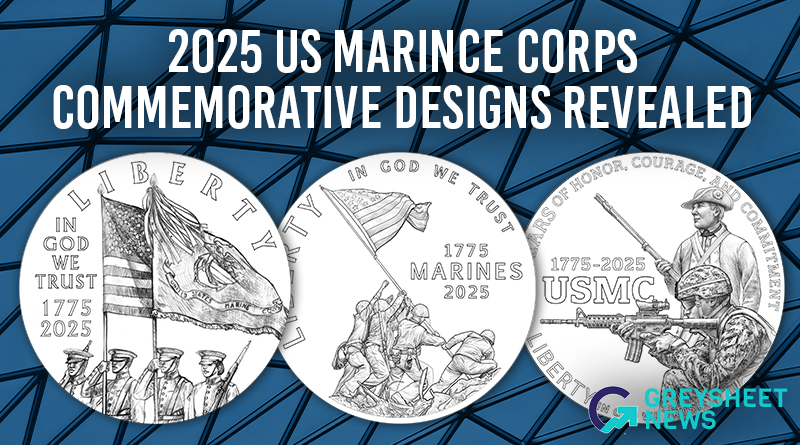
United States Mint Unveils Designs For The 2025 United States Marine Corps 250th Anniversary Commemorative Coin Program
The designs will be featured on a $5 gold coin, a $1 silver coin, and a half dollar clad coin.
7/23/2024
Events
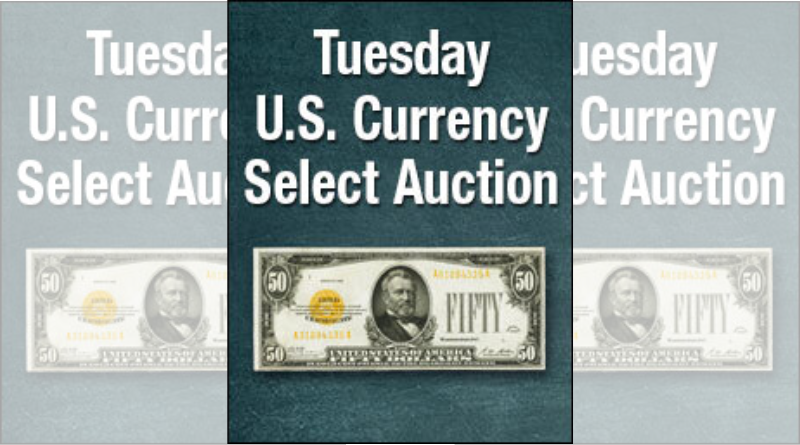
Heritage Auctions: US Currency Tuesday Select Auction
Location: Heritage Auctions
Tuesday, June 2, 2026
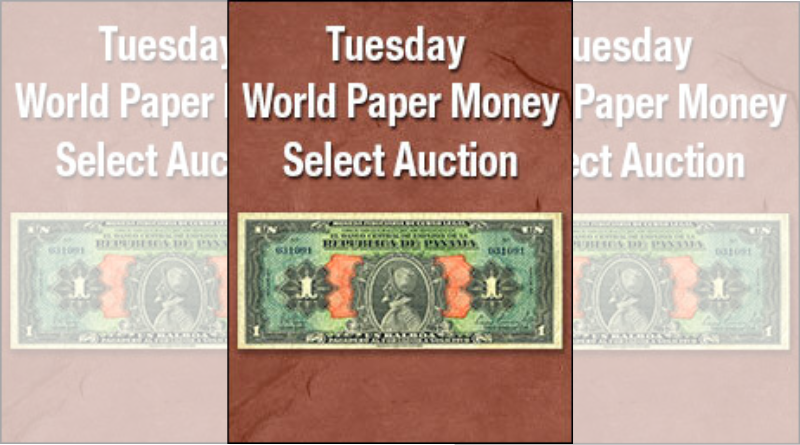
Heritage Auctions: World Paper Money Tuesday Select Auction
Location: Heritage Auctions
Tuesday, June 2, 2026
Heritage Auctions: US Coins Tuesday & Wednesday Select Auction
Location: Heritage Auctions
Wednesday, June 3, 2026