




 Whitman Expo



The unprecedented crossover underscores his personal efforts to combat “grade inflation.”
Thank you to our sponsors!
Go check them out!





Obverse Description
A shield flanked on the left and right by leaves topped with a cross with arrows positioned behind at the bottom so the arrow heads and shanks protrude at the sides. The motto IN GOD WE TRUST appears at the top periphery with the date positioned at the bottom center.
Reverse Description
A large numeral 5 surrounded by 13 stars centered in the design with UNITED STATES OF AMERICA * CENTS around the periphery. Straight lines, depicting rays of the sun, extended from the numeral to between the stars. The rays were removed in 1867.
Book Reference
Key to Collecting: The 1866 Shield nickel is in great demand as the first year of issue and also for inclusion in type sets for the With Rays design. Examples are available in nearly all grade ranges, but quality can be a problem. Most Mint State coins (example illustrated here) have problems of one sort or another, being dull and lifeless (often from overdipping) and/or having weak areas of detail (on at least 90% of the coins examined) and a simple lack of eye appeal. Probably no more than 1 in 10 MS-65 or finer coins is really superb in the eyes of the connoisseur. Most probably, the rarity of this date in the MS-66 grade is due more to overall lack of eye appeal than to actual wear. The good news is that dies of this year abound with interesting repunchings, cracks, and other differences, most of which can be studied and enjoyed with a lowpower magnifying glass.
Proofs are readily available and are usually well struck; however, most have been dipped multiple times, giving them lifeless surfaces. Many others have hairlines or are spotted. Cherrypicking is advised, as probably not more than 1 in 5 or 10 will be a “keeper” for a connoisseur. Such Proofs were first sold in the summer of 1866, after many collectors had ordered Proof sets from the Mint. The Mint once offered single Proofs for 10¢ each for those interested.
•!67!•
CIRCULATION STRIKES:
Characteristics and Appearance: All are from Reverse Style B (illustrated above; Proofs are different, as described below). Details are usually light in some areas, such as the star centers and the horizontal lines in the shield. Luster can range from dull to (not often) very frosty. Most dies show cracks, sometimes very extensive ones—an interesting feature without effect on the market price. At least one die shows extensive crumbling at the denticles at the lower left of the obverse. Striking is usually light in areas. Points to check include the horizontal and vertical shield lines on the obverse and the star centers on the reverse. Not more than 1 coin in 10 has all star-centers sharply defined (although they may be visible). Sharply struck coins with excellent eye appeal are rare. Cherrypicking is the order of the day to find one! All are of Reverse Style B, with a star pointing under the right serif of the E in STATES.
Mintage and Distribution Notes: Production of the new Shield nickels began on June 11, 1866, and supplies began reaching circulation soon afterward. There seems to have been a wide call for the new coins, this demand continuing through the next several years. No bank or Treasury caches or hoards have ever been reported.
Great problems were experienced with the dies and the hard nickel alloy, and it was unusual for a pair of dies to last for more than 10,000 impressions. “The die usage was so heavy that the engraving department had trouble keeping up with the demand and coinage was actually halted on occasion while waiting for fresh dies.”1
At the time, there were only a few dozen rare coin dealers, at most, in the United States. Likely, some stocked Proofs, but ignored circulation strikes. The epicenter of the trade was in Philadelphia, and in this and subsequent years, there was a strong interest and lively trade in patterns (see appendix A).
PROOF STRIKES:
Characteristics and Appearance: All seen are well struck, save for a common lightness on certain horizontal shield lines, usually on the right side; however, the separation of the lines is complete.
The obverse die has a tiny, raised center dot, made by a compass point or center punch. It has been suggested that this may have been a handmade die using various elements, but no difference has been located with regard to the positions of the letters, denticles, and the like in relation to each other.
Most Proofs I have seen are sharply detailed. In the past, some circulation strikes with prooflike surfaces have been sold as Proofs. Today, anyone with an elementary awareness of Reverse Style A (with a prominent center dot and with 5 repunched at upper left; used only for Proofs in 1866) and Reverse Style B can determine which is which.
The obverse die is well basined, giving curvature to the field where it meets the border. The reverse is plane (flat), but the field is somewhat wavy, as can be seen if an example is held at a certain angle to the light.
The obverse die was highly repolished late in its career. All known Proofs are from Reverse Style A (see chapter 4) with a star pointing under the left serif of the final S in STATES.
Mintage and Distribution Notes: Estimates for Proof mintages (800–1,200) vary widely. Likely, Proofs were restruck in later years as demand for them arose.
VARIETIES:
Repunched Date—Several obverse dies show repunching, with two (Fivaz-Stanton numbers FS-301 and 302, a.k.a. Breen-2461/2462 and Fletcher-8/10) being breathtaking—with virtually the full earlier date being bold and offregister to the east by the width of half a numeral and two-thirds of a numeral, respectively. (See the selected bibliography for information on the Fivaz-Stanton, Breen, and Fletcher texts.) These have been known for many years but have achieved publicity only since the 1960’s. Few repunchings anywhere in American numismatics are this dramatic.
Missing Leaf—No outside leaf on the second group at right; three leaves instead of four. Edward L. Fletcher describes only three dies with this feature from 25 dies listed, but Howard Spindel (in his computerized Shield Nickel Viewer) has found five.
Catalog Information
GSID:
2891
Designer:
James B. Longacre
Obverse Designer:
James B. Longacre
Obverse Lettering:
IN GOD WE TRUST, 1866
Reverse Designer:
James B. Longacre
Reverse Lettering:
5, UNITED STATES OF AMERICA, CENTS
Weight (gr):
5 gr
Weight (oz):
0.1608 oz
Strike Type:
Proof
Diameter:
20.5
Coin Shape:
Round
Edge:
Plain
Variety:
Rays
Coin Date:
1866
Denomination:
5c
Designation:
PR
Mint Location:
Philadelphia
Mintage:
600
Coinage Type:
Shield nickel
Coinage Years:
1866-1867
Composition:
75% copper; 25% nickel
PCGS #:
93817
Send Catalog Feedback
To: editor@greysheet.com
Subject: I would like to contribute catalog info to CDN for 1866 5c Rays PR DCAM
Body: Referring page: http://dev.greysheet.com/prices/item/1866-five-cents-proof-deep-cameo-with-rays-shield-nickel/gsid/2891 GSID: 2891 Title: 1866 5c Rays PR DCAM
Subscribe to View
View more data, info, and visualizations. Get access to retail and wholesale pricing as well as auction data.
Coin Value History
1866 5c Rays PR DCAM
Value By Grade
1866 5c Rays PR DCAM
CPG (retail) values
Currency
Grade Range
Grading Authority
Sort by
Pricing
Values
Greysheet & CPG® Values
Shield Nickel 5c Rays, 1866-1867 PR [Type]
![Shield Nickel 5c Rays, 1866-1867 PR [Type]](https://images.greysheet.com/Ctc/CatalogEntry/ha_com_1316_3020-2.20200624040933286.jpg?MaxWidth=200&Mode=Pad&Scale=UpscaleCanvas&format=webp)
Worth: $875 – $12,600
1866 5c Rays PR

Worth: $875 – $12,600
1867 5c Rays PR

Worth: $18,000 – $50,000
Shield Nickel 5c No Rays, 1867-1883 PR [Type]
![Shield Nickel 5c No Rays, 1867-1883 PR [Type]](https://images.greysheet.com/Ctc/Catalog/ha_com_1291_4375-0.20200718080538892.jpg?MaxWidth=200&Mode=Pad&Scale=UpscaleCanvas&format=webp)
Worth: $180 – $6,600
1867 5c No Rays PR

Worth: $180 – $1,800
1867 5c No Rays, Pattern Reverse, FS-1902 PR

Worth: $1,800 – $13,200
1868 5c PR

Worth: $180 – $3,500
1869 5c PR

Worth: $180 – $3,960
1870 5c PR

Worth: $180 – $1,080
1871 5c PR

Worth: $180 – $5,400
1872 5c PR

Worth: $180 – $3,600
1873 5c Closed 3 PR

Worth: $180 – $2,880
1874 5c PR

Worth: $180 – $3,120
1875 5c PR

Worth: $180 – $6,000
1876 5c PR

Worth: $180 – $2,640
1866 5C Rays PR66+ Deep Cameo PCGS. CAC. ...
$31,720
1866 5C Rays PR67+ Ultra Cameo NGC. CAC. JD-1, Low R.3....

$45,600
1866 5C Rays PR65 Deep Cameo PCGS. CAC. JD-1, R.3....

$7,500
1866 5C Rays PR66+ Ultra Cameo NGC. ...

$22,200
1866 5C Rays PR67 Deep Cameo PCGS. ...

$36,000
1866 5C Rays PR65 Ultra Cameo NGC. ...

$6,300
1866 5C Rays PR66+ Deep Cameo PCGS. CAC. ...

$36,000
1866 5C Rays PR67 Ultra Cameo NGC. ...

$18,800
1866 5C Rays PR65 Ultra Cameo NGC. The Five Cent Nickel ...
$4,025
$17,038
1866 5C Rays PR67 Ultra Cameo NGC. A mainstay of the United States' circulating coinage today, the Nickel Five Cent Piece w...
$19,550
1866 5C Rays PR66 Ultra Cameo NGC. The nickel Five cent piece was introduced in 1866 to reduce the supply of Fractional Cu...
$10,350
1866 5C Rays, DC
$18,975
1866 5c Rays NGC Proof 66 Ultra Cameo

$8,740
1866 5C Rays PR66 Deep Cameo NGC. The nickel Five Cent piece was introduced in 1866 to reduce the supply of Fractional Cur...
$8,625
Greysheet News
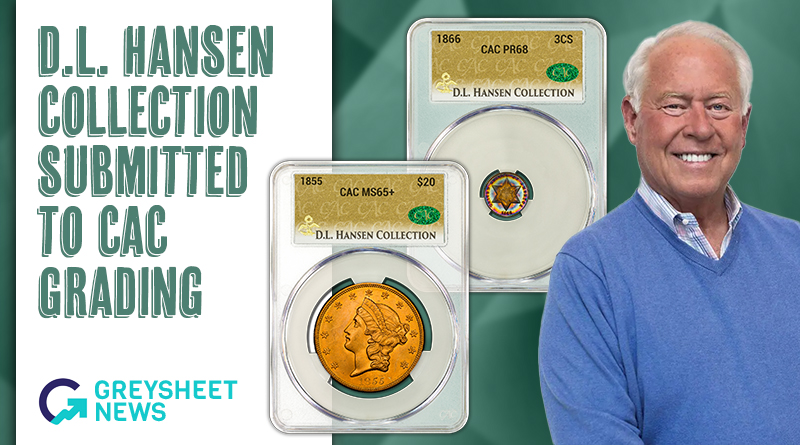
Prominent Collector Dell Loy Hansen Submitting His Historical Collection Of U.S. Coins To CAC Grading
8/8/2024
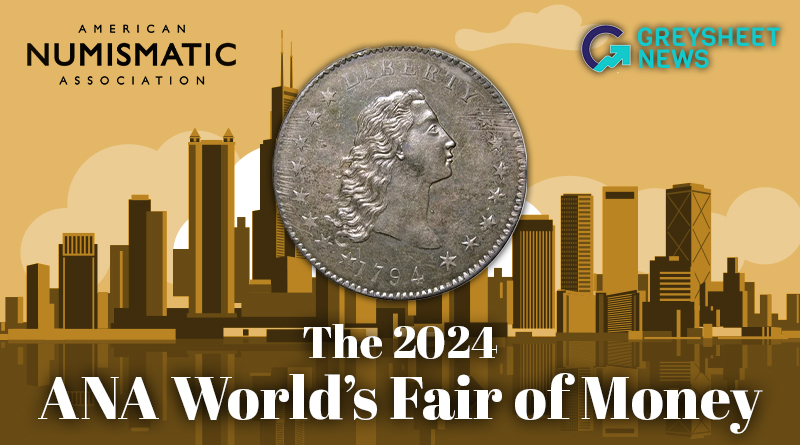
American Numismatic Association's Largest Coin Show, August 6-10 In Chicago
Dazzling rarities, free educational opportunities, family fun and more await at the Donald E. Stephens Convention Center
7/25/2024
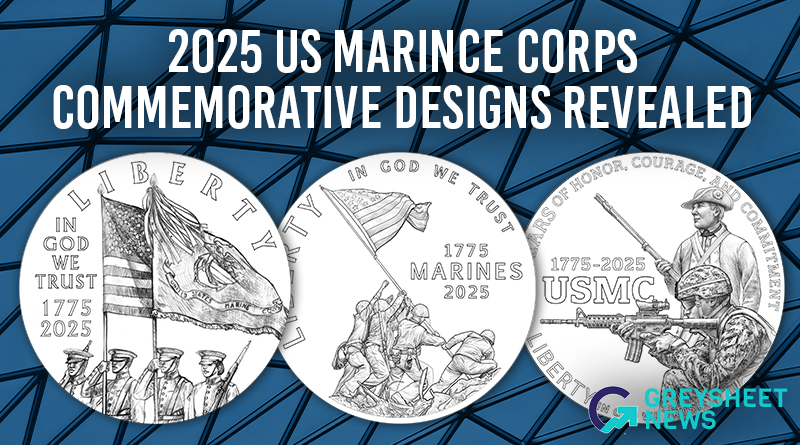
United States Mint Unveils Designs For The 2025 United States Marine Corps 250th Anniversary Commemorative Coin Program
The designs will be featured on a $5 gold coin, a $1 silver coin, and a half dollar clad coin.
7/23/2024
Events
Heritage Auctions: US Currency Tuesday Select Auction
Location: Heritage Auctions
Tuesday, June 2, 2026
Heritage Auctions: World Paper Money Tuesday Select Auction
Location: Heritage Auctions
Tuesday, June 2, 2026
Heritage Auctions: US Coins Tuesday & Wednesday Select Auction
Location: Heritage Auctions
Wednesday, June 3, 2026