




 Whitman Expo
![Image for Shield Nickel 5c No Rays, 1867-1883 MS [Type]](https://images.greysheet.com/ctc/catalog/noRaysMS.jpg?MaxHeight=640&Mode=Pad&Scale=UpscaleCanvas&format=webp)


The unprecedented crossover underscores his personal efforts to combat “grade inflation.”
Thank you to our sponsors!
Go check them out!





Shield nickels were struck from 1866 through 1883 and designed by James B. Longacre. These 75% copper, 25% nickel coins, the first 5-cent pieces with this composition, circulated concurrently with the physically smaller but equally denominated half dime, which also has a face value of five cents.
Generally speaking, the scarcest Shield nickels were minted from 1877 through 1881, with the 1866, 1867 Without Rays, 1868, 1869, and 1882 issues being the most commonly encountered dates across the grading spectrum. The rarest issues by date are the 1877 and 1878 Shield nickels, which are proof-only issues with a combined mintage of less than 3,000 pieces.
Shield nickel varieties include the 1867 Rays and 1867 Without Rays, with the former showcasing rays between the stars that encircle the large numeral 5 on the coin's reverse. Earlier into production that year, the rays were removed, leaving only stars around the '5.' Another set of important varieties are found on 1873 nickels with the Closed 3 and Open 3, as evidenced in the fourth numeral of the date. The 1873 Open 3 is far more common than the 1873 Closed 3. All Shield nickels were made at the Philadelphia Mint.
Obverse Description
A shield flanked on the left and right by leaves topped with a cross with arrows positioned behind at the bottom so the arrow heads and shanks protrude at the sides. The motto IN GOD WE TRUST appears at the top periphery with the date positioned at the bottom center.
Reverse Description
A large numeral 5 surrounded by 13 stars centered in the design with UNITED STATES OF AMERICA * CENTS around the periphery.
Book Reference
Designer: James B. Longacre. Weight: 5 grams. Composition: .750 copper, .250 nickel. Diameter: 20.5 mm. Edge: Plain. Mint: Philadelphia.
Key to Collecting: In early 1867, the Shield nickel motif was revised by eliminating the rays between the stars on the reverse. Afterward, the striking quality improved, as Mint officials hoped it would. However, the hard nickel-copper alloy was difficult to work with, and today it is a numismatic challenge to acquire choice pieces. Enough coins were made in circulation strike and Proof format that finding one will be no problem. However, it is important to keep an eye open for quality. Mint State coins are plentiful, especially of the last two dates in the series, 1882 and 1883.
Aspects of Striking and Appearance: The striking is generally much better than on the 1866 and 1867 With Rays style. Striking quality and aesthetic appeal are generally better for the later-dated coins. Issues of the 1860’s and 1870’s require special care to find quality pieces. Points to check include the horizontal shield lines and the star details. Die cracks are common among earlier dates and are sometimes a virtual network of tiny connecting lines—interesting to observe.
Proof Coins: Proofs of 1867 to 1876 are apt to vary in quality, and cherrypicking is advised. The 1877 and 1878 dates were made only in Proof format, the 1878 having a frosty surface not much different from a circulation strike in appearance. Proofs of the 1879 to 1883 years are generally of higher quality, with more mirrorlike fields and sharper details than found on earlier issues.
Catalog Information
GSID:
72352
Designer:
James B. Longacre
Obverse Designer:
James B. Longacre
Obverse Lettering:
IN GOD WE TRUST, 1867
Reverse Designer:
James B. Longacre
Reverse Lettering:
5, UNITED STATES OF AMERICA, CENTS
Weight (gr):
5 gr
Weight (oz):
0.1608 oz
Strike Type:
Business
Diameter:
20.5
Coin Shape:
Round
Edge:
Plain
Variety:
No Rays
Variety 2:
1867-1883
Coin Date:
Shield Nickel
Denomination:
5c
Designation:
MS
Mint Location:
Philadelphia
Coinage Type:
Shield nickel
Coinage Years:
1867-1883
Composition:
75% copper; 25% nickel
PCGS #:
3793
Send Catalog Feedback
To: editor@greysheet.com
Subject: I would like to contribute catalog info to CDN for Shield Nickel 5c No Rays, 1867-1883 MS [Type]
Body: Referring page: http://dev.greysheet.com/prices/item/shield-nickel-no-rays-five-cents-type-coin-business-strike/gsid/72352 GSID: 72352 Title: Shield Nickel 5c No Rays, 1867-1883 MS [Type]
Subscribe to View
View more data, info, and visualizations. Get access to retail and wholesale pricing as well as auction data.
Coin Value History
Shield Nickel 5c No Rays, 1867-1883 MS [Type]
Value By Grade
Shield Nickel 5c No Rays, 1867-1883 MS [Type]
CPG (retail) values
Currency
Grade Range
Grading Authority
Sort by
Pricing
Values
Greysheet & CPG® Values
| Grade | CAC | CPG Value (Retail) | Greysheet Price (Wholesale) |
|---|---|---|---|
| MS67 |

|
$3,250 | $1,234 |
| MS67 | - | $2,700 | $1,234 |
| MS66 |
|
$1,234 | $1,234 |
| MS66 | - | $1,234 | $1,234 |
| MS65 |
|
$1,234 | $1,234 |
| MS65 | - | $1,234 | $1,234 |
| MS64 |
|
$1,234 | $1,234 |
| MS64 | - | $1,234 | $1,234 |
| MS63 |
|
$1,234 | $1,234 |
| MS63 | - | $1,234 | $1,234 |
| MS62 |
|
$1,234 | $1,234 |
| MS62 | - | $1,234 | $1,234 |
| MS61 |
|
$1,234 | $1,234 |
| MS61 | - | $1,234 | $1,234 |
| MS60 |
|
$1,234 | $1,234 |
| MS60 | - | $1,234 | $1,234 |
| AU58 |
|
$1,234 | $1,234 |
| AU58 | - | $1,234 | $1,234 |
| AU55 |
|
$1,234 | $1,234 |
| AU55 | - | $1,234 | $1,234 |
| AU53 |
|
$1,234 | $1,234 |
| AU53 | - | $1,234 | $1,234 |
| AU50 |
|
$1,234 | $1,234 |
| AU50 | - | $1,234 | $1,234 |
| XF45 |
|
$1,234 | $1,234 |
| XF45 | - | $1,234 | $1,234 |
| XF40 |
|
$1,234 | $1,234 |
| XF40 | - | $1,234 | $1,234 |
| VF35 |
|
$1,234 | $1,234 |
| VF35 | - | $1,234 | $1,234 |
| VF30 |
|
$1,234 | $1,234 |
| VF30 | - | $1,234 | $1,234 |
| VF25 |
|
$1,234 | $1,234 |
| VF25 | - | $1,234 | $1,234 |
| VF20 |
|
$1,234 | $1,234 |
| VF20 | - | $1,234 | $1,234 |
| F15 |
|
$1,234 | $1,234 |
| F15 | - | $1,234 | $1,234 |
| F12 |
|
$1,234 | $1,234 |
| F12 | - | $1,234 | $1,234 |
| VG10 |
|
$1,234 | $1,234 |
| VG10 | - | $1,234 | $1,234 |
| VG8 |
|
$1,234 | $1,234 |
| VG8 | - | $1,234 | $1,234 |
| G6 |
|
$1,234 | $1,234 |
| G6 | - | $1,234 | $1,234 |
| G4 |
|
$1,234 | $1,234 |
| G4 | - | $1,234 | $1,234 |
| AG3 |
|
$1,234 | $1,234 |
| AG3 | - | $1,234 | $1,234 |
Shield Nickel 5c Rays, 1866-1867 MS [Type]
![Shield Nickel 5c Rays, 1866-1867 MS [Type]](https://images.greysheet.com/ctc/catalog/raysMS.jpg?MaxWidth=200&Mode=Pad&Scale=UpscaleCanvas&format=webp)
Worth: $15 – $36,000
1866 5c Rays MS

Worth: $15 – $36,000
1866/1866 5c Rays, Repunched Date MS

Worth: $150 – $14,400
1867 5c Rays MS

Worth: $17 – $36,000
1867 5c No Rays MS

Worth: $13 – $10,800
1868 5c MS

Worth: $13 – $9,600
1869 5c MS

Worth: $13 – $6,000
1870 5c MS

Worth: $15 – $2,200
1871 5c MS

Worth: $45 – $12,600
1872 5c MS

Worth: $25 – $12,600
1873 5c Closed 3 MS

Worth: $30 – $4,800
1873 5c Open 3 MS

Worth: $18 – $3,250
1873 5c Large/Small 3, Open 3, FS-1301 MS

Worth: $6,000 – $19,000
1873 5c Doubled Die Obverse MS

Worth: $70 – $3,000
1874 5c MS

Worth: $19 – $2,640
1883 5C Shield MS65 PCGS. CDN: $450 Whsle. Bid for NGC/PCGS MS65. Mintage 1,456,919. ...
$476
1870 5C AU55 PCGS. PCGS Population: 27 in 55, 340 finer (12/25). CDN: $140 Whsle. Bid for NGC/PCGS AU55. Mintage 4,806,000....
$183
1879 5C VF35 PCGS. PCGS Population: 8 in 35, 190 finer (12/25). CDN: $1,050 Whsle. Bid for NGC/PCGS VF35. Mintage 25,900....
$1,586
1881 5C Fine 15 PCGS. PCGS Population: 16 in 15, 322 finer (12/25). CDN: $380 Whsle. Bid for NGC/PCGS Fine 15. Mintage 68,8...
$415
1867 5C No Rays MS66+ NGC. NGC Census: 36 in 66 (2 in 66+, 1 in 66*), 1 finer (11/25). CDN: $1,350 Whsle. Bid for NGC/PCGS ...
$1,830
1880 5C VF25 NGC. ...
$4,636
1881 5C Good 6 PCGS. PCGS Population: 13 in 6, 384 finer (11/25). CDN: $235 Whsle. Bid for NGC/PCGS Good 6 . Mintage 68,800...
$293
1872 5C MS63 PCGS. PCGS Population: 91 in 63, 205 finer (11/25). CDN: $210 Whsle. Bid for NGC/PCGS MS63. Mintage 6,036,000....
$342
1872 5C XF45 PCGS. PCGS Population: 35 in 45, 473 finer (12/25). CDN: $105 Whsle. Bid for NGC/PCGS XF45. Mintage 6,036,000....
$149
1881 5C AU58 PCGS. PCGS Population: 19 in 58, 150 finer (11/25). CDN: $850 Whsle. Bid for NGC/PCGS AU58. Mintage 68,800. ...
$915
1883 5C AU53 PCGS. PCGS Population: 90 in 53, 2938 finer (12/25). CDN: $88 Whsle. Bid for NGC/PCGS AU53. Mintage 1,456,919....
$104
1882 5C MS62 PCGS. CDN: $145 Whsle. Bid for NGC/PCGS MS62. Mintage 11,476,000. ...
$169
1869 5C MS64 NGC. CDN: $300 Whsle. Bid for NGC/PCGS MS64. Mintage 16,395,000. ...
$384
1881 5C VG8 NGC. NGC Census: 10 in 8, 175 finer (11/25). CDN: $300 Whsle. Bid for NGC/PCGS VG8 . Mintage 68,800. ...

$324
1867 5C No Rays -- Cleaned, Spot Removed -- ANACS Details. AU50. Mintage 28,800,000....

$64
1868 5C MS67 PCGS....

$9,000
1882 5C Repunched Date MS61 ANACS. Fletcher-05. Housed in a small-sized holder. Mintage 11,476,000....

$154
1881 5C VF20 PCGS. PCGS Population: (12/304). Mintage 68,800. ...

$456
1881 5C XF40 NGC. CAC. CAC Population: (4/44). Mintage 68,800. ...

$630
1868 5C -- Obverse Cleaned -- ANACS. Unc Details Net AU55. Mintage 28,800,000....

$139
Greysheet News
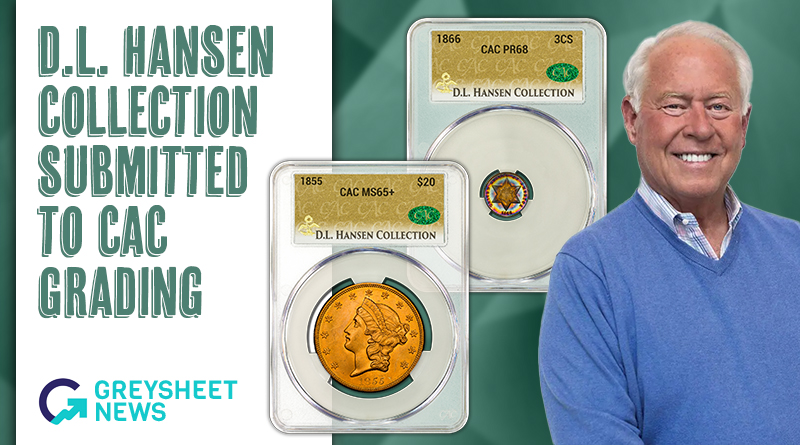
Prominent Collector Dell Loy Hansen Submitting His Historical Collection Of U.S. Coins To CAC Grading
8/8/2024
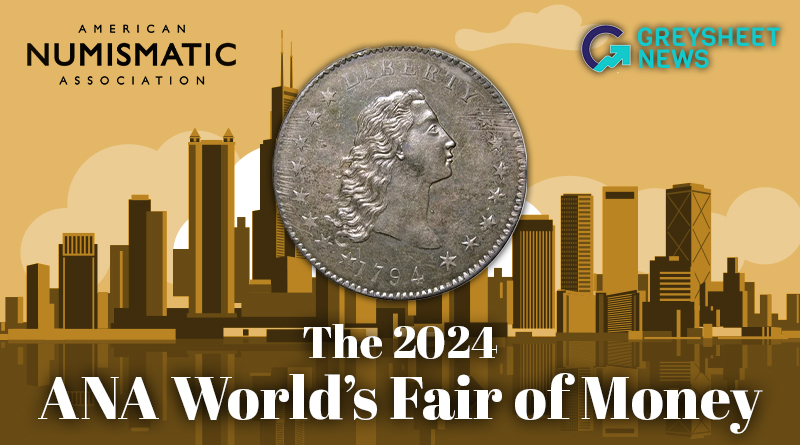
American Numismatic Association's Largest Coin Show, August 6-10 In Chicago
Dazzling rarities, free educational opportunities, family fun and more await at the Donald E. Stephens Convention Center
7/25/2024
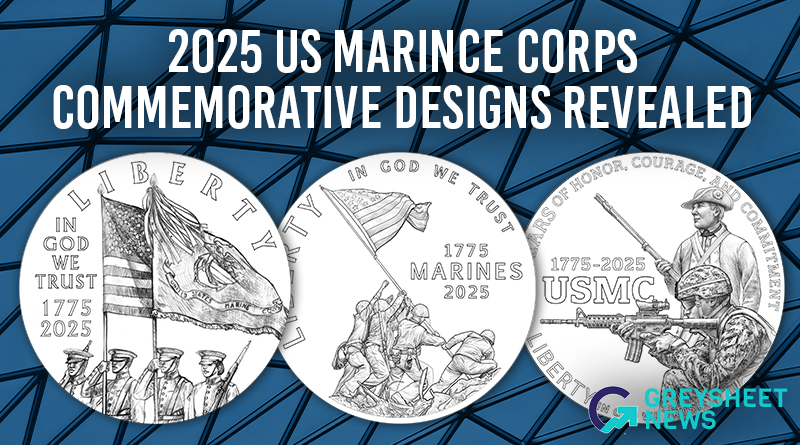
United States Mint Unveils Designs For The 2025 United States Marine Corps 250th Anniversary Commemorative Coin Program
The designs will be featured on a $5 gold coin, a $1 silver coin, and a half dollar clad coin.
7/23/2024
Events
Heritage Auctions: US Currency Tuesday Select Auction
Location: Heritage Auctions
Tuesday, June 2, 2026
Heritage Auctions: World Paper Money Tuesday Select Auction
Location: Heritage Auctions
Tuesday, June 2, 2026
Heritage Auctions: US Coins Tuesday & Wednesday Select Auction
Location: Heritage Auctions
Wednesday, June 3, 2026