



 Whitman Expo



The unprecedented crossover underscores his personal efforts to combat “grade inflation.”
Thank you to our sponsors!
Go check them out!





Repunched date variety.
Obverse Description
A shield flanked on the left and right by leaves topped with a cross with arrows positioned behind at the bottom so the arrow heads and shanks protrude at the sides. The motto IN GOD WE TRUST appears at the top periphery with the date positioned at the bottom center.
Reverse Description
A large numeral 5 surrounded by 13 stars centered in the design with UNITED STATES OF AMERICA * CENTS around the periphery. Straight lines, depicting rays of the sun, extended from the numeral to between the stars. The rays were removed in 1867.
Book Reference
Key to Collecting: The 1867 With Rays nickel is basically scarce, and it has been recognized as such for a long time. However, in the modern era of emphasis on condition rarity, and with relatively few truly choice high-grade examples around, this variety suffers from lack of publicity. Quality is a problem when you find one. As with the 1866, there are usually problems with sharpness, and many coins are dull. Over a long span of years, I have seen only a handful of coins that truly combine a high grading number with sharply struck details and good eye appeal. A choice Mint State 1867 With Rays is, in a word, a sleeper. However, coin for coin, the 1867 With Rays has a higher average quality than do the nickels of 1866.
The 1867 With Rays Proof (illustrated above) is a classic rarity. Probably no more than several dozen or so are known; there are some prooflike Mint State coins that have been mistakenly called Proofs. The mintage is unknown. Students of the series have given many opinions, including the statement that no Proofs at all were struck until several years later. John Dannreuther, who has studied the die technicalities, has demonstrated that Proofs were struck on several runs. Per the same authority, an estimated 15 originals were made in 1867, plus perhaps three or more times that many were made on at least five later production sequences.2 Likely, dealers with close connections to the Mint—John W. Haseltine being the prime example—simply ordered more Proofs as needed for store stock. The depth and breadth of such restriking is just now beginning to be appreciated, with new leading-edge scholarship by Dannreuther and others.
For Proofs, quite a few grading events (not necessarily different examples) have been reported by the grading services—numbers that would have been impossible to believe a few decades ago.
CIRCULATION STRIKES:
Characteristics and Appearance: Usually fairly well struck, better than the typical 1866 of this type. Points to check for weakness include the horizontal lines in the shield and, on the reverse, the centers of the stars. Nicks on areas that are lightly struck are likely from the surface of the original planchet. All circulation strikes have Reverse Style B, as do Proofs.
Mintage and Distribution Notes: The widely published mintage figure for this issue is an estimate by R.W. Julian, per this commentary contributed to the present work:
The coiner notified Mint Director William Millward that he proposed to change the design on February 1, 1867, but we do not know if this was done on that exact day. As a result the best we can do is estimate the number of Shield nickels with rays struck in 1867 at 2,019,000, the number coined in the month of January. This leaves 28,890,500 as the number of 1867 nickels coined without rays on the reverse. The average for the last 11 months of 1867 is a very creditable 2.6 million pieces per month, which was the best monthly average (in a given year) until 1906, nearly 40 years later. It also shows the great public demand for the new coin.
VARIETIES:
Repunched Date (Nickel over Dime Logotype)—FS-301, F-08. The most dramatic variety shows the final date of 1867 flanked by a 1 to its left and a 7 to its right. Howard Spindel, in the Shield Nickel Viewer, confirmed that this is a Small Date (regular for nickels of this year) logotype punched over a Large Date intended for a Liberty Seated dime. The telltale overlay is shown at right.3
Repunched Date—Several varieties of repunched dates are known. The Fivaz-Stanton and Fletcher texts give descriptions, as does the Shield Nickel Viewer. Another interesting variety, FS-303, F-02, seems to have as an underdate an impression from a smaller-date logotype with a more delicate 7, but it is usually attributed simply as a repunched date.
Misplaced Date—On FS-304, F-01, URS-1, the base of the 1 in 1867 appears outside the ball at lower left. As Fivaz and Stanton note, “To date, this is still a unique example. Hundreds of dedicated Shield nickel enthusiasts are looking for this variety.”
Catalog Information
GSID:
376263
Designer:
James B. Longacre
Obverse Designer:
James B. Longacre
Obverse Lettering:
IN GOD WE TRUST, 1867
Reverse Designer:
James B. Longacre
Reverse Lettering:
5, UNITED STATES OF AMERICA, CENTS
Weight (gr):
5 gr
Weight (oz):
0.1608 oz
Strike Type:
Business
Diameter:
20.5
Coin Shape:
Round
Edge:
Plain
Variety:
Rays, Repunched Date
Variety 2:
FS-301
Coin Date:
1867
Denomination:
5c
Designation:
MS
Mint Location:
Philadelphia
Mintage:
2,019,000
Coinage Type:
Shield nickel
Coinage Years:
1866-1867
Composition:
75% copper; 25% nickel
PCGS #:
38319
Send Catalog Feedback
To: editor@greysheet.com
Subject: I would like to contribute catalog info to CDN for 1867 5c Rays, Repunched Date, FS-301 MS
Body: Referring page: http://dev.greysheet.com/prices/item/1867-5c-with-rays-shield-nickel-fs-301/gsid/376263 GSID: 376263 Title: 1867 5c Rays, Repunched Date, FS-301 MS
Subscribe to View
View more data, info, and visualizations. Get access to retail and wholesale pricing as well as auction data.
Coin Value History
1867 5c Rays, Repunched Date, FS-301 MS
Value By Grade
1867 5c Rays, Repunched Date, FS-301 MS
CPG (retail) values
Currency
Grade Range
Grading Authority
Sort by
Pricing
Values
Greysheet & CPG® Values
| Grade | CAC | CPG Value (Retail) | Greysheet Price (Wholesale) |
|---|---|---|---|
| MS64 |

|
$11,000 | $1,234 |
| MS64 | - | $9,500 | $1,234 |
| MS63 |
|
$1,234 | $1,234 |
| MS63 | - | $1,234 | $1,234 |
| MS62 |
|
$1,234 | $1,234 |
| MS62 | - | $1,234 | $1,234 |
| MS61 |
|
$1,234 | $1,234 |
| MS61 | - | $1,234 | $1,234 |
| MS60 |
|
$1,234 | $1,234 |
| MS60 | - | $1,234 | $1,234 |
| AU58 |
|
$1,234 | $1,234 |
| AU58 | - | $1,234 | $1,234 |
| AU55 |
|
$1,234 | $1,234 |
| AU55 | - | $1,234 | $1,234 |
| AU53 |
|
$1,234 | $1,234 |
| AU53 | - | $1,234 | $1,234 |
| AU50 |
|
$1,234 | $1,234 |
| AU50 | - | $1,234 | $1,234 |
| XF40 | - | $1,234 | $1,234 |
| VF20 | - | $1,234 | $1,234 |
Shield Nickel 5c Rays, 1866-1867 MS [Type]
![Shield Nickel 5c Rays, 1866-1867 MS [Type]](https://images.greysheet.com/ctc/catalog/raysMS.jpg?MaxWidth=200&Mode=Pad&Scale=UpscaleCanvas&format=webp)
Worth: $15 – $36,000
1866 5c Rays MS

Worth: $15 – $36,000
1866/1866 5c Rays, Repunched Date MS

Worth: $150 – $14,400
1867 5c Rays MS

Worth: $17 – $36,000
Shield Nickel 5c No Rays, 1867-1883 MS [Type]
![Shield Nickel 5c No Rays, 1867-1883 MS [Type]](https://images.greysheet.com/ctc/catalog/noRaysMS.jpg?MaxWidth=200&Mode=Pad&Scale=UpscaleCanvas&format=webp)
Worth: $13 – $2,592
1867 5c No Rays MS

Worth: $13 – $10,800
1868 5c MS

Worth: $13 – $9,600
1869 5c MS

Worth: $13 – $6,000
1870 5c MS

Worth: $15 – $2,200
1871 5c MS

Worth: $45 – $12,600
1872 5c MS

Worth: $25 – $12,600
1873 5c Closed 3 MS

Worth: $30 – $4,800
1873 5c Open 3 MS

Worth: $18 – $3,250
1873 5c Large/Small 3, Open 3, FS-1301 MS

Worth: $6,000 – $19,000
1873 5c Doubled Die Obverse MS

Worth: $70 – $3,000
1867 5C Rays, Repunched Date, FS-301, AU58 PCGS. The Cherrypickers' Guide describes the repunching on the date as, "the...

$2,880
1867 5C Rays, Repunched Date, FS-301, AU55 PCGS. CAC. ...
$3,120
1867 5C Rays, Repunched Date, FS-301, AU58 PCGS. CAC....

$3,600
1867 5C Rays, Repunched Date, FS-301, AU58 PCGS. CAC. ...
$3,120
1867 5C Rays, Repunched Date, FS-301, AU58 PCGS. CAC. PCGS Population: (3/1). NGC Census: (0/2). AU58. Mintage 2,019,000. ...
$4,080
1867 5C Rays, Repunched Date, FS-301, AU58 PCGS. CAC. ...
$1,778
1867 5C Rays, Repunched Date, FS-301 (002.1), AU58 PCGS. CAC. PCGS Population (2/0). NGC Census: (0/0). Mintage: 2,019,000....
$2,115
Greysheet News
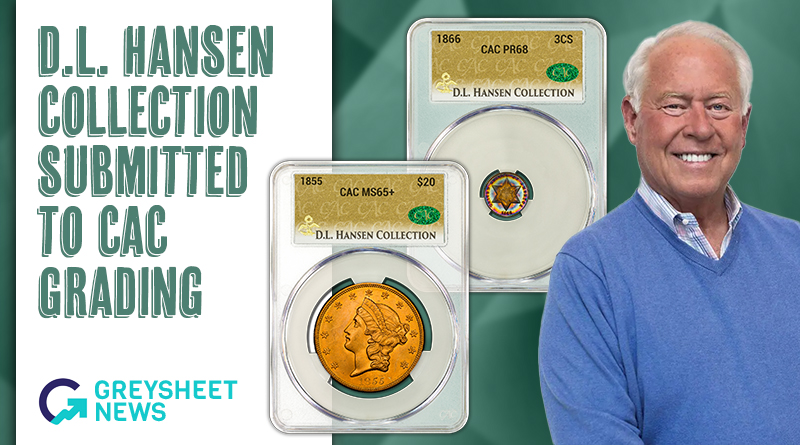
Prominent Collector Dell Loy Hansen Submitting His Historical Collection Of U.S. Coins To CAC Grading
8/8/2024
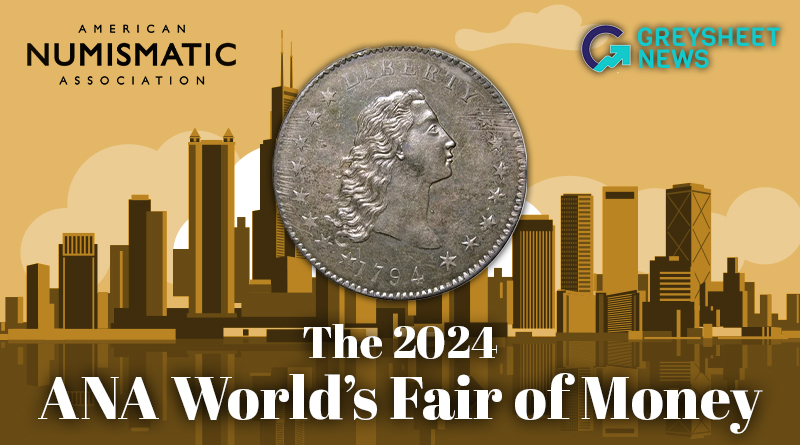
American Numismatic Association's Largest Coin Show, August 6-10 In Chicago
Dazzling rarities, free educational opportunities, family fun and more await at the Donald E. Stephens Convention Center
7/25/2024
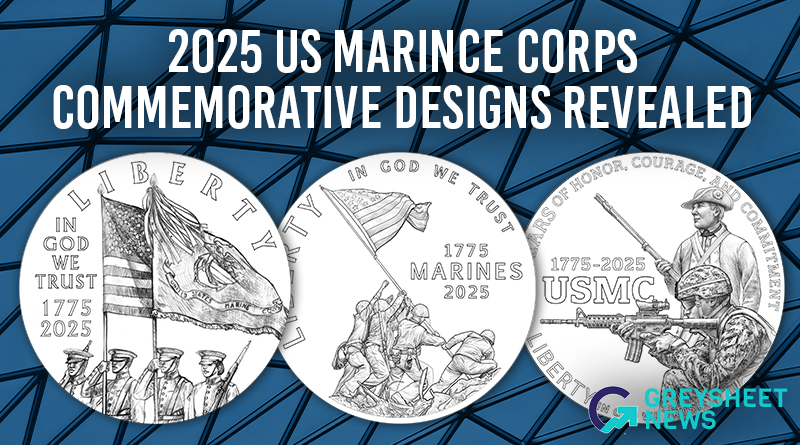
United States Mint Unveils Designs For The 2025 United States Marine Corps 250th Anniversary Commemorative Coin Program
The designs will be featured on a $5 gold coin, a $1 silver coin, and a half dollar clad coin.
7/23/2024
Events
Heritage Auctions: US Currency Tuesday Select Auction
Location: Heritage Auctions
Tuesday, June 2, 2026
Heritage Auctions: World Paper Money Tuesday Select Auction
Location: Heritage Auctions
Tuesday, June 2, 2026
Heritage Auctions: US Coins Tuesday & Wednesday Select Auction
Location: Heritage Auctions
Wednesday, June 3, 2026