




 Whitman Expo



The unprecedented crossover underscores his personal efforts to combat “grade inflation.”
Thank you to our sponsors!
Go check them out!





Flying eagle cents were only issued for 3 years and remain popular in most any grade.
Obverse Description
An eagle with wings extended in full flight fills the central obverse design with the words UNITED STATES OF AMERICA around the top periphery. The date is centered at the bottom.
Reverse Description
The reverse bears the denomination of ONE CENT in the center surrounded by a wreath bearing a ribbon tied in at the bottom center.
Book Reference
1857 Cent Production: Soon after the Mint Act of February 21, 1857 was enacted, production began on the regular-issue 1857 Flying Eagle cent. By May 25, the offcial release date, the excitement of the populace overwhelmed the U.S. Mint. Two special outdoor booths were set up in the Mint yard to accommodate the massive demand. In addition to the novelty of the new coin, the rush to get the new cent was augmented by the mandate that they be exchanged for the old copper cents and half cents, which were to be slowly removed from circulation. The cents were mostly paid out in bags of 500 pieces.
Up until 1860, certain foreign silver coinage, mostly Spanish coins minted in Mexico, was legal currency in this country. The new Mint Act called for the removal of these coins in exchange for the new cents or federal silver coinage. Most people chose to exchange for silver, even at a discount.
The shape of the lettering on these new dies was slightly altered, most noticeably on the O in OF, which is oval shaped. Some of the undated dies from 1856, which had a somewhat squared O in OF, were dated 1857 and used for this production. This creates two minor types of 1857 Flying Eagle cents: Type of 1856 and Type of 1857. The Type of 1857 is far more common and is usually not considered a variety.
Survivability: This issue was initially heavily saved because of its novelty. One of the effects of the redemption for old coppers is that many people may have obtained large quantities at one time. It was diffcult to spend cents for anything but small purchases, so enterprising individuals would bundle the coins up into 25¢, 50¢, and $1 bags. Lack of wear from personal contact may have contributed to their survivability. Within six years they were withdrawn from circulation, along with all the other hard currency, during the Civil War. After 1863 they came back into circulation and stayed there in quantity until the redemption program of the 1870’s. After 1880, they began to be curiosities in circulation.
The coins remaining today are in either very low grade (below Fine) or Mint State. Problem-free Extremely Fine and About Uncirculated coins are very diffcult to locate.
Collecting Challenges: These coins are available readily enough that collectors should be patient to find attractive examples with good strikes and few problems. The Type of 1856 design is of fairly minor importance and was not well known until the 1980’s. As such it is not included in any of the popular albums made for circulated coins, or in Whitman’s Guide Book of United States Coins (the Red Book). Even so, some specialists desire to acquire an example.
Collecting Circulated Pieces: The optimal collecting grade for circulated coins is EF-40. Examples in Good to Fine are very plentiful. The higher-grade examples are fairly expensive, but the price is based on demand for a popular coin, so they tend to be easily resold at a price close to retail. On the other hand, low-grade examples are plentiful enough that their resale value is much lower than their retail price.
Collecting Mint State Pieces: The optimal collecting grade for Mint State coins is MS-64. Examples in this grade are very popular and in high demand. They are also widely available, so it is important to search out quality pieces. Because of price resistance, examples in MS-63 and lower are in demand if they are attractive. MS-64 examples offer the best value for the money spent. Prices for MS-65 are much higher than for MS-64 because of the demand for “gem” sets against a small supply of available pieces. Beware of lower-quality MS-65 coins that may in fact be no better than the nicer MS-64 examples available. A patient collector will be rewarded with a beautiful example of this popular design.
Collecting Proof Issues: Proof examples are very well struck and have very deep mirror fields. These are some of the most beautiful Flying Eagle cents made. All Proof 1857 cents come from the Type of 1857 dies. A few prooflike examples of the Type of 1856 design are known, and can be confused as Proofs. Some have even been mistakenly certified as Proofs.
The Proofs are much rarer than the published mintage suggests. The Red Book lists an estimated mintage of 485 pieces; however, nowhere near those numbers are known today. Perhaps no more than 50 were struck. Unimpaired specimens in PF-63 or higher are easily five-figure coins. Needless to say, this is one of the toughest dates in the series.
VARIETIES:
This is one of the more popular dates with variety collectors. Two design types, Type of 1856 and Type of 1857, are available to collectors should they desire to acquire them.
The top varieties for this date are the multi-denominational clashed dies: Snow-7, Snow-8, and Snow-9. These have imprints on the die, called clash marks, which are caused not by the opposing die, but by a totally different denomination! Snow-7 has obverse clash marks from the obverse of a $20 gold piece! Snow-8 shows reverse clash marks from the reverse of a Liberty Seated quarter dollar. Snow-9 shows clash marks from the obverse of a Liberty Seated half dollar. These three varieties are widely collected as a set.
There are no fewer than 11 known doubled dies, some of which, like the Snow-3, Snow-4, and Snow-15, are quite dramatic. There are a few repunched dates known as well, including one on the Type of 1856 design. One interesting variety, S-16, shows the base of all four digits punched into the eagle’s neck feathers, twice!
1857 Multi-Denominational Clashed Dies: Snow-7, -8, -9:
These three varieties, clashed dies from denominations totally unrelated to the cent, are some of the most interesting among all United States coinage! In general, clashed dies are not rare, nor are they very interesting or collectable to most collectors. However, these clash marks are produced from dies other than the Flying Eagle cent and as such have great appeal with collectors.
Clashed dies are produced when dies impact each other. A reversed impression of each die is left on the opposing die. All coins later struck from these dies will show the marks as a slightly raised shelf. This may happen during the setup of the dies in the press. If the dies are initially set too close, the dies will clash during the startup of the press. This is commonly seen in the Indian Head Cent series. On the obverse the clashes are usually in the form of a jagged gear-shaped shelf by the forehead of Lady Liberty. This is from the impression of the inside of the wreath from the reverse die. The reverse will likewise show the clash impression from the forehead and nose inside the wreath, by the O in ONE. Collectors take these typical clash marks as normal artifacts of coin production and place little added interest in them. The clash marks described here, however, are much different.
The study of these coins has been ongoing by many specialists since they were first identified. In 1977 an 1857 quarter dollar with strange clash marks on its reverse was sent to Tom DeLorey, editor of Coin World’s Collector’s Clearinghouse, for identification by Jesse Perrotta. The coin was correctly identified as having clash marks from the reverse die of a Flying Eagle cent. At the same time, purely by chance, Bill Fivaz sent DeLorey another 1857 clashed die coin. This time it was a Flying Eagle cent with a clash on its obverse from a half dollar (Snow-9). DeLorey’s findings were subsequently published in Coin World under the title “Was Mischief Afoot in 1857 Die Clashes?” The strange clash marks were ascribed to the possibility that someone at the Mint was making mismatched coins with various denominations. Today we call these types of coins mules. They have been surreptitiously produced in the past, most recently in 2000 with the Sacagawea dollar / Washington quarter coins.
Nearly a decade later, Bill Fivaz, who owned a clashed quarter and the Snow-9 half dollar clash, was told of a Flying Eagle cent with clash marks on its reverse from the reverse of a half dollar! After buying that coin and studying it, he discovered that it was not clashed with a half dollar, but with a quarter! It was the missing link to the quarter clashed with the cent in his collection. Today this variety is classified as Snow-8.
The last one of the known 1857 clashed dies to be discovered was the Snow-7 $20 clashed obverse. Bill Fivaz also brought this one to light, but he did not claim to be the discoverer. David McCann later was identified as the initial finder.
One theory, of a surreptitious “Midnight Minter,” has undergone some rethinking as these coins and their manufacture have been studied further. An alternate theory has emerged, due mainly to research by Chris Pilliod, whose article “What Error Coins Can Teach Us About Die Settings” appeared in the April 1996 issue of The Numismatist. This article used striking errors to determine if a given die was used in the upper position in the coining press (called a hammer die) or if it was in the bottom position (called an anvil die). Pilliod showed that the Flying Eagle series had its die setting opposite from the 1857 quarter dollar, half dollar, and double eagle dies.
The significance of this is apparent when it is noticed that the various clashed die varieties show combinations that are predicted by Pilliod’s research. All show either obverse/obverse or reverse/reverse combinations. Also consistent with this is the observation that the designs are aligned right side up, rather than rotated 180 degrees as is seen on normal clashed dies. In light of Pilliod’s study and the fact that no actual coins exist from these die combinations, Q. David Bowers concluded in his Buyer’s and Enthusiast’s Guide to Flying Eagle and Indian Cents that these clashed dies were not the product of surreptitious behavior at the Mint at all. It was suggested that these were caused by accident during the changing of the dies during normal coinage production. In the course of changing the dies from one denomination to another, the collar would have to be removed as well as the two dies. This would allow the press to actually cycle with two denomination dies. It may have been a common practice to cycle the press once to seat the dies in the press.
The following is the probable scenario of their production, by Bowers.
Producing the Snow-7 Double Eagle Clashed Die
It is 1857, and a coining press has been used recently to strike $20 gold pieces. A $20 obverse die is in the hammer position and a $20 reverse die is in the anvil position. It is desired to strike Flying Eagle one-cent pieces using this press, to fill the great demand for this new coin. The public is starved for them, and there are shortages for a long time after the first release of the new Flying Eagle cents on May 25, 1857.
The $20 reverse die in the anvil position is removed and replaced with a one-cent Flying Eagle obverse die. With the newly fitted one-cent obverse die in place in the anvil, opposite the $20 obverse still in place in the hammer position, the press is run through a cycle, and the $20 obverse die in the hammer position strikes the one-cent obverse die in the anvil position. Clash marks occur on both obverse dies.
The clashed $20 obverse die is removed from the press and put in storage, and a new reverse die for a one-cent piece is put in the hammer die position. Cents are struck, each of which shows the clash mark of a $20 die on its obverse.
Whether $20 pieces were ever struck from the now-damaged obverse $20 die is not known; none have been identified thus far by numismatists.
Producing the Snow-9 Half Dollar Clashed Die
It is 1857, and a coining press has been used recently to strike Liberty Seated fifty-cent pieces. A fifty-cent obverse die is in the hammer position and a fifty-cent reverse die is in the anvil position. It is 1856, Variety 3 gold dollar desired to strike Flying Eagle one-cent pieces using this press, again to fill the demand for this new denomination.
The fifty-cent reverse die in the anvil position is removed and replaced with a onecent Flying Eagle obverse die. With the newly fitted one-cent obverse die in place in the anvil, opposite the fifty-cent obverse still in place in the hammer position, the press is run through a cycle, and the fifty-cent obverse die in the hammer position strikes the one-cent obverse die in the anvil position. Clash marks occur on both obverse dies.
The clashed fifty-cent obverse die is removed from the press, put in storage, and a new reverse die for a one-cent piece is put in the hammer die position. Cents are struck, each of which shows the clash mark of a fifty cent die on its obverse.
Whether 1857 half dollars were ever struck from the now-damaged obverse fifty-cent die is not known; none have been identified thus far by numismatists.
Producing the Snow-8 Quarter Dollar Clashed Die
It is later in 1857, and a coining press has been used recently to strike 1857 Flying Eagle cents. Now, either the demand for cents has eased, or the demand for quarter dollars has taken precedence. A one-cent reverse die is in the hammer position and a one-cent Flying Eagle obverse die is in the anvil position. It is desired to strike Liberty Seated quarter dollars using this press.
The one-cent Flying Eagle obverse die in the anvil position is removed and replaced with a quarter dollar reverse die. With the newly-fitted quarter dollar reverse die in place in the anvil, opposite the one-cent reverse still in place in the hammer position, the press is run through a cycle, and the one-cent reverse die in the hammer position strikes the quarter dollar reverse die in the anvil position. Clash marks occur on both reverse dies.
The clashed one-cent reverse die is removed from the press, and put in storage (thus there is the possibility, however remote, that this die could have been used in 1858 in addition to in 1857), and a new obverse die for a quarter dollar is put in the hammer die position. Liberty Seated quarter dollars are struck, each of which shows the clash mark of a one-cent die on its reverse. Later, the clashed one-cent wreath reverse die is combined with a Flying Eagle obverse, and Flying Eagle cents are struck showing quarter dollar clash marks on the reverse; made in the ordinary manner.
Other multi-denominational clashed dies have been found—an 1864 two-cent piece with a reverse clash from the obverse of an Indian Head cent; an 1868 three-cent piece with obverse clash marks from the reverse of an Indian Head cent; and an 1870 Shield nickel with its obverse clashed with the obverse of an Indian Head cent—so this type of variety is not specific to 1857.
Catalog Information
GSID:
15313
Designer:
James B. Longacre
Obverse Designer:
James B. Longacre
Obverse Lettering:
UNITED STATES OF AMERICA, 1857
Reverse Designer:
James B. Longacre
Reverse Lettering:
ONE CENT
Weight (gr):
4.67 gr
Weight (oz):
0.165 oz
Strike Type:
Business
Diameter:
19
Coin Shape:
Round
Edge:
Plain
Variety:
Flying Eagle
Coin Date:
1857
Denomination:
1c
Designation:
MS
Mint Location:
Philadelphia
Mintage:
17,450,000
Coinage Type:
Flying Eagle Cent
Coinage Years:
1856-1858
Composition:
0.880 Copper; 0.120 Nickel
PCGS #:
2016
Send Catalog Feedback
To: editor@greysheet.com
Subject: I would like to contribute catalog info to CDN for 1857 1c Flying Eagle MS
Body: Referring page: http://dev.greysheet.com/prices/item/1857-1c-united-states-flying-eagle-cent/gsid/15313 GSID: 15313 Title: 1857 1c Flying Eagle MS
Subscribe to View
View more data, info, and visualizations. Get access to retail and wholesale pricing as well as auction data.
Coin Value History
1857 1c Flying Eagle MS
Value By Grade
1857 1c Flying Eagle MS
CPG (retail) values
Currency
Grade Range
Grading Authority
Sort by
Pricing
Values
Greysheet & CPG® Values
| Grade | CAC | CPG Value (Retail) | Greysheet Price (Wholesale) |
|---|---|---|---|
| MS66 |

|
$12,000 | $1,234 |
| MS66 | - | $9,750 | $1,234 |
| MS65 |
|
$1,234 | $1,234 |
| MS65 | - | $1,234 | $1,234 |
| MS64 |
|
$1,234 | $1,234 |
| MS64 | - | $1,234 | $1,234 |
| MS63 |
|
$1,234 | $1,234 |
| MS63 | - | $1,234 | $1,234 |
| MS62 |
|
$1,234 | $1,234 |
| MS62 | - | $1,234 | $1,234 |
| MS61 |
|
$1,234 | $1,234 |
| MS61 | - | $1,234 | $1,234 |
| MS60 |
|
$1,234 | $1,234 |
| MS60 | - | $1,234 | $1,234 |
| AU58 |
|
$1,234 | $1,234 |
| AU58 | - | $1,234 | $1,234 |
| AU55 |
|
$1,234 | $1,234 |
| AU55 | - | $1,234 | $1,234 |
| AU53 |
|
$1,234 | $1,234 |
| AU53 | - | $1,234 | $1,234 |
| AU50 |
|
$1,234 | $1,234 |
| AU50 | - | $1,234 | $1,234 |
| XF45 |
|
$1,234 | $1,234 |
| XF45 | - | $1,234 | $1,234 |
| XF40 |
|
$1,234 | $1,234 |
| XF40 | - | $1,234 | $1,234 |
| VF35 |
|
$1,234 | $1,234 |
| VF35 | - | $1,234 | $1,234 |
| VF30 |
|
$1,234 | $1,234 |
| VF30 | - | $1,234 | $1,234 |
| VF25 |
|
$1,234 | $1,234 |
| VF25 | - | $1,234 | $1,234 |
| VF20 |
|
$1,234 | $1,234 |
| VF20 | - | $1,234 | $1,234 |
| F15 |
|
$1,234 | $1,234 |
| F15 | - | $1,234 | $1,234 |
| F12 |
|
$1,234 | $1,234 |
| F12 | - | $1,234 | $1,234 |
| VG10 |
|
$1,234 | $1,234 |
| VG10 | - | $1,234 | $1,234 |
| VG8 |
|
$1,234 | $1,234 |
| VG8 | - | $1,234 | $1,234 |
| G6 |
|
$1,234 | $1,234 |
| G6 | - | $1,234 | $1,234 |
| G4 |
|
$1,234 | $1,234 |
| G4 | - | $1,234 | $1,234 |
| AG3 |
|
$1,234 | $1,234 |
| AG3 | - | $1,234 | $1,234 |
Flying Eagle Cent 1c 1856-1858 MS [Type]
![Flying Eagle Cent 1c 1856-1858 MS [Type]](https://images.greysheet.com/ctc/catalog/20260626/cac_81622437_81622437-3.webp?MaxWidth=200&Mode=Pad&Scale=UpscaleCanvas&format=webp)
Worth: $12 – $42,000
1856 1c Flying Eagle MS

Worth: $5,500 – $228,000
1858 1c Flying Eagle, Small Letters MS

Worth: $12 – $19,200
1858 1c Flying Eagle, Large Letters MS

Worth: $12 – $42,000
1858/7 1c Flying Eagle, LL, Strong Overdate MS

Worth: $75 – $150,000
1858/(7) 1c Flying Eagle, LL, Weak Overdate MS

Worth: $155 – $4,180
Flying Eagle Cent Set 1c 4 Coins MS

Worth: $5,536 – $265,700
1857 1C Flying Eagle XF45 PCGS. CDN: $170 Whsle. Bid for NGC/PCGS XF45. Mintage 17,450,000....
$232
1857 1C Flying Eagle MS63 PCGS. CDN: $960 Whsle. Bid for NGC/PCGS MS63. Mintage 17,450,000....
$1,007
1857 1C Flying Eagle MS62 PCGS. CDN: $630 Whsle. Bid for NGC/PCGS MS62. Mintage 17,450,000....
$702
1857 1C Doubled Die Obverse, Snow-4, FS-101, AU55 PCGS. Formerly FS-002. PCGS Population: 5 in 55, 30 finer (11/25). CDN: $...
$476
1857 1C MS64 PCGS. CDN: $1,500 Whsle. Bid for NGC/PCGS MS64. Mintage 17,450,000. ...
$1,525
1857 1C MS65 NGC. ...
$3,660
1857 1C MS66 NGC. ...
$5,612
1857 1C MS61 NGC. CDN: $600 Whsle. Bid for NGC/PCGS MS61. Mintage 17,450,000....
$690
1857 1C Flying Eagle -- Scratched -- ANACS Details. AU58 Details. Mintage 17,450,000....
$312
(1856-58) 1C Copper-Nickel Cent Planchet NGC. 4.7 grams....
$900
1857 1C Flying Eagle, Misplaced Date & Die Break, Snow-16 -- Scratched, Cleaned -- ANACS Details. AU50 Details. Mintage 17,...

$192
1857 1C Flying Eagle VF30 ANACS. Mintage 17,450,000....

$109
1857 1C Flying Eagle VF35 ANACS. Mintage 17,450,000....

$164
1857 1C Obverse Die Clash with Seated Half, Snow-9, FS-402, VF20 NGC. NGC Census: (9/92)....
$94
1857 1C Eagle, Obverse Die Clash with Seated Half, Snow-9, FS-402, VF25 NGC. Ex: Stack's W 57th St Collection. NGC Census: ...
$240
1857 1C Eagle -- Improperly Cleaned -- NCS. XF Details. Mintage 17,450,000....
$119
1857 1C Flying Eagle FS-402, S-9 -- Obverse Clash With 50C -- VG8 PCGS. PCGS Population: (6/104)....

$109
1857 1C Obverse Die Clash with Seated Half, Snow-9, FS-402, VG10 NGC. NGC Census: (15/126)....

$65
1857 1C AU53 PCGS. PCGS Population: (165/3964 and 0/61+). NGC Census: (103/2972 and 0/25+). CDN: $280 Whsle. Bid for NGC/PC...

$336
1857 1C Flying Eagle Cent -- Obverse and Reverse Struck Thru -- NGC....

$134
Greysheet News
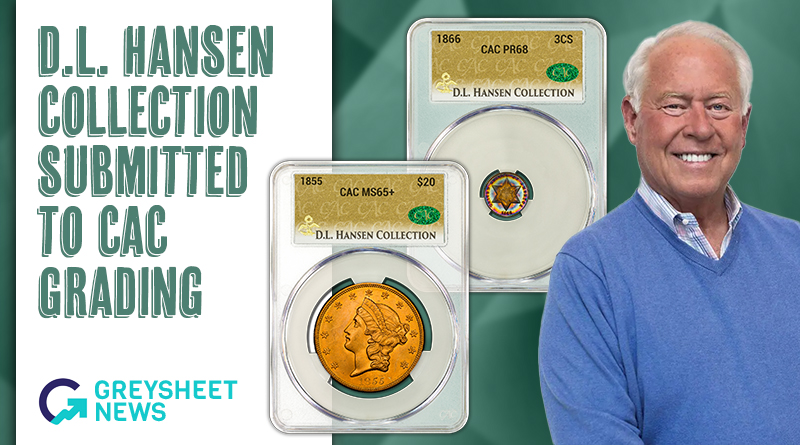
Prominent Collector Dell Loy Hansen Submitting His Historical Collection Of U.S. Coins To CAC Grading
8/8/2024
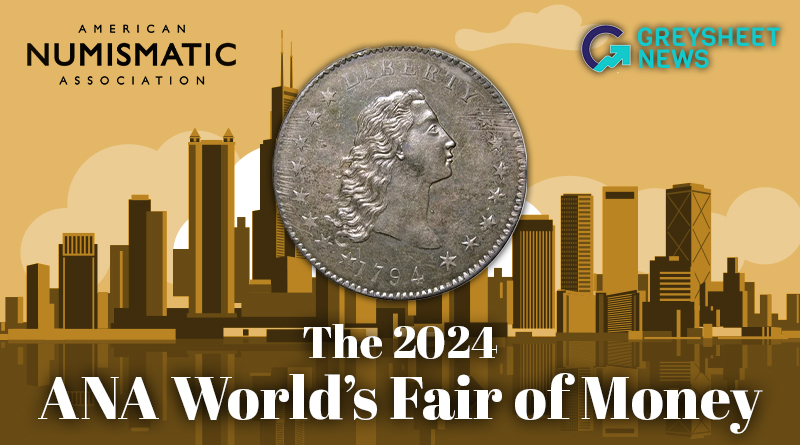
American Numismatic Association's Largest Coin Show, August 6-10 In Chicago
Dazzling rarities, free educational opportunities, family fun and more await at the Donald E. Stephens Convention Center
7/25/2024
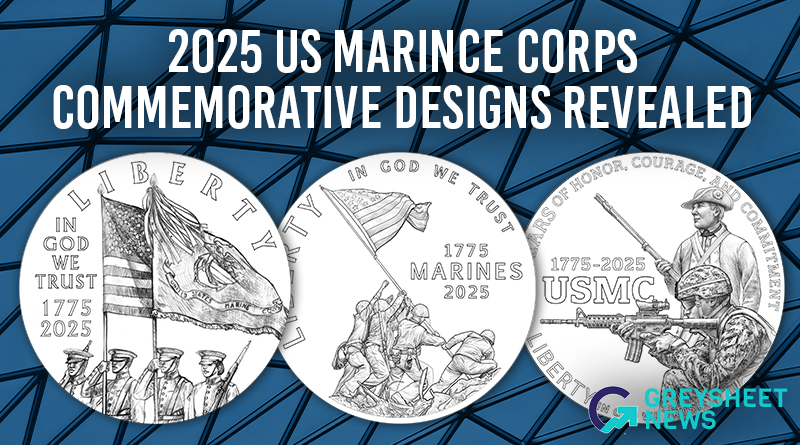
United States Mint Unveils Designs For The 2025 United States Marine Corps 250th Anniversary Commemorative Coin Program
The designs will be featured on a $5 gold coin, a $1 silver coin, and a half dollar clad coin.
7/23/2024
Events
Heritage Auctions: US Coins Tuesday & Wednesday Select Auction
Location: Heritage Auctions
Wednesday, July 1, 2026
Heritage Auctions: World & Ancient Coins Wednesday & Thursday Select Auction
Location: Heritage Auctions
Thursday, July 2, 2026